
Problem: Integrating additive manufacturing into existing processes and managing material variability are significant challenges for companies.
- Solution: Strategic integration of AM and material innovation, such as developing new metal and polymer powders, are key to overcoming these challenges.
- Results: Companies that have adopted AM have experienced improvements in efficiency, cost savings, and product quality, with notable benefits in aerospace and medical applications.
- Future Outlook: The future of additive manufacturing looks promising, with ongoing advancements in technology and materials driving further growth and innovation.
- Expert Insight: According to William “Dallas” Martin, AMUG's new president, companies should view additive manufacturing as a complementary technology to enhance traditional manufacturing methods.
The Evolution of Additive Manufacturing: A Historical Perspective
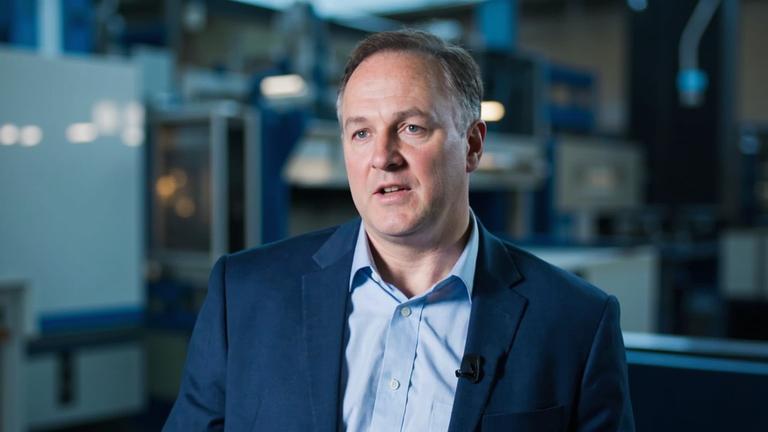
In a recent interview with Engineering.com, William “Dallas” Martin, the newly appointed president of the Additive Manufacturing Users Group (AMUG), provided a comprehensive overview of the additive manufacturing (AM) landscape. Martin, who has been involved in the AM industry for over two decades, shared his insights on the technological advancements, current challenges, and future prospects of this rapidly evolving field.
Problem: Navigating the Complexities of Additive Manufacturing
Additive manufacturing, once a niche technology, has grown into a pivotal component of modern manufacturing. However, this growth has not been without its challenges. According to Martin, one of the primary issues facing the industry is the complexity of integrating AM into existing manufacturing processes. "Many companies struggle with the transition from traditional manufacturing to additive manufacturing," he noted. "The learning curve is steep, and the initial investment can be significant."
Another significant challenge is the variability in material properties. While AM offers unparalleled design freedom, the materials used in the process often exhibit different properties compared to their traditionally manufactured counterparts. This variability can lead to inconsistencies in the final product, which is a critical concern for industries that require high precision and reliability, such as aerospace and medical devices.
Solution: Strategic Integration and Material Innovation
To address these challenges, Martin emphasized the importance of strategic integration and material innovation. "Companies need to approach additive manufacturing as a complementary technology rather than a replacement for traditional methods," he advised. This approach involves identifying specific applications where AM can add value, such as rapid prototyping, custom tooling, and small-batch production.
In terms of material innovation, Martin highlighted the ongoing research and development efforts aimed at creating new materials with properties tailored for AM. "We're seeing a lot of progress in this area," he said. "Companies are developing materials that not only mimic the properties of traditional materials but also offer additional benefits, such as enhanced strength and durability."
One notable example is the development of metal powders specifically designed for AM. These powders, which are available in various alloys, allow for the creation of complex geometries that would be difficult or impossible to achieve with traditional manufacturing methods. Additionally, advancements in polymer materials have expanded the range of applications for AM, particularly in the medical and automotive industries.
Results: A Promising Future for Additive Manufacturing
The strategic integration of AM and the development of new materials have yielded promising results. According to Martin, companies that have successfully implemented AM have seen significant improvements in efficiency, cost savings, and product quality. "The feedback we've received from our members is overwhelmingly positive," he stated. "They're seeing tangible benefits from adopting additive manufacturing."
For instance, in the aerospace industry, AM has enabled the production of lightweight components that reduce fuel consumption and increase aircraft performance. In the medical field, custom implants and prosthetics created using AM have improved patient outcomes and reduced recovery times. These examples underscore the transformative potential of additive manufacturing.
##
Is this your company?
This article features your business. Claim it to add your logo, contact details, and a link to your website — or upgrade to reach more buyers.
Did you know 80% of Press Releases trigger AI content warnings? Reach out and the M4S team can assist.