
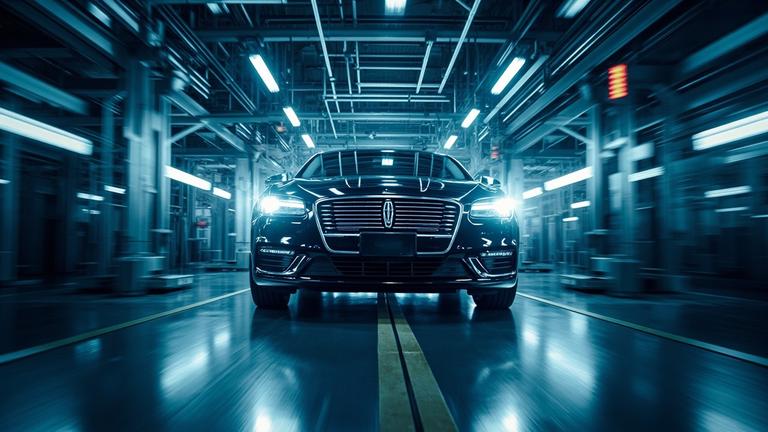
Reshoring commitment: Ford will end Lincoln Nautilus imports from China and move production to US plants starting in 2030.
- Tariff pressure: A 52.5% duty — including the 2.5% baseline tariff — eliminated the cost case for Hangzhou-built production via the Changan joint venture.
- Capacity constraint: Ford cited a lack of North American capacity when it began importing in 2024 and must secure new domestic capacity before the shift.
- Volume context: Roughly 34,000 US Nautilus sales in 2025 and 20,050 through July, down 5.7%, against nearly 829,000 F-series pick-ups.
- Industry pattern: General Motors plans to reshore Buick Envision production in 2028, while a Senate proposal targets automakers over 15% Chinese-owned.
Chief Executive Jim Farley described the move as a difficult but necessary step to strengthen the company's domestic manufacturing base, speaking in a Reuters joint interview with Commerce Secretary Howard Lutnick.
Tariff economics drive the timeline
The decision is a direct response to US Commerce Department pressure and the tariff structure now applied to the vehicle. The Nautilus currently faces a 52.5% duty on entry to the US, a figure that combines the 2.5% baseline passenger car tariff with additional levies — a burden steep enough to erase the cost advantage of building the SUV in Hangzhou. The vehicle is manufactured through Ford's joint venture with Chinese automaker Changan.
Farley was blunt about the causality:
"We made this decision as soon as the policy of the administration was set. We knew exactly what they wanted to do, and we knew exactly what it meant for Ford."
Why the four-year wait
That capacity constraint has not resolved itself: Ford will need to secure new domestic capacity before US production can begin, which explains why the shift does not take effect until 2030. The company has not disclosed which plant will take on the Nautilus.
A niche product with real volume stakes
By Ford's internal standard, the Nautilus is a modest seller aimed at a particular premium niche. The automaker sold roughly 34,000 units in the US during 2025 — a sharp contrast against the nearly 829,000 F-series pick-ups sold in the same period. Mid-year figures showed little momentum: Ford sold 20,050 Nautilus vehicles through July, down 5.7% year-on-year, though the model remains Lincoln's best seller this year.
Lincoln does have an existing US manufacturing footprint to build on. The Navigator is assembled in Louisville, Kentucky, and the Aviator at Chicago Assembly Plant.
Regulatory exposure recedes
A separate issue has been resolved alongside the tariff decision. Ford had previously sought authorisation from the Commerce Department to continue selling the Nautilus under new US connected car technology rules taking effect in 2027. Ford now says it no longer needs that authorisation, with Farley emphasising that tariffs — not technology restrictions — were the decisive factor.
Not an isolated read on China production economics
General Motors has reached a similar conclusion, announcing plans to move Buick Envision production to the US starting in 2028. Meanwhile, a US Senate Commerce Committee proposal would bar automakers more than 15% owned by Chinese entities from selling vehicles in the US at all — a measure that would affect Mercedes-Benz if enacted.
The recalibration appears model-by-model rather than wholesale: the Lincoln Z, a sedan built in China through the same Changan joint venture but sold only in that market, has no confirmed production plan going forward.
Is this your company?
This article features your business. Claim it to add your logo, contact details, and a link to your website — or upgrade to reach more buyers.
Did you know 80% of Press Releases trigger AI content warnings? Reach out and the M4S team can assist.