
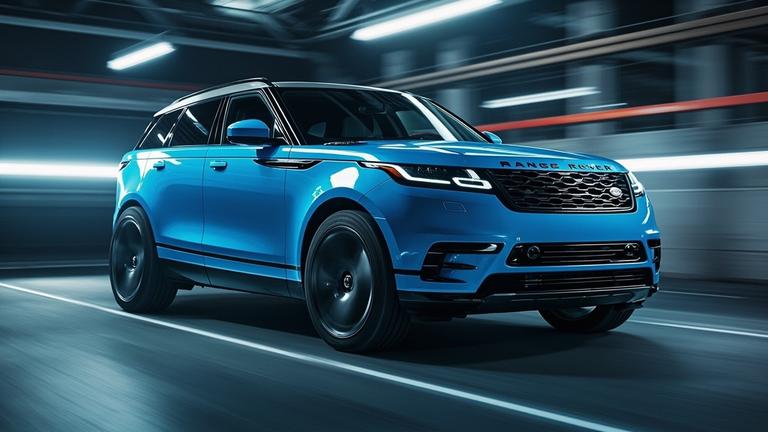
Market reception: More than 80,000 individuals have expressed interest, with 70% new to both Range Rover and BEV ownership.
- Launch milestone: The Range Rover Electric is the first battery-electric (BEV) model in the brand's 56-year history, starting at £154,070 in the UK and US$138,000 in the US.
- Powertrain performance: Twin permanently-excited synchronous motors deliver 542-550 horsepower and up to 850 Nm, with zero-to-60 mph in 4.3 seconds and wading depth near 900 mm.
- Production strategy: JLR builds the Electric on shared Solihull lines alongside combustion and hybrid models, retraining 9,000 plant workers, with battery packs and drive units made in Wolverhampton.
Jaguar Land Rover has launched the Range Rover Electric, the first battery-electric (BEV) model in the brand's 56-year history. Pricing starts at £154,070 (US$208,500) in the UK and US$138,000 in the US — territory that places the SUV alongside the Bentley Bentayga and the electric Mercedes G-Class rather than mainstream BEV competitors such as Tesla or Rivian.
Powertrain and Performance
The twin-motor layout uses permanently-excited synchronous motors producing a combined 542-550 horsepower and up to 850 Nm of torque. That output takes the SUV from zero to 60 mph in 4.3 seconds.
Off-road capability — the Range Rover calling card — has not been sacrificed in the transition. A single-pedal mode enables climbs of up to 45 degrees, and wading depth remains close to 900 mm.
Charging and Connectivity
Range reaches up to 372 miles in UK testing, or 333 miles under the US EPA cycle. Charging from 10% to 80% takes around 22 minutes, and at peak output on a 350 kW charger, the battery can add roughly 125 miles in just ten minutes. The system supports bidirectional charging.
North American buyers gain built-in NACS compatibility for Tesla's Supercharger network. For reference, BMW's iX3 offers more range for less money — a reminder that JLR is betting on badge, not spec-sheet leadership.
A Manufacturing Hedge, Not a Leap
The production strategy is the real story for manufacturing professionals. JLR is building the Electric on the same Solihull production lines as its combustion and hybrid siblings, allowing output to shift with demand. The company has retrained 9,000 workers at the Solihull plant and a further 1,500 across the wider West Midlands. A Wolverhampton facility builds the battery packs and electric drive units.
Shared production lines and enormous margins let JLR hedge its bet on uncertain BEV demand without any real dedicated capital risk.
Demand Signals and Competitive Context
JLR reports that more than 80,000 individuals have expressed interest in the model, with 70% having never owned either a Range Rover or a BEV — evidence that the launch is attracting new customers rather than converting the existing base.
The premium price also draws a clear line between the Range Rover Electric and budget entrants:
The high price also sets it apart from cheaper Chinese rivals like Chery's Jaecoo 7, often nicknamed the 'Temu Range Rover' for its similar styling, although the comparison is looser than it sounds.
The Jaecoo 7 starts around £30,000 and competes with Kia, Hyundai and MG — an entirely different segment from Range Rover and rivals such as Porsche, Bentley and Mercedes.
For manufacturers watching JLR's electrification path, the lesson is conservative capital deployment: shared lines, retrained labor, in-house battery and drive-unit production, and margins that absorb demand uncertainty.
Is this your company?
This article features your business. Claim it to add your logo, contact details, and a link to your website — or upgrade to reach more buyers.
Did you know 80% of Press Releases trigger AI content warnings? Reach out and the M4S team can assist.