
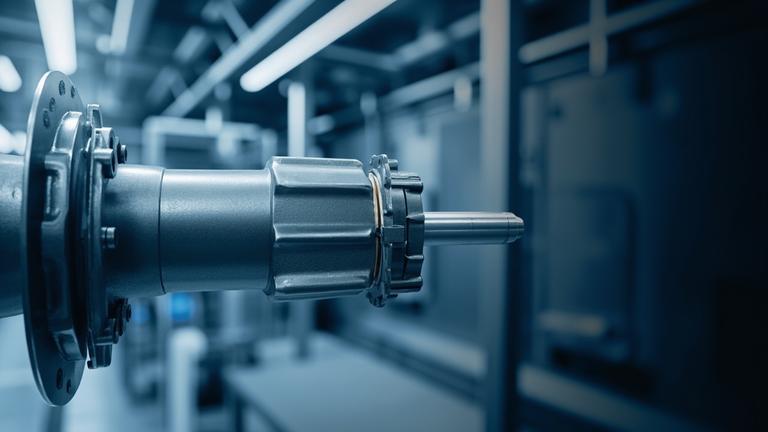
This case study demonstrates the transformative potential of additive manufacturing in military logistics, reducing procurement times from months to weeks and enabling rapid response to maintenance needs.
Problem
The Royal Navy faced a significant challenge during the recent routine Submarine Maintenance Period (SMP) for HMS Anson in Australia. Traditional procurement processes for replacement parts would have required months, if not years, to complete. This delay posed a serious risk to the maintenance schedule and operational readiness of the submarine.
Solution
QinetiQ, a strategic partner of the UK’s Submarine Delivery Group, leveraged advanced additive manufacturing techniques to address this challenge. The process began with reverse engineering the required parts at their UK facilities. The technical data was then securely transferred to their Australian counterparts, ensuring compliance with international data security standards.
Local suppliers in Perth, Western Australia, were engaged to manufacture the majority of the components. QinetiQ Australia also produced some parts at their facilities on the east coast. This distributed manufacturing approach maximized efficiency and utilized local capabilities.
The components underwent rigorous quality assurance, including approval by the Submarine Delivery Group Additive Manufacturing Team. Once approved, the parts were delivered to HMAS Stirling, where the crew of HMS Anson installed them during the maintenance period.
"QinetiQ’s global reach and established local engineering capability enabled us to move quickly to support HMS Anson in Australia," said Corry Neale, CEO of QinetiQ Australia. "We will continue to support AUKUS Pillar 1 activities and provide opportunities to Australian companies to be part of this internationally significant, complex supply chain."
Results
The project achieved a remarkable turnaround time of just four weeks, a significant improvement over traditional methods. This success marks the first time the Royal Navy has used advanced manufacturing to produce submarine components in support of a routine SMP in Australia.
Key outcomes include:
- Time Savings: Reduced procurement time from months or years to just four weeks.
- Local Engagement: Involved Australian suppliers and QinetiQ Australia's facilities, supporting local industry.
- Quality Assurance: All components met stringent quality standards, as approved by the Submarine Delivery Group Additive Manufacturing Team.
- Operational Impact: Ensured HMS Anson’s maintenance schedule was not delayed, maintaining operational readiness.
This achievement represents a critical milestone in the implementation of the Submarine Rotational Force - West, a key component of AUKUS Pillar 1. It demonstrates the potential of advanced manufacturing to transform logistics and supply chain management in military operations.
Technical Details
- Manufacturing Method: Additive manufacturing
- Data Transfer: Secure transfer of technical data from UK to Australia
- Suppliers: Local suppliers in Perth, WA, and QinetiQ Australia facilities on the east coast
- Approval: Submarine Delivery Group Additive Manufacturing Team
- Installation: Conducted by HMS Anson crew at HMAS Stirling
Is this your company?
This article features your business. Claim it to add your logo, contact details, and a link to your website — or upgrade to reach more buyers.
Did you know 80% of Press Releases trigger AI content warnings? Reach out and the M4S team can assist.