
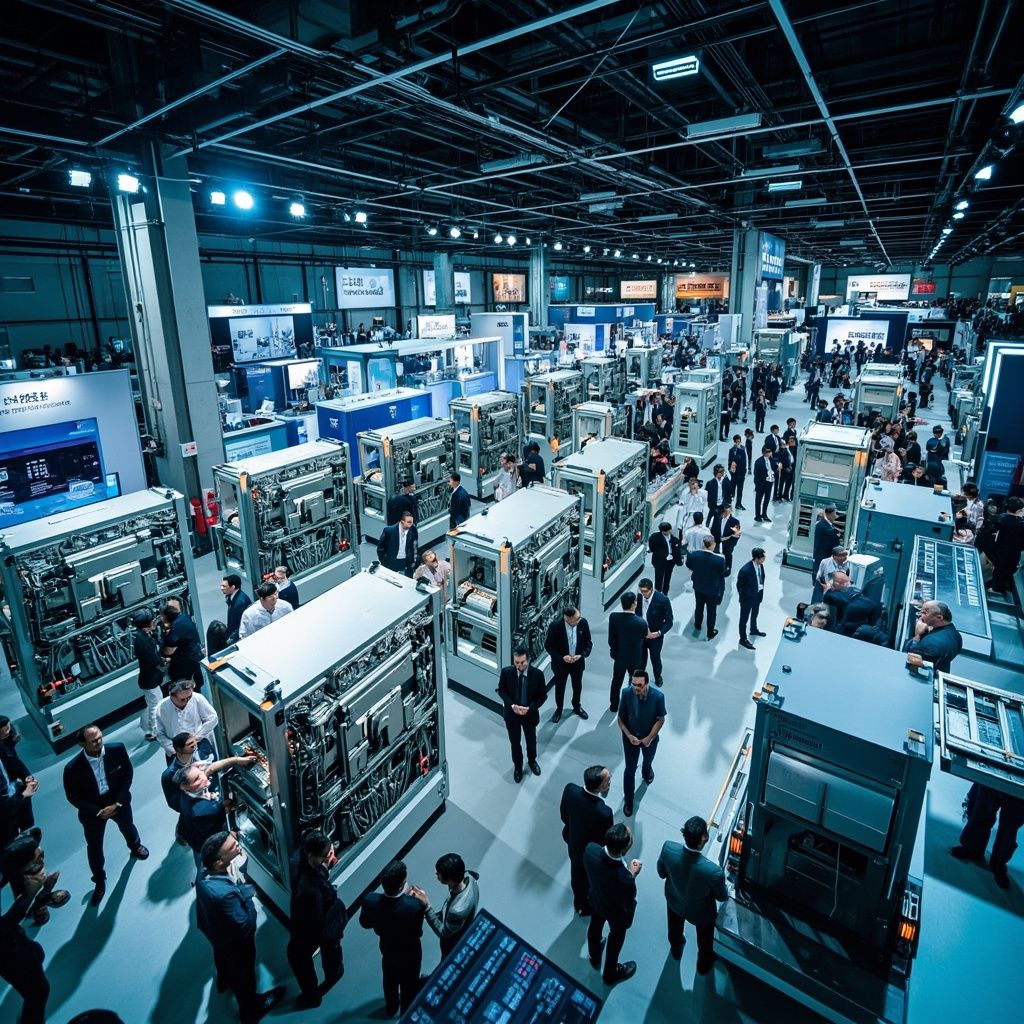
The Battery Show Europe represents a high-signal technical gathering for engineers working in battery technology and H/EV manufacturing, where the real value lies in peer-to-peer knowledge exchange rather than vendor presentations. The event has tightened its technical focus, making it worthwhile for cell, pack, and process engineers while offering less for software-focused roles.
The Industry's Annual Reality Check
Engineers have a reputation for dry humor, and for good reason. The profession demands precision while constantly confronting systems that refuse to behave. When engineers gather at trade events, the conversation often drifts toward the absurdities of debugging IoT platforms, wrestling with AI optimization demands, and the increasingly blurred lines between professional and personal devices.
The Battery Show Europe, returning to Stuttgart in November 2024, has become one of the most substantive gatherings for professionals working across battery technology and hybrid/electric vehicle development. With three days of conference programming, live demonstrations, and structured networking, the event addresses supply chain vulnerabilities that have reshaped manufacturing strategy over the past 18 months.
What Actually Happens in These Rooms
I spoke with three engineers who attended the 2023 event. Their feedback was consistent: the technical sessions delivered actionable content, but the real value emerged during breaks and evening receptions. One battery systems engineer from a Tier 1 supplier described swapping troubleshooting stories with peers from competing companies. "You realize everyone is fighting the same battles," she told me. "The vendors present polished solutions. The engineers in the hallway tell you what actually works."
The conference program spans electrode manufacturing, thermal management, recycling processes, and safety standards. Sessions on supply chain risk mitigation drew the largest crowds, which tracks with what I've heard from procurement teams struggling to qualify alternate suppliers for critical materials.
The Numbers That Matter
The 2023 event hosted over 500 exhibitors across 32,000 square meters of exhibition space. Conference attendance reached approximately 7,200 registered participants, with the highest concentration in the 28-45 age demographic. The expo floor featured live demonstrations of formation and aging equipment, laser welding systems, and dry room technology.
For context: Europe represents roughly 25% of global battery manufacturing capacity, with gigafactories announced or under construction totaling over 1,000 GWh by 2030. The technical workforce supporting this buildout requires continuous training on evolving safety codes and testing protocols.
What Engineers Should Actually Do
If you're evaluating whether to attend, the decision framework is straightforward. The conference delivers value for engineers involved in cell selection, pack integration, or manufacturing process development. It offers less for those in software-heavy BMS roles, where the technical content skews toward hardware. Registration tiers range from €800 for single-day access to €2,400 for full conference and expo credentials.
The networking aspect remains the primary differentiator. Formal presentations capture published work and established approaches. The hallway conversations capture the unfiltered reality of what fails in production environments and how teams actually solved those problems.
"The presentations tell you what the textbooks say. The expo floor tells you what the equipment vendors won't admit. The bar tells you everything." — Battery systems engineer, Tier 1 supplier
The Honest Assessment
The Battery Show Europe has matured into a legitimate technical conference. The expo floor has tightened its vendor mix, reducing the footprint of companies selling concepts in favor of those demonstrating working systems. Conference sessions have improved in specificity, with more data-driven presentations and fewer marketing-driven overviews.
Is it worth the travel budget? For engineers actively working in battery technology or H/EV integration, the answer leans toward yes. For those evaluating the space or working in adjacent fields, the value proposition depends on how effectively you use the networking opportunities.
The event runs November 5-7, 2024 at Messe Stuttgart. Early registration closes September 15.
Simon McLoughlin
Is this your company?
This article features your business. Claim it to add your logo, contact details, and a link to your website — or upgrade to reach more buyers.
Did you know 80% of Press Releases trigger AI content warnings? Reach out and the M4S team can assist.