
Cost rationale: Sourcing batteries and components in China saves an estimated 30-40% versus manufacturing in Japan, Europe or North America.
- China-first production shift: Toyota will build its next-generation Lexus BEV at a Shanghai plant starting autumn 2027, ramping from 1,000 vehicles per month to tens of thousands annually by 2028.
- Gigacasting advantage: The vehicle uses gigacasting to mould aluminium body sections into single pieces, cutting section weight by up to 20%.
- Market scale driver: China posted 8.57 million BEV sales in 2025 (60% of the global total), with sales forecast to hit 11.41 million by 2030.
- Industry-wide pattern: Honda renewed its GAC joint venture through 2038 and Nissan exports China-built BEVs, as Japanese brands' China market share fell from roughly a quarter in 2020 to around 13%.
A break from the Japan-first playbook
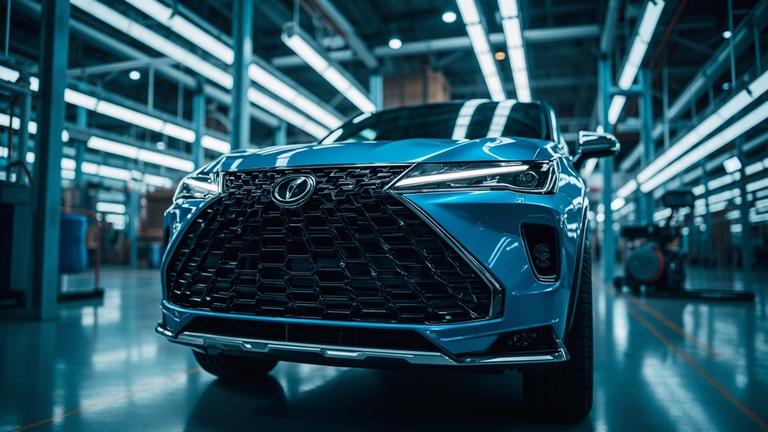
Toyota will build its next-generation battery-electric vehicle (BEV) in China before anywhere else — a notable departure from the company's usual practice of debuting new technology at home. The model, sold under the Lexus brand, will be produced at a plant in Shanghai starting in autumn 2027.
The ramp is deliberately conservative. Production begins at 1,000 vehicles per month, scaling to tens of thousands annually by 2028. Launching under the Lexus badge rather than Toyota positions the program as a smaller, higher-margin test run before any broader rollout.
Gigacasting at the core of the manufacturing strategy
The vehicle will use gigacasting, a technique that moulds multiple aluminium body sections into a single large piece. The process cuts the weight of those sections by up to 20% — a meaningful gain for any BEV program chasing efficiency and simplified assembly.
The vehicle format itself reflects local priorities. Toyota halted development of an electric coupe in Japan, redirecting toward the SUV format preferred by Chinese consumers. The company's existing lineup in China already comprises an entry-level SUV and a sedan.
Why China: the market math
The scale of China's BEV market explains the shift.
China accounted for 8.57 million BEV sales in 2025 — 60% of the global total, according to GlobalData. The market dwarfs both Europe's and Japan's, with Europe holding roughly triple Japan's volume. And the growth runway remains long: China's BEV sales are forecast to reach 11.41 million by 2030.
The cost equation is just as decisive.
Sourcing batteries and components in China saves an estimated 30-40% against manufacturing in Japan, Europe or North America.
Part of a broader industry template
Toyota is not moving alone.
The urgency is clear in the share data. Japanese brands' combined market share in China has declined from roughly a quarter in 2020 to around 13% today. What began as individual responses to falling sales has hardened into a common playbook — one that trades in-house development for local platforms and supply chains.
Japanese automakers are ceding their limited in-house BEV expertise, instead contributing their badge and tuning on top of it.
For manufacturing professionals, the takeaway is concrete: gigacasting's weight and assembly savings, stacked on top of 30-40% localised sourcing advantages, is the combination now defining competitive BEV production economics.
Is this your company?
This article features your business. Claim it to add your logo, contact details, and a link to your website — or upgrade to reach more buyers.
Did you know 80% of Press Releases trigger AI content warnings? Reach out and the M4S team can assist.