
Innovation risk: Georg Stieler and Henrik Christensen warned the ban could cut U.S. startups off from low-cost platforms and potentially sweep in Canadian and European robots.
- Regulatory action: The Federal Communications Commission has banned imports of certain foreign-made advanced robotic devices, including humanoids and quadrupeds, over national security and supply chain concerns.
- Carve-outs: Conditional approval from the U.S. Department of War or Department of Homeland Security exempts some devices; already-authorized models and prior acquisitions are unaffected, and software updates can proceed via waiver.
- Industry support: Standard Bots CEO Evan Beard called the move one of the strongest technology-security actions in modern U.S. history, with Unitree's backdoor findings reinforcing the cybersecurity rationale.
- Supply chain exposure: China controls more than 90% of global magnet-rare-earth refining and sintered permanent-magnet production, though Interact Analysis expects limited short-term impact on Chinese humanoid makers.
What the ban covers
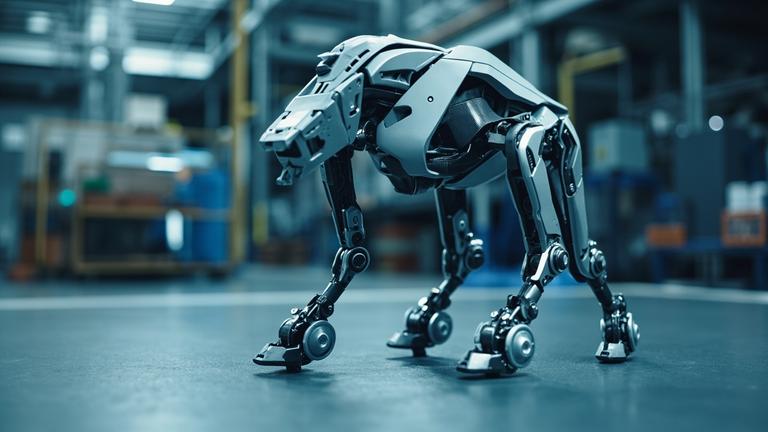
The Federal Communications Commission has banned imports of certain foreign-made advanced robotic devices, including humanoid robots and quadruped robots, citing national security risks and potential supply chain vulnerabilities. The restrictions also extend to power inverters.
The ban is not absolute. Exemptions apply to robots and power inverters that receive conditional approval from the U.S. Department of War or the U.S. Department of Homeland Security. Devices already acquired and models that have received FCC equipment authorization are unaffected, and software updates for foreign-supplied systems can be approved with a waiver.
Industry reaction splits along competitive lines
Standard Bots, based in Glen Cove, N.Y., supports the ban, arguing the U.S. must lead in robotics technology. CEO Evan Beard was direct:
“This is one of the strongest technology-security actions in modern U.S. history.”
Security concerns underpin that support. Unitree robots were found to have a backdoor transmitting data to servers in China — the kind of finding that has shifted the conversation from trade policy to cybersecurity. Robert Little, a business development advisor, former chief of robotics strategy at Novanta Inc., and a 2026 Joseph F. Engelberger Robotics Awards honoree, explained the logic behind a broad ban rather than company-specific action:
“Some ask, ‘Why not just ban those individual companies instead of all Chinese brands?’ The answer appears to be that the administration believes the risk extends beyond any one company because of the Chinese government’s authority over companies operating in China.”
The cost to U.S. innovation
Not everyone sees the ban as a clean win. Georg Stieler, a global robotics advisor and managing director for Asia at STM, warned of near-term consequences:
“In the near term, the measure could slow U.S. physical AI innovation by cutting startups and researchers off from future low-cost Chinese platforms before comparable Western alternatives exist.”
The upstream dependency problem compounds this. China accounts for more than 90% of global magnet-rare-earth refining and sintered permanent-magnet production — a potential lever for countermeasures. The ban may also slow the commercialization of humanoid robots in the U.S.
Henrik Christensen, Qualcomm Chancellor’s Chair in Robotic Systems at the University of California San Diego, raised a broader concern:
“Note the ban is potentially _much_ wider than China. Canadian [and] European robots could be impacted. This is very bad news for the industry in general.”
Limited short-term market impact
The global humanoid race, however, is unlikely to stall. Rueben Scriven, senior research manager at Interact Analysis, noted:
“In the short term, the impact even on Chinese companies is likely to be limited, as most Chinese humanoid robot companies have not yet entered the U.S. market.”
Is this your company?
This article features your business. Claim it to add your logo, contact details, and a link to your website — or upgrade to reach more buyers.
Did you know 80% of Press Releases trigger AI content warnings? Reach out and the M4S team can assist.