
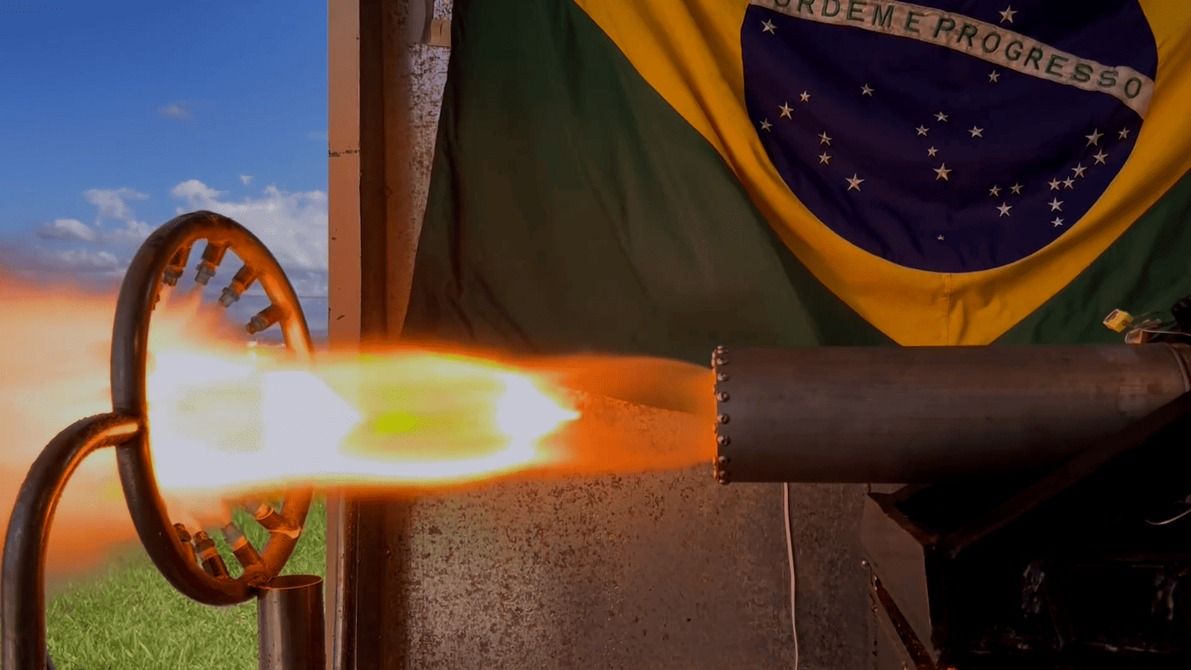
EOS is helping Brazilian aerospace startup BIZU Space build the additive manufacturing skills behind its orbital rocket ambitions.
EOS has partnered with Brazilian aerospace startup BIZU Space to advance additive manufacturing for next-generation space applications. Engineers will study Design for Additive Manufacturing through the Additive Minds Academy. The startup is working on propulsion for Brazil's first privately developed, fully Brazilian orbital launch vehicle program, and is exploring industrial metal 3D printing for combustion chambers and closed-cycle turbopump technologies.
BIZU Space engineers will get Design for Additive Manufacturing (DfAM) training through the Additive Minds Academy.
The startup is developing propulsion technologies for Brazil's first privately developed, fully Brazilian orbital launch vehicle program, and is part of the country's growing commercial space sector. It is now exploring industrial metal 3D printing for advanced rocket engine components as it builds out that propulsion work.
Michael Wohlfart, Team Manager Business Development & Academy at EOS, says the strongest additive manufacturing programs pair the technology itself with education for the engineers using it. The components BIZU Space is targeting include combustion chambers and closed-cycle turbopump technologies.
Frequently asked questions
How does the partnership between EOS and BIZU Space enhance additive manufacturing for space propulsion technologies?
The partnership provides BIZU Space engineers with access to Design for Additive Manufacturing (DfAM) education through the Additive Minds Academy and engineering support from EOS Additive Minds experts. This collaboration aims to help engineers leverage industrial 3D printing for demanding applications like space propulsion.
What specific components are being developed by BIZU Space using industrial metal 3D printing?
BIZU Space is exploring industrial metal 3D printing for advanced rocket engine components, including combustion chambers and closed-cycle turbopump technologies.
What are the broader implications of this collaboration for Brazil's commercial space sector?
The collaboration supports Brazil's growing commercial space sector by enhancing local expertise in additive manufacturing, which is crucial for developing complex aerospace components and supporting independent access to space for small satellite missions.
What role does education play in the success of additive manufacturing programs for space applications?
Education is critical, as the most successful additive manufacturing programs combine technology with education to develop a deep understanding of Design for Additive Manufacturing (DfAM). This ensures engineers can fully leverage the advantages of industrial 3D printing for demanding applications like space propulsion.
How is additive manufacturing contributing to the development of Brazil's space capabilities?
Additive manufacturing is playing an increasingly important role in developing complex aerospace components locally, which strengthens Brazil's space capabilities and supports the growth of its commercial space sector.
What is the significance of industrial metal 3D printing for propulsion technologies in the space industry?
Industrial metal 3D printing is significant for propulsion technologies as it enables the development of advanced components like combustion chambers and turbopumps, which are essential for next-generation space applications and can drive innovation and efficiency in the industry.
Is this your company?
This article features your business. Claim it to add your logo, contact details, and a link to your website — or upgrade to reach more buyers.
Did you know 80% of Press Releases trigger AI content warnings? Reach out and the M4S team can assist.