
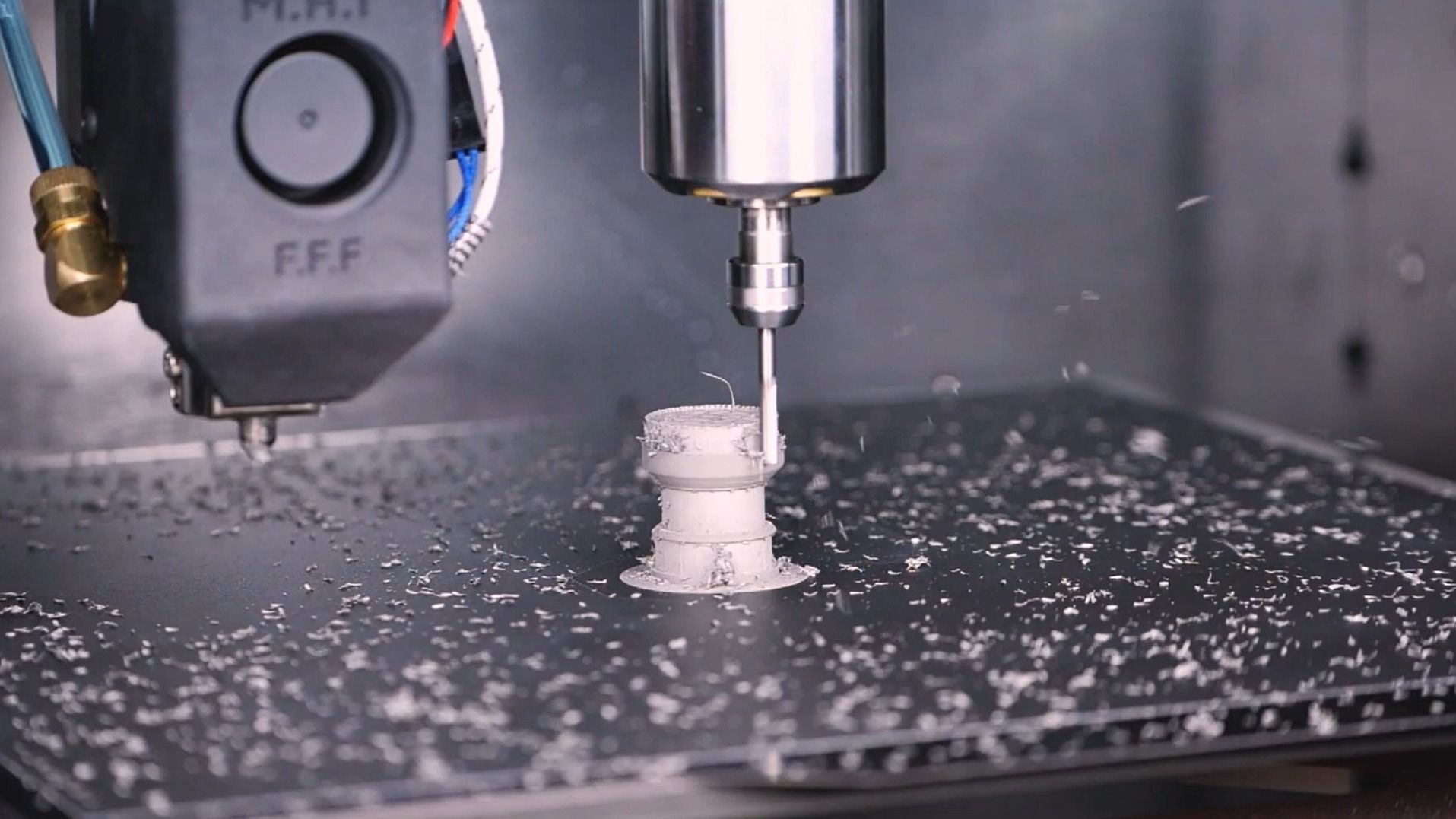
The hardest ceramic parts may need additive freedom and machined finishes in one route.
3DCeram Sinto's comparison of CNC machining and ceramic additive manufacturing finds each route carries its own complexity, from tooling and tool access to support design and thermal post-processing. The company, which develops printing equipment and ceramic feedstocks, presents hybrid production as the best compromise for intricate shapes that need accurately finished interfaces.
3DCeram Sinto, a ceramic SLA specialist, compares CNC machining with ceramic 3D printing for demanding technical ceramic parts.
CNC machining remains valuable for accessible, precision-critical features; machining before full sintering eases cutting, but parts still change dimension during firing. Additive manufacturing offers geometric freedom: internal flow passages, lightweight lattices and consolidated multi-feature components, and can reduce the need for dedicated forming tools.
Hybrid manufacturing may offer the best compromise for complex shapes needing accurately finished interfaces; 3DCeram's M.A.T. (Multi Additive Technology) platform combines additive operations with CNC machining. The SLA range serves aerospace, semiconductor equipment, defense and energy, scaling from the C101 EASY FAB to the C3601 ULTIMATE at 600x600x300 mm.
Frequently asked questions
What are the key differences between CNC machining and ceramic 3D printing for technical ceramics?
CNC machining excels in handling accessible features but struggles with enclosed channels and deep recesses. Ceramic SLA/DLP printing, on the other hand, enables intricate internal channels, lattice structures, and complex integrated shapes, though it is subject to cleaning and firing constraints.
How does the choice of manufacturing process affect the economics of producing technical ceramic components?
CNC machining is often cost-effective for simpler designs, established routings, or specific batch sizes. Ceramic additive manufacturing, however, can be more economical for complex, customized, or low-volume components, with economics depending on throughput and yield.
What hybrid manufacturing strategies are available for technical ceramics, and when are they most beneficial?
Hybrid manufacturing strategies, like 3DCeram’s M.A.T. platform, combine additive operations with CNC machining. This approach is most beneficial when complex shapes require accurately finished interfaces, as it leverages additive design freedom while ensuring controlled finishing where needed.
What are the advantages of ceramic additive manufacturing for aerospace and energy applications?
Ceramic additive manufacturing offers advantages for aerospace and energy applications by enabling lightweight structures and optimized flow paths, which can enhance performance and efficiency in these demanding fields.
How does 3DCeram support the ceramic additive manufacturing process beyond printing?
3DCeram provides expertise in critical steps such as cleaning, debinding, and sintering, ensuring that the entire process from printing to the final fired part is supported. This comprehensive approach helps achieve high-quality, reliable ceramic components.
What factors should be considered when choosing between CNC machining and ceramic additive manufacturing?
Key factors include the ability of cutting tools to reach essential features, required material and fired properties, functionally critical tolerances and surface finishes, the number of conforming parts needed, and the cleaning, firing, finishing, and qualification steps involved in each route.
Is this your company?
This article features your business. Claim it to add your logo, contact details, and a link to your website — or upgrade to reach more buyers.
Did you know 80% of Press Releases trigger AI content warnings? Reach out and the M4S team can assist.