
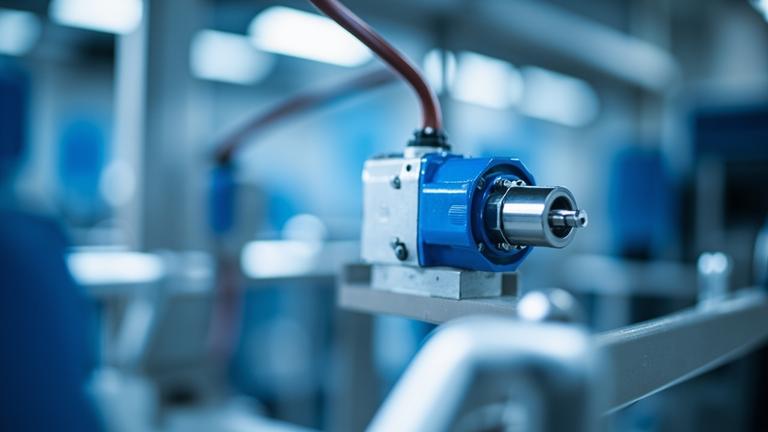
This case study illustrates a significant advancement in medical device manufacturing, showcasing how Carbon's DLS technology can produce ISO 13485-certified fluidic fittings that match traditional injection-molded performance at a lower cost.
Problem: Balancing Cost and Quality in Medical Device Manufacturing
The medical device industry has long grappled with the challenge of producing high-quality fluidic fittings while maintaining cost-effectiveness. Traditional manufacturing methods, such as injection molding, often force manufacturers to choose between premium quality at a high cost or lower-grade alternatives that compromise on performance. This trade-off is particularly problematic in the medical field, where precision and reliability are paramount.
Solution: Leveraging Carbon's Digital Light Synthesis (DLS) Technology
Astoria Pacific, in collaboration with Carbon, tackled this challenge by employing Carbon's Digital Light Synthesis (DLS) technology to develop ISO 13485-certified, 3D-printed fluidic fittings for Darwin Microfluidics. This case study demonstrates the transformative potential of additive manufacturing in the medical device sector.
### Material Selection and Performance
Carbon's functional materials were selected for their ability to match the performance characteristics of traditional injection-molded plastics. These materials were crucial in achieving the necessary mechanical properties, chemical resistance, and biocompatibility required for medical applications.
### Precision and Complexity in Design
The DLS process enabled the production of fittings with tight tolerances, thin walls, and complex internal channels. This level of precision is difficult to achieve with conventional manufacturing methods. The 3D printing process allowed for the creation of intricate geometries that enhance the functionality of the fittings, such as improved fluid flow and reduced dead volumes.
### Production Scale and Certification
The project successfully scaled from prototyping to full production while maintaining ISO 13485 certification. This certification ensures that the manufacturing process meets the stringent quality management requirements of the medical device industry.
Results: A New Paradigm in Medical Device Manufacturing
The collaboration between Astoria Pacific and Carbon resulted in a customizable, white-labelable fluidic fitting that offers premium quality at a cost comparable to budget alternatives. This development disrupts the traditional market dynamics by eliminating the long-standing trade-off between cost and quality.
### Key Outcomes
- Performance: The 3D-printed fittings match the performance of traditional injection-molded components, including mechanical strength and chemical resistance.
- Cost: The production cost is significantly lower than that of premium options, making high-quality fittings more accessible.
- Customization: The ability to customize fittings without the need for expensive tooling changes allows for greater flexibility in product design.
- Certification: The manufacturing process adheres to ISO 13485 standards, ensuring compliance with medical industry regulations.
"This project exemplifies how additive manufacturing can revolutionize the medical device industry by offering high-quality, cost-effective solutions that were previously unattainable," said Whitney Menzel, Senior Manager at Astoria Pacific.
Expert Insights
Whitney Menzel, with over a decade of experience in 3D printing and rapid prototyping, emphasized the role of DLS technology in accelerating product development cycles and enabling low-volume production runs. Isabelle Palumbo, Senior Strategic Account Manager at Carbon, highlighted the potential of additive manufacturing to simplify supply chains and expedite time-to-market for medical innovations.
Conclusion
The successful implementation of Carbon's DLS technology in the production of medical fluidic fittings demonstrates the viability of additive manufacturing in meeting the rigorous demands of the medical device industry. This case study serves as a blueprint for manufacturers seeking to leverage 3D printing for high-quality, cost-effective production.
Is this your company?
This article features your business. Claim it to add your logo, contact details, and a link to your website — or upgrade to reach more buyers.
Did you know 80% of Press Releases trigger AI content warnings? Reach out and the M4S team can assist.