
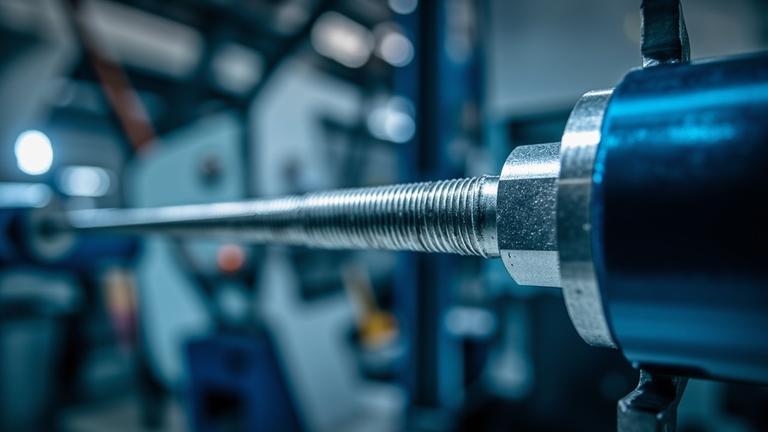
The downtime cost: The machine sat idle for the better part of a month — nearing 30 days — while waiting for the replacement part.
- The triggering failure: A specialized bolt costing about two cents broke, going undetected because it was never instrumented, and had to be ordered from a specific supplier.
- The structural cause: Predictive systems are built around expected failures and optimized for common cases, making them blind by design to rare failures absent from training data.
- The recommended audit: Evaluate which uninstrumented parts could cause downtime if they failed, especially failures that cannot be quickly recovered from due to specialized parts or unprepared response.
A predictive-maintenance system did exactly what it was designed to do. It watched the parts that tend to wear, learned the patterns that precede common failures, and predicted them reliably. Then a small bolt — costing about two cents — broke, and the system never saw it coming.
A Failure Nobody Instrumented
Podgortsev trained as an industrial engineer and began his career building predictive-maintenance systems from sensor data on industrial machines. The system he worked on monitored expensive, high-volume production equipment and was effective at flagging the failures it was designed to see.
The bolt was not one of them. There was no sensor on it, no data stream watching it, nothing in the model that accounted for it. It rarely broke, and instrumenting a two-cent part that fails almost never made no sense next to the expensive, predictable wear components.
The bolt was also a specialized part. It had to be ordered from a specific supplier, and while everyone waited, the machine sat dead. By the time the part arrived and a technician installed it, the machine had been down for the better part of a month — approaching 30 days of lost production for a component worth two cents.
The Structural Blind Spot
Podgortsev, who later moved from industrial engineering into data and AI, says he has watched the same pattern repeat in system after system, across industries that have nothing to do with bolts. His diagnosis is blunt: the problem is structural, not a mistake any individual made.
Every predictive system is built around expected failures. Engineers instrument the parts known to wear, train the model on previously seen patterns, and optimize for the common case. A system tuned for the average, expected failure is blind by design to the rare one, because the rare failure was never in the training data. It doesn't appear as a warning — it appears as a machine that is suddenly dead, with no alert ever fired.
"The cost of a breakdown has almost nothing to do with how often it happens," Podgortsev writes.
"A two-cent bolt that fails once can cost far more than a wear part you replace on schedule every quarter because the damage isn't in the part; it's in how long the line stays down and how ready you are to respond."
Prioritizing what to monitor based on failure frequency, he argues, is exactly backwards for the failures that hurt most.
What to Audit Before the Next Investment
Podgortsev's prescription is practical. Walk the machine and look for the parts that aren't instrumented — not because they're unimportant, but because they seemed too small or too rare to bother with. Then ask which of them, if they failed at the worst moment, couldn't be fixed quickly because the part is specialized or the response isn't ready. That intersection — the failure you can't see and can't quickly recover from — is where the next extended outage is hiding.
None of this negates monitoring common failures, which remains necessary. But a system optimized only for the expected case leaves a documented exposure.
"The machine that's most likely to blindside you isn't the one failing in ways you understand," Podgortsev concludes. "It's the one about to break in a way your system was never built to see."
Is this your company?
This article features your business. Claim it to add your logo, contact details, and a link to your website — or upgrade to reach more buyers.
Did you know 80% of Press Releases trigger AI content warnings? Reach out and the M4S team can assist.