
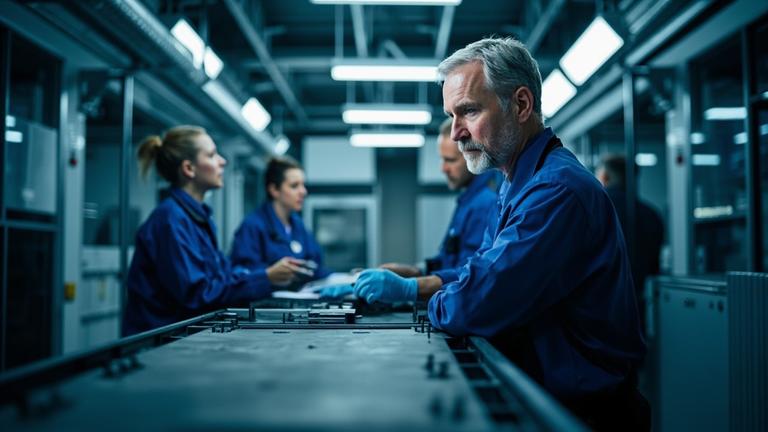
Workforce reframed: The manufacturing workforce is mislabeled, not missing — the deficit is in connecting students' existing skills to industry demand.
- Texas capacity expansion: Toyota will invest $3.6 billion in Texas, build a second San Antonio assembly line, and add 150,000 units of annual capacity while moving production from Mexico.
- Outcome-based AI pricing: Industrial AI needs a pricing model based on outcomes rather than consumption, per the argument gaining traction among manufacturers.
- Labor and funding friction: UAW members authorized a strike at Woodward MPC in Niles, and NIST was again late renewing Manufacturing Extension Partnership contracts.
The automaker plans to invest $3.6 billion in Texas and move production from Mexico, centered on a second assembly line at its San Antonio factory.
"Toyota plans to build a second assembly line at its San Antonio factory, increasing annual production capacity at the plant by 150,000 units, the company said in a statement."
That is a substantial capacity addition for a single plant, and the timing is notable. Manufacturers across the automotive sector are weighing footprint decisions against a trade environment that just became less predictable.
USMCA Heads for Rewrite, Not Renewal
The US will not renew the USMCA in its current form. The review is underway, with proposed changes to the treaty on the table. Holland & Knight's Patrick Childress has outlined where negotiations stand, the proposed changes, and what the outcome could mean for automotive manufacturers.
The stakes for supply chain planners are direct:
"The trade pact decision likely will fuel uncertainty for businesses in North America, given the deep integration across supply chains in sectors like automobiles."
Read together, Toyota's move and the USMCA posture tell a coherent story. When treaty terms are in flux, capacity inside the US border carries a premium. Whether that logic holds depends on what the renegotiated pact actually contains — and that remains unresolved.
AI's Business Model Problem
On the technology side, a sharper argument is emerging: industrial AI will fail without a new pricing model based on outcomes.
"Manufacturers offering AI services should be charging based on outcomes, not consumption."
The same outcome-oriented thinking extends to procurement, where the next era belongs to organizations that build talent capable of translating intelligence into outcomes. The through-line is talent and accountability, not tooling.
Labor, Funding and the Workforce Pipeline
Elsewhere on the shop floor and in policy:
- UAW members voted to authorize a strike at Woodward MPC in Niles, Illinois.
- The Department of Commerce's NIST agency was late on renewing contracts tied to Manufacturing Extension Partnerships — a repeat delay that leaves centers in limbo.
- On workforce, the framing is shifting: the manufacturing workforce is mislabeled rather than missing. The gap is the connection between what students are already doing and the industries that need them.
- Continuous improvement practitioners got another diagnostic from Behind the Curtain hosts John Dyer and Dr. Mohamed Saleh, who continue cataloging warning signs of lean initiatives headed off the rails.
China's new production strategy adds external pressure, with expectations of fewer US auto exports, higher inflation, and technical stagnation.
Is this your company?
This article features your business. Claim it to add your logo, contact details, and a link to your website — or upgrade to reach more buyers.
Did you know 80% of Press Releases trigger AI content warnings? Reach out and the M4S team can assist.