
Gradual ramp: production starts at 1,000 vehicles per month, scaling to tens of thousands annually by 2028.
- China-first launch: Toyota will build its next-generation BEV at a Shanghai plant starting autumn 2027, under the Lexus brand.
- Manufacturing edge: gigacasting cuts body section weight by up to 20%, while China sourcing saves an estimated 30-40% versus Japan, Europe or North America.
- Market pressure: China posted 8.57 million BEV sales in 2025 (60% of the global total) even as ICE sales collapsed 44% in July 2026.
- Industry template: Honda, Nissan, Mazda and Volkswagen are all leveraging China-based BEV development and production.
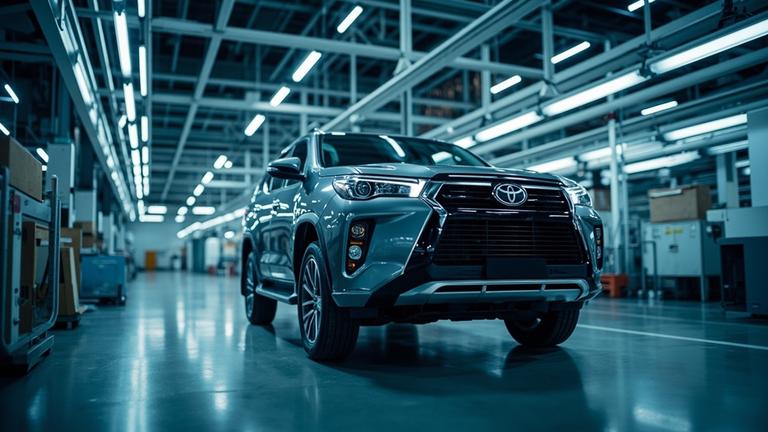
Toyota will build its next-generation battery-electric vehicle (BEV) in China starting in autumn 2027, produced at a plant in Shanghai under the Lexus brand. Production will begin at 1,000 vehicles per month before scaling to tens of thousands annually by 2028.
The manufacturing story matters as much as the location. The vehicle will use gigacasting, which reduces body section weight by up to 20%.
Japanese automakers are ceding their limited in-house BEV expertise, instead contributing their badge and tuning on top of it.
Why China
The scale of China's BEV market explains the shift.
China accounted for 8.57 million BEV sales in 2025, 60% of the global total, and China's BEV sales are forecast to reach 11.41 million by 2030. Meanwhile the conventional car business there is deteriorating fast: in July 2026, retail car sales in China fell 20.9% year-over-year to 1.46 million units, and internal combustion engine (ICE) vehicle sales in China collapsed 44% in July 2026.
The product call reflects that reality too. Toyota halted development of an electric coupe in Japan, focusing instead on the SUV format preferred by Chinese consumers.
The Cost and Cycle-Time Math
Sourcing batteries and components in China saves an estimated 30-40% against manufacturing in Japan, Europe or North America.
Chinese modular BEV platforms reduce development cycles from four to five years to 18-24 months. Stack gigacasting's weight savings on top of localized sourcing and compressed timelines, and the engineering logic is hard to argue with — even if the strategic concession behind it is significant.
A Wider Pattern
Toyota is not alone. Honda has renewed its GAC joint venture and reverse-imports Odyssey minivans built in China, while also importing its next Insight BEV from China. Nissan is shipping China-built BEVs including the N7 sedan, with exports reaching the Philippines. Mazda exports its China-built 6e sedan and CX-6e SUV.
Launching under Lexus rather than Toyota suggests a deliberate choice: test the approach on a smaller, higher-margin production run first, consistent with the ramp from 1,000 units to tens of thousands.
Is this your company?
This article features your business. Claim it to add your logo, contact details, and a link to your website — or upgrade to reach more buyers.
Did you know 80% of Press Releases trigger AI content warnings? Reach out and the M4S team can assist.