
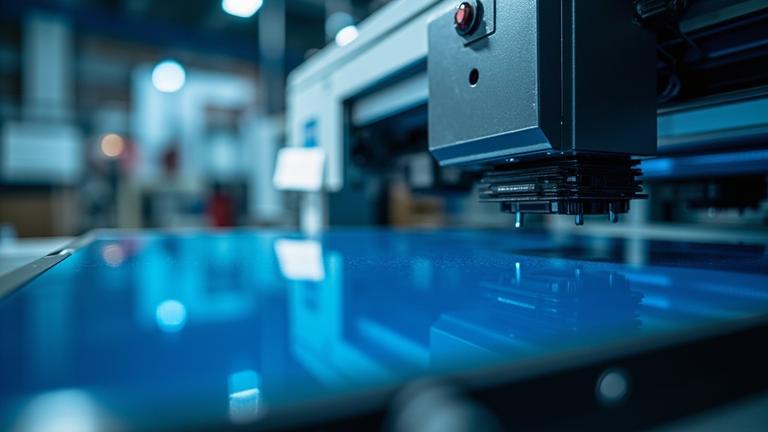
This article underscores a critical evolution in how engineers and manufacturers perceive and utilize 3D printing. The focus has shifted from the technology itself to its applications, particularly in leveraging complexity to add value.
- 3D printing is now seen as a tool for adding complexity that enhances functionality, not just a novelty.
- Engineers should assess whether complexity through 3D printing adds value to the component or product.
- Applications include aerospace components, heat exchangers, and mass customization in consumer products.
- 3D printing is also valuable for augmenting traditional manufacturing processes, such as creating custom tools and parts.
- The technology's integration into existing workflows is becoming more prevalent, offering new avenues for innovation and efficiency.
Problem: The Challenge of 3D Printing Perceptions
3D printing technology has reached a point where it is no longer seen as a novel or futuristic solution. The initial excitement around its capabilities has faded as the technology has become more commonplace. This shift presents a new challenge: how to maintain interest and effectively communicate the value of 3D printing to engineers and manufacturers who may now view it as just another tool in their arsenal.
Solution: Focus on Complexity and Value-Added Applications
Eric Utley, an applications engineering manager at Protolabs, suggests a straightforward approach to determining when to use 3D printing. The key question is whether adding complexity to a component or product through 3D printing adds value. Here are the main points from his insights:
- 1. **Complexity for Weight Reduction**: In aerospace, for example, complexity can be used to create organic generative designs that reduce the weight of components. This is a clear case where complexity adds value.
- 2. **Increased Surface Area for Functionality**: Applications like heat exchangers benefit from increased complexity because it allows for greater surface area, enhancing the component's functionality.
- 3. **Mass Customization**: In consumer products, complexity can be leveraged to offer mass customization. This personalization of products is a strong value proposition that 3D printing can deliver effectively.
Utley also emphasizes the importance of understanding that 3D printing is not just for end-use parts. It can be a powerful tool for augmenting other manufacturing processes. For instance, 3D printing can be used to create custom manufacturing tools, such as hands for glove making, extruders, heat exchangers, forming mandrels, and mold blocks. These applications highlight the versatility of 3D printing in enhancing traditional manufacturing methods.
Results: A Shift in Perspective and Application
The perception of 3D printing is evolving from a standalone technology to a complementary process that adds value through complexity. This shift is evident in several key areas:
- - **Familiarity and Design Expertise**: More engineers are now familiar with 3D printing and understand how to design for it. This has led to a move away from explaining the technology itself to focusing on its applications and benefits.
- - **Versatility in Manufacturing**: The use of 3D printing to augment other manufacturing processes is gaining traction. This approach allows for greater flexibility and innovation in production.
- - **Value-Driven Applications**: By focusing on complexity and its value, engineers can identify applications where 3D printing offers the most significant benefits. This includes weight reduction, increased functionality, and mass customization.
"The technology is no longer about the wow factor. It's about finding the right applications where complexity can drive value."
Is this your company?
This article features your business. Claim it to add your logo, contact details, and a link to your website — or upgrade to reach more buyers.
Did you know 80% of Press Releases trigger AI content warnings? Reach out and the M4S team can assist.