
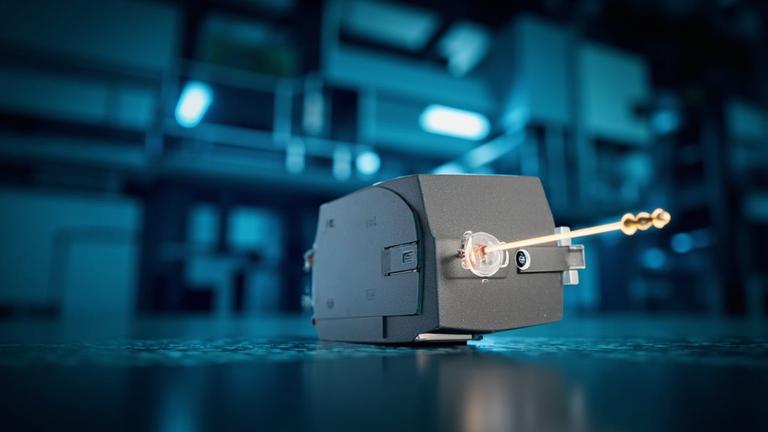
Solution: Aptiv's PULSE sensor, with its AI-driven fusion of radar and vision data, was integrated into Carter's AI platform.
- Problem: Robust.AI needed to enhance the navigation and safety of their third-generation Carter mobile robot in complex environments.
- Results: The implementation of the PULSE sensor significantly improved Carter's object detection, path planning, and situational awareness, leading to safer and more efficient navigation.
- This collaboration between Aptiv and Robust.AI exemplifies the transformative potential of advanced sensor technology in the field of autonomous robotics.
The Challenge: Navigating Complex Environments Safely
In the rapidly evolving landscape of autonomous robotics, one of the most pressing challenges is ensuring the safety and reliability of robots operating in dynamic, unpredictable environments. Robust.AI, a leader in AI-driven robotics, faced this exact challenge with their third-generation Carter mobile robot. The goal was clear: to enable Carter to navigate safely around people and obstacles in various settings, from warehouses to public spaces. However, achieving this level of autonomy required a sophisticated sensor system capable of real-time data processing and decision-making.
The Solution: Aptiv's PULSE Sensor with AI-Driven Sensor Fusion
Robust.AI turned to Aptiv, a pioneer in automotive technology and sensor systems, to address this challenge. Aptiv's PULSE sensor, integrated with advanced AI algorithms, provided the robust sensor fusion necessary for Carter's safe navigation. The PULSE sensor combines data from radar and vision systems, leveraging AI to create a comprehensive and accurate environmental model.
"The integration of Aptiv's PULSE sensor with our AI platform has been a game-changer for Carter's navigation capabilities," said Gary Marcus, CEO of Robust.AI. "The sensor's ability to fuse radar and vision data in real-time has significantly enhanced our robot's situational awareness."
Technical Specifications and Implementation
The PULSE sensor operates at a frequency of 77 GHz, providing high-resolution radar data that is crucial for detecting and tracking moving objects. Coupled with high-definition cameras, the sensor system captures detailed visual information, which is then processed by Aptiv's proprietary AI algorithms. These algorithms analyze the data to identify objects, predict their movements, and calculate optimal paths for the robot to follow.
Key technical specifications include:
- Radar Frequency: 77 GHz
- Vision System: High-definition cameras with 1080p resolution
- Data Processing: Real-time fusion of radar and vision data
- AI Algorithms: Machine learning models for object detection and path planning
The implementation of the PULSE sensor involved a seamless integration with Carter's existing AI platform. This required a meticulous calibration process to ensure accurate data alignment and synchronization between the radar and vision systems.
The Results: Enhanced Navigation and Safety
The deployment of Aptiv's PULSE sensor has yielded impressive results for Robust.AI's Carter robot. The enhanced sensor fusion capabilities have significantly improved the robot's ability to navigate complex environments safely. Specifically, Carter now demonstrates:
- Improved Object Detection: The robot can detect and track moving objects with greater accuracy, reducing the risk of collisions.
- Enhanced Path Planning: Real-time data processing allows for dynamic path adjustments, ensuring smooth and efficient navigation.
- Increased Situational Awareness: The fusion of radar and vision data provides a more comprehensive understanding of the environment, enabling the robot to respond effectively to unexpected obstacles.
"The results have been remarkable," said Marcus. "Carter's navigation capabilities have been elevated to a new level, thanks to the advanced sensor fusion provided by Aptiv's PULSE sensor."
Is this your company?
This article features your business. Claim it to add your logo, contact details, and a link to your website — or upgrade to reach more buyers.
Did you know 80% of Press Releases trigger AI content warnings? Reach out and the M4S team can assist.