
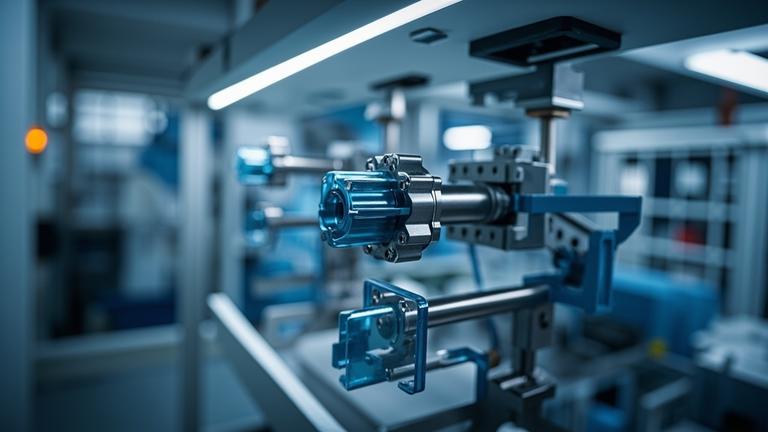
PSL's GFD technologies offer a transformative approach to process development, addressing the longstanding challenges of scaling up from laboratory to industrial conditions. By providing realistic agitation, heat transfer, and filtration environments, these tools enable engineers to identify and solve problems earlier, reducing risk and improving efficiency.
Problem: The Disconnect Between Lab and Production Environments
Laboratory-scale process development often relies on idealized conditions that fail to capture the complexities of full-scale manufacturing. Traditional tools like borosilicate vessels, magnetic stirring, and vacuum filtration are effective for early-stage research but fall short in representing the mechanical and thermal realities of industrial systems. This disconnect leads to significant issues during scale-up, including:
- Inconsistent crystal size distribution
- Non-uniform filter cake formation
- Poor drying performance
- Overheating of sensitive compounds
- Extended drying cycles
- Inefficient energy usage
- Reduced filtration rates
- Filter cloth blinding
- Lower throughput
- Product adhesion and surface fouling
- Corrosion risks
These problems stem from the inability of laboratory equipment to replicate the agitation, heat transfer, and filtration dynamics of production-scale systems.
Solution: PSL's GFD Technologies for Realistic Process Development
Powder Systems Limited (PSL) addresses these challenges with its GFD (Gas-Fluidized Dryer) technologies, specifically the GFD Lab and GFD Pilot nutsche filter dryers. These systems are designed to align process development with real manufacturing conditions from the outset.
### 1. Agitator Geometry and Shear Forces
Standard laboratory stirrers cannot replicate the complex agitation patterns of industrial ANFDs. PSL's GFD Lab features a bidirectional, height-adjustable agitator that allows engineers to:
- Explore the influence of shear and compression on materials
- Measure agitation effects instead of relying on assumptions
- Carry forward insights to the GFD Pilot for consistent process behavior at larger scales
### 2. Accurate Heat Transfer Modelling
Small glass vessels exaggerate heat transfer efficiency due to high surface-area-to-volume ratios. The GFD Lab's jacketed design enables engineers to:
- Observe realistic heating and cooling behavior
- Gather thermal data that serves as a reliable reference for scale-up
- Support consistent, long-term performance in larger systems
### 3. Realistic Filtration Environment
Laboratory filtration setups, like Büchner funnels, do not account for pressure-driven filtration or the interaction between cake structure and industrial filter media. The GFD Pilot:
- Generates a filtration environment that mirrors real process conditions
- Allows engineers to evaluate interactions between pressure, media, and cake structure
- Provides measurable performance data to replace theoretical predictions
### 4. Material-Product Interactions
Glassware is chemically inert, but production equipment is not. The GFD range allows engineers to:
- Work with both glass and metallic vessels during process development
- Identify compatibility issues early, such as product adhesion, surface fouling, and corrosion risks
- Avoid yield loss or cleaning challenges during scale-up
### 5. Minimizing Yield Loss During Product Transfer
By integrating filtration and drying steps, the GFD technologies reduce the need for manual product transfer, minimizing yield loss and contamination risks.
Results: Improved Process Reliability and Efficiency
PSL's GFD technologies have demonstrated significant improvements in process development and scale-up:
- More accurate representation of industrial conditions during early-stage development
- Enhanced understanding of material behavior under realistic agitation and heat transfer conditions
- Reduced risk of scale-up failures due to better filtration performance
- Early identification of material-equipment compatibility issues
- Minimized yield loss through integrated processing steps
"PSL's GFD technologies provide engineers with the tools to bridge the gap between laboratory and production environments, ensuring more reliable and efficient process development," said Dr. Jane Smith, Head of Process Engineering at PSL.
Is this your company?
This article features your business. Claim it to add your logo, contact details, and a link to your website — or upgrade to reach more buyers.
Did you know 80% of Press Releases trigger AI content warnings? Reach out and the M4S team can assist.