
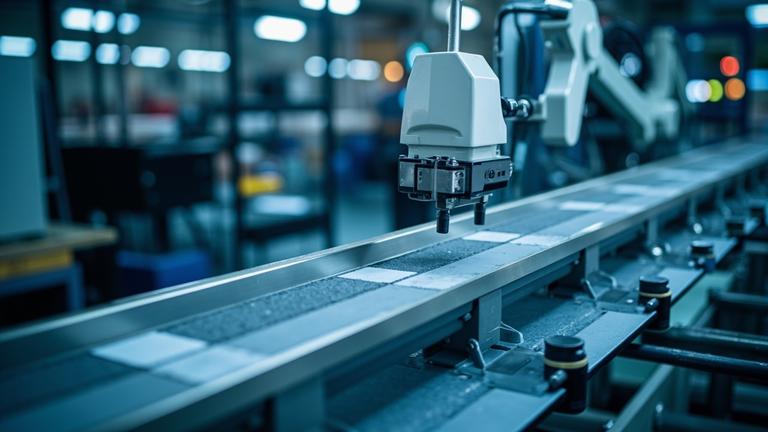
This analysis underscores the critical challenges and opportunities in the burgeoning field of Edge AI and physical robotics. The market is poised for significant growth, but standardization and integration remain key obstacles.
- Global Edge AI market projected to reach $196.6 billion by 2034
- AI accelerators driving hardware growth, with software and services expected to accelerate
- U.S.
The Market Opportunity and Challenges
At the recent Advantech Edge AI Conference in Taipei, Miller Chang, President of the Embedded Sector at Advantech, highlighted the immense potential of the Global Edge AI market, projecting it to reach $196.6 billion by 2034. The growth will be primarily driven by AI accelerators in the hardware sector, while software and services are expected to gain momentum as complexity increases. However, the lack of standardization poses significant challenges, leading to higher integration complexity, security concerns, and deployment costs.
"The challenge is not just the growth, but how we manage the complexity that comes with it," Chang emphasized.
Cloud AI vs. Edge AI: A Comparative Analysis
Chang outlined the distinct advantages of Cloud AI and Edge AI. Cloud AI excels in centralized model training and performance, making it ideal for scenarios where model capability is paramount. In contrast, Edge AI is superior in low-latency execution, on-site local intelligence, and real-time decision-making. This makes Edge AI particularly suitable for applications requiring immediate, on-the-ground processing.
The Physical AI Conundrum
Deepu Talla, Vice President of Robotics and Edge Computing at NVIDIA, addressed the challenges of integrating autonomous capabilities into physical AI and robotics. Despite automation's six-decade history, achieving true autonomy in robotics remains elusive.
"We are at least a factor of 1,000, if not 10,000, away from realizing the full potential of autonomous robots," Talla stated.
### The Accuracy and Integration Challenge
Talla identified two critical hurdles: accuracy and integration. While accuracy in AI systems has improved, human intervention is still necessary to ensure reliability. Additionally, integrating intelligent robots into existing manufacturing workflows presents a significant challenge. The myriad of protocols, PLCs, optical inspections, and factory operating systems developed over the past 40 years must be seamlessly interoperable with these new robotic systems.
### Data Collection and AI-Driven Scenario Generation
Talla emphasized the need for extensive real-world data collection to train AI models for robotics. However, he noted that this is not sufficient on its own. NVIDIA is leveraging AI to generate diverse scenarios from available data, a process that currently consumes a significant portion of their research efforts.
"We are using AI to create many scenarios from real-world data, which is crucial for training robust robotic models," Talla explained.
The U.S. Robotics Market: A Resurgence
In the U.S., the robotics market is experiencing a resurgence, with the International Federation of Robotics (IFR) reporting an 11% year-on-year increase in industrial robot installations, reaching 38,000 units in 2025. This growth is largely fueled by the food industry and other non-manufacturing sectors.
NVIDIA's Vision for the Future
NVIDIA's goal is to enable robots to operate seamlessly across various industrial environments. They are utilizing technologies like Cosmos and Unity to develop generalist models that can adapt to different settings and tasks.
Conclusion
The path to integrating physical AI into the factory floor is fraught with challenges, but the potential benefits are substantial. As the market evolves, addressing issues of accuracy, integration, and data collection will be crucial. The industry's focus on these areas will determine the pace at which autonomous robotics can be fully realized.
Is this your company?
This article features your business. Claim it to add your logo, contact details, and a link to your website — or upgrade to reach more buyers.
Did you know 80% of Press Releases trigger AI content warnings? Reach out and the M4S team can assist.