
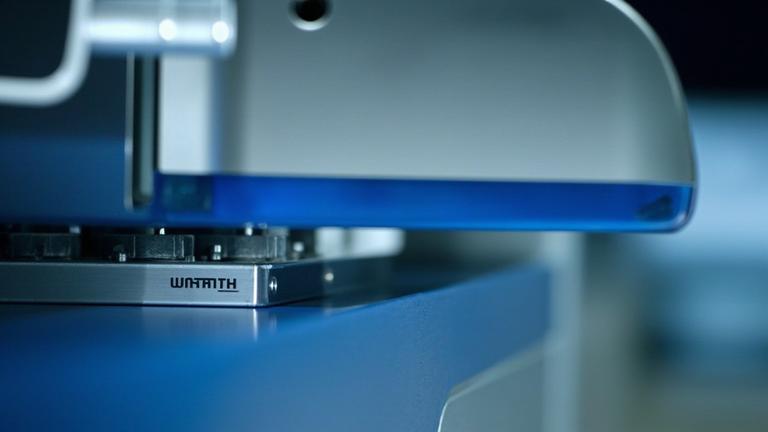
Additive adoption: Wraith Systems switched to 3D printing technology from 3D Systems, and costs came down considerably as a result.
- Founding story: Wraith Systems was founded in 2006 by Jason McAlister — a former AV-8B Harrier pilot and later Lockheed Martin engineer who worked on an F-35 Pilot Training Aid — together with a mechanical engineer friend.
- Training gap identified: The original F-35 training aid used the Thrustmaster F-16 stick and throttle system, which did not provide adequate training; Wraith Systems spent over 15 years addressing that shortfall.
- Manufacturing inflection point: Rising demand for HOTAS systems in 2023 forced a change, because production volumes wouldn't make injection moulding viable.
- Flagship product: The F-35 Lightning II – X Grip Interceptor is a flight-representative desktop HOTAS suitable for flight simulation and pilot training on the F-35 Lightning II.
Wraith Systems has spent more than 15 years building desktop flight training hardware, but when demand for its Hands-On Throttle-And-Stick (HOTAS) systems grew in 2023, the company faced a classic manufacturing economics problem — and solved it with additive manufacturing technology from 3D Systems.
From the Cockpit to the Desktop
The company traces its origins to 2006, when a military veteran and his mechanical engineer friend set out to bring aircraft pilot training to the desktop. That veteran, Jason McAlister, founder and CEO of Wraith Systems, had flown AV-8B Harriers during his military career and later joined Lockheed Martin, where he helped develop a Pilot Training Aid for F-35 pilots.
That training aid, at the time, relied on the Thrustmaster F-16 stick and throttle system — off-the-shelf hardware that did not deliver the most adequate training for F-35 pilots. Wraith Systems set out to address the shortfall, and did so in much the same way for more than 15 years.
When Volumes Don't Justify the Tooling
Growth created a manufacturing dilemma. Injection moulding, the conventional route for plastic housings, didn't pencil out.
"The volumes wouldn't quite make injection moulding viable, and while machining might have proved effective, developments in the 3D printing world caught McAlister's eye."
The economics here will be familiar to any engineer working in low-to-mid-volume production: tooling costs push injection moulding out of reach, while machining carries its own cost burden for complex enclosure geometries. Additive offered a third path.
"Having made the switch to additive, costs have come down considerably."
The Product on the Bench
The result of that shift is visible in Wraith Systems' flagship hardware:
"The completed F-35 Lightning II – X Grip Interceptor by Wraith Systems are flight representative desktop HOTAS suitable for flight simulation and pilot training on the F-35 Lightning II."
The X Grip Interceptor sits squarely in the niche the company was founded to serve — flight-representative controls that make desktop simulation genuinely useful for training, rather than a compromise.
The Takeaway
Wraith Systems' experience is a tidy case study in where additive manufacturing fits: not as a wholesale replacement for conventional processes, but as the economically rational choice when volumes are too low for tooling and machining costs are too high. For a company that had built its product the same way for over 15 years, the switch delivered what matters most in low-volume production — considerably lower costs without sacrificing the flight-representative quality its customers expect.
Is this your company?
This article features your business. Claim it to add your logo, contact details, and a link to your website — or upgrade to reach more buyers.
Did you know 80% of Press Releases trigger AI content warnings? Reach out and the M4S team can assist.