
Adoption barrier shift: Wireless and satellite-based systems have cut installation complexity, leaving consumer awareness — not technology — as the primary obstacle.
- Core technology enablers: RTK technology provides centimeter-level positioning, while 4G connectivity links mowers to cloud systems and mobile apps, enabling real-time obstacle avoidance and adaptive mowing patterns.
- Commercial landscaping opportunity: With the U.S. sector growing 6.5% annually between 2020 and 2025 and over 1 million people employed in landscaping services, autonomous mowing addresses labor shortages and operational efficiency.
- Sunseeker's position: Sunseeker Robotics operates in more than 40 countries across 5,000+ retail stores and closed nearly RMB 500 million ($74.3 million U.S.) in Series B funding in early 2026.
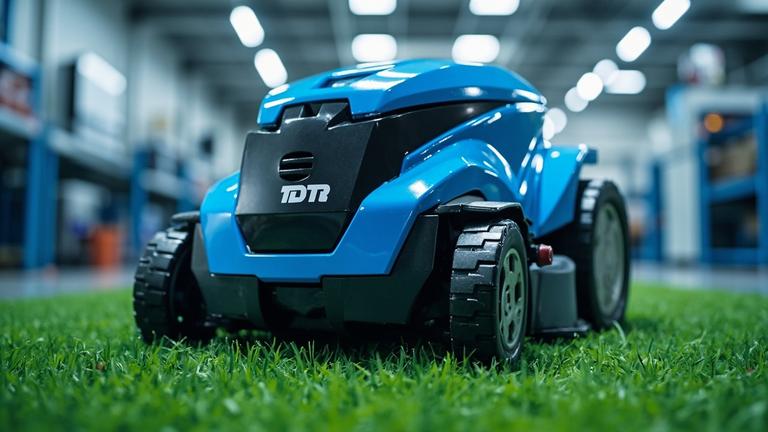
Robotic lawn mowing is shedding its reputation as a niche gadget category. Advances in machine vision, satellite guidance, AI-based planning, and onboard autonomy are turning the robotic lawn mower into what industry observers describe as a new automation platform for outdoor environments — and the numbers backing that claim are getting harder to ignore.
"Robotic mowing is becoming more commercially viable because of vision and satellite guidance, AI planning, and autonomy." — Sunseeker Robotics
The market case
Against that backdrop, Sunseeker Robotics projects the U.S. robotic lawn mower market could approach 50% household penetration over the next 8 years — an aggressive forecast, but one the company ties directly to falling costs, improving AI capability, and rising consumer awareness.
Whether or not the 50% figure lands, the enabling technology stack is now well defined, and it maps cleanly onto problems manufacturing and automation engineers already know how to solve.
The technology stack
Modern robotic lawn mowers can understand lawn layouts, adapt mowing patterns, and avoid obstacles with minimal human intervention. Two pieces of infrastructure do much of the heavy lifting:
- RTK technology: delivers centimeter-level positioning accuracy, replacing the buried boundary wires that defined previous-generation systems.
- 4G connectivity: maintains continuous communication between the robot, cloud systems, and mobile applications.
The combination matters for adoption economics. Wireless systems and satellite-based systems have reduced installation complexity — historically one of the biggest friction points for the category. Meanwhile, AI integration enables continuous improvement of the user experience: navigation algorithms and mowing patterns can be refined over time rather than frozen at shipment.
Beyond the backyard
The commercial landscaping angle may be the more compelling near-term story. At the same time, the U.S. landscaping services industry employs over 1 million people, according to BLS, yet operators report persistent difficulty recruiting and retaining workers for seasonal, physically demanding outdoor work.
Autonomous mowing systems can help address these labor shortages and improve operational efficiency by taking over repetitive tasks — freeing human crews for higher-value work and reducing time spent operating heavy machinery in difficult conditions.
The company making the case
Sunseeker Robotics is not arguing from the sidelines. The company operates in more than 40 countries, sells through over 5,000 retail stores worldwide, and completed nearly RMB 500 million ($74.3 million U.S.) in Series B funding in early 2026. Founder and CEO Terry Ma — who holds a master's degree from the University of Manchester and a bachelor's degree from Shanghai University of Finance and Economics — has positioned the company at the center of the outdoor robotics push.
The takeaway
Robotic lawn mowers are emerging as one of the next major waves of home automation. The remaining barrier is arguably cultural rather than technical: consumer perception still lags the current capability of wireless, satellite-guided systems. If awareness catches up with the hardware, the 50% penetration thesis stops looking like marketing and starts looking like a roadmap.
Is this your company?
This article features your business. Claim it to add your logo, contact details, and a link to your website — or upgrade to reach more buyers.
Did you know 80% of Press Releases trigger AI content warnings? Reach out and the M4S team can assist.