
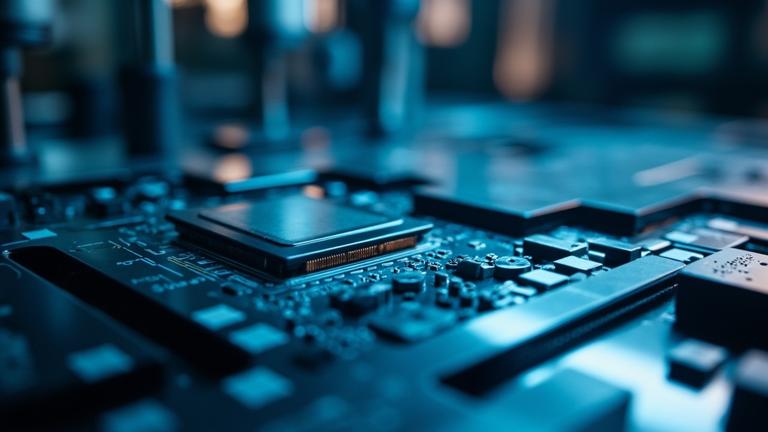
Architecture principles: The compute system is engineered around responsiveness, ruggedisation, and redundancy, with raw onboard compute scaled 20-fold.
- Custom silicon debut: Waymo has built its first custom computer chip on TSMC's 5nm process, delivering more than 1,000 TOPS dedicated to raw sensor processing and machine-learning workloads.
- Perception capability: The chip processes raw LiDAR, radar, and camera streams in real time, handles temporal denoising for improved low-light perception, and supports 13 high-resolution cameras simultaneously.
- Multi-sensor vindication: The chip counters Elon Musk's "sensor contention" criticism, aligning with Jim Farley's "mission-critical" view of LiDAR and Steven Qiu's scepticism of camera-only Level 3-4 autonomy.
Waymo has, for the first time, built its own custom computer chip to power its robotaxi fleet, disclosing the silicon in a 20 August 2026 blog post. The chip is fabricated on TSMC's 5nm process technology and is already operating inside the company's newest robotaxi generation, Ojai.
For manufacturing and hardware engineers, the notable detail is what the chip does not do. It is dedicated specifically to processing raw sensor data and running machine-learning models — a front-end perception processor rather than a total vehicle compute solution.
A purpose-built perception processor
The chip delivers more than 1,000 TOPS and can extract information from raw LiDAR, radar, and camera streams in real time. Waymo says it handles temporal denoising, which the company claims improves low-light perception, and that the system can process high-fidelity data from 13 high-resolution cameras simultaneously.
Waymo frames the silicon as additive, not as a break from its supplier base. The company lists AMD, Micron, Nvidia, Samsung, SanDisk, and Socionext as ongoing collaborators, and describes the custom chip as one of several components it is developing alongside external hardware rather than in place of it.
Engineered around three constraints
The compute architecture is built around three principles that will be familiar to anyone designing electronics for harsh automotive environments:
- Responsiveness: — processing handled onboard, with minimal delay between sensor capture and vehicle action.
- Ruggedisation: — hardware engineered for the vehicle environment.
- Redundancy: — the system is designed so that no single failure leaves the vehicle without compute.
Waymo says it has scaled raw onboard compute power 20-fold, and that its system can process inputs from different sensor types both simultaneously and relatively instantaneously.
An engineering answer to a long-running argument
The disclosure lands in the middle of the industry's most persistent architectural debate. Tesla CEO Elon Musk has for years criticised the exact approach Waymo is scaling:
dismissed multi-sensor systems as introducing dangerous "sensor contention" and added costs that would limit the commercial viability of autonomous driving.
Musk has also:
singled out LiDAR as a "crutch" and "a fool's errand"
The industry consensus, however, leans Waymo's way. Ford's Jim Farley has characterised LiDAR as "mission-critical" for his company's autonomous driving ambitions, while Robosense founder Steven Qiu has called SAE Level 3-4 autonomy more or less impossible with camera sensors only. Waymo's new chip — a fused, redundant, multi-sensor architecture in silicon — is effectively that position hardened into hardware.
The Ojai build, and the cost question
The Ojai robotaxi is manufactured by Geely brand Zeekr in Ningbo, China, then fitted with Waymo's sixth-generation Driver system at a facility in Mesa, Arizona. Approximately 300 Ojai vehicles are already in Waymo's commercial fleet, operating in Los Angeles, Phoenix, and San Francisco, with further rollouts planned for Denver, Las Vegas, and San Diego in 2026.
The open question is not performance — it is cost. Outside estimates put sixth-generation hardware at US$20,000–$25,000 per vehicle, down sharply from the US$100,000-$125,000 of the previous generation. That is real progress on the bill of materials, but whether it is enough to support profitable expansion at scale remains unanswered. On that point, at least, Musk's cost critique still stands unaddressed.
Is this your company?
This article features your business. Claim it to add your logo, contact details, and a link to your website — or upgrade to reach more buyers.
Did you know 80% of Press Releases trigger AI content warnings? Reach out and the M4S team can assist.