
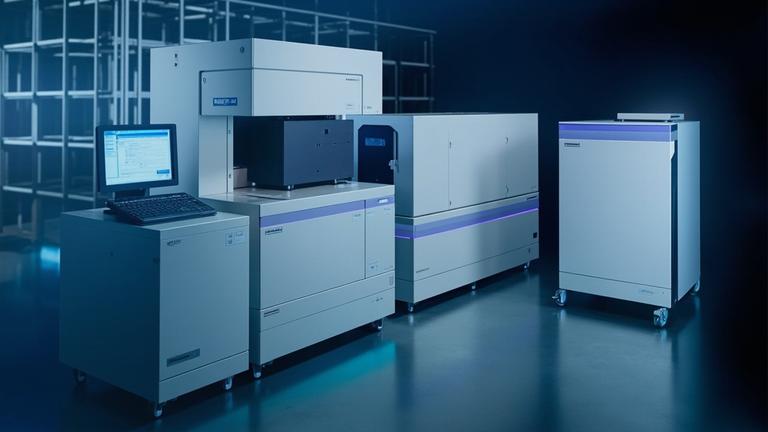
This development marks a significant advancement in proteomics technology, offering unprecedented sensitivity and speed in analyzing complex protein variants. The implications for drug discovery and precision medicine are substantial.
Problem
The complexity of proteome analysis has long posed a significant challenge in translational oncology and drug discovery. Traditional mass spectrometry methods struggle to deliver the depth and sensitivity required to analyze the vast number of proteoforms—molecular variants of proteins that arise from genetic variation, alternative splicing, and post-translational modifications. This limitation hampers the ability to identify actionable biomarkers and therapeutic targets, particularly when precision genomics proves inconclusive.
Solution
At the ASMS conference, Bruker Corporation (Nasdaq: BRKR) introduced the timsMRMS system, integrating trapped ion mobility separation with ultra-high-resolution magnetic resonance mass spectrometry (MRMS). This innovation is part of a broader suite of advancements, including the timsUltra AIP, timsOmni, razor-PASEF workflows, Spectronaut 21, and OmniScape software.
The timsOmni system, in particular, stands out by combining trapped ion mobility with trapped electron capture dissociation (ExD) technologies. This combination provides scientists with higher dimensionality, significantly enhanced top-down sensitivity, and richer structural information. The OmniScape AI-driven top-down software further transforms this data into actionable insights, enabling deeper functional proteoform analysis.
Key technical specifications include:
- Capability to measure over 10,000 proteins in formalin-fixed paraffin-embedded (FFPE) biopsies
- Processing of more than 6,500 proteins at a rate of 500 samples per day (SPD)
- 4x increase in sensitivity for proteoforms, antibodies, glycoproteins, and oligonucleotides
Results
The impact of these advancements is profound. By enabling the analysis of a vast number of proteoforms with unprecedented sensitivity and speed, the timsMRMS system accelerates the path from discovery to biomarkers and precision medicine. This is particularly crucial in cases where genomics alone cannot provide clear therapeutic guidance.
"Proteoforms are the fundamental unit of molecular disease. The timsOmni system allows us to analyze over one million distinct functional—and sometimes pathological—human proteoforms, derived from just 20,000 human genes. This capability opens an unprecedented opportunity to accelerate drug discovery and improve success rates in human trials," said Frank H. Laukien, PhD, Bruker’s President and CEO.
The system's integration of AI-driven software like OmniScape enhances the clarity and utility of the data, making it easier for researchers to identify potential biomarkers and therapeutic targets. The increased sensitivity and speed also mean that laboratories can process more samples in less time, significantly improving throughput and efficiency.
In practical terms, the timsMRMS system offers:
- A 4x increase in sensitivity for top-down proteomics
- Enhanced structural information for deeper insights into molecular disease drivers
- Improved drug candidate success rates in human trials
Implications for Engineers and Manufacturing Professionals
The introduction of the timsMRMS system represents a significant technological advancement in the field of proteomics. For engineers and manufacturing professionals, this means a shift towards more sophisticated and integrated systems that combine multiple technologies to deliver superior performance. The system's AI-driven software also underscores the growing importance of data analytics and machine learning in biotechnology.
Is this your company?
This article features your business. Claim it to add your logo, contact details, and a link to your website — or upgrade to reach more buyers.
Did you know 80% of Press Releases trigger AI content warnings? Reach out and the M4S team can assist.