
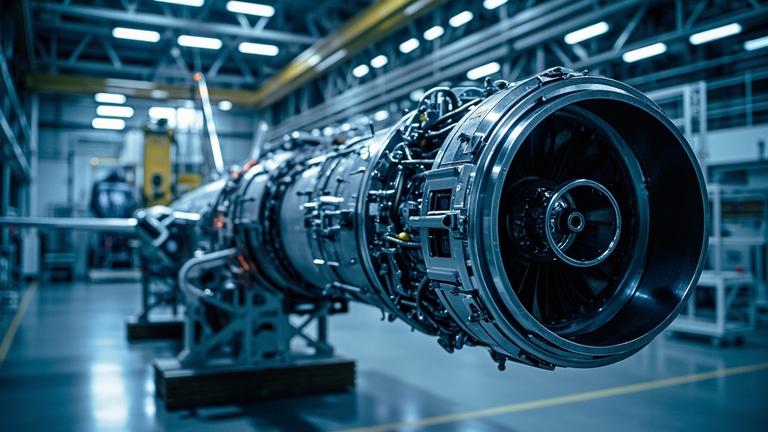
Problem: The aviation industry required a new jet engine that could balance power, efficiency, and environmental concerns.
- Solution: GE Aerospace developed the GE9X, the world's largest and most powerful jet engine, featuring advanced technologies like a 3D-printed fuel nozzle and ceramic matrix composites.
- Results: The GE9X offers a 10% improvement in fuel efficiency and a 20% reduction in emissions, setting a new benchmark for commercial jet engines and promising to revolutionize air travel with the upcoming Boeing 777X.
- The GE9X is not just an engineering feat; it is a strategic response to the evolving needs of the aviation industry, offering a glimpse into the future of air travel.
Problem: The Need for Increased Efficiency and Power in Aviation
The aviation industry has been under constant pressure to enhance fuel efficiency, reduce emissions, and increase power output to meet growing global travel demands and stringent environmental regulations. Traditional jet engines have struggled to balance these requirements, often requiring compromises between power and efficiency. The development of a new engine that could significantly outperform its predecessors was critical for the next generation of commercial aircraft.
Solution: The Introduction of the GE9X
GE Aerospace, a leader in jet engine technology, has risen to the challenge with the introduction of the GE9X, the world’s largest and most powerful jet engine. Unveiled on the National Mall in Washington D.C., the GE9X is a marvel of modern engineering, boasting a fan diameter of 134 inches and a thrust capability of 134,300 pounds. This engine is designed for the Boeing 777X, promising to deliver unprecedented levels of efficiency and performance.
Technical Specifications
- Fan Diameter: 134 inches
- Thrust: 134,300 pounds
- Composite Fan Blades: 16 fourth-generation carbon fiber composite blades
- Combustor: Twin-annular pre-swirl (TAPS) III combustor for reduced emissions
- Materials: Ceramic matrix composites (CMC) in the high-pressure turbine for improved durability and heat resistance
The GE9X incorporates several cutting-edge technologies, including a 3D-printed fuel nozzle, which enhances fuel efficiency and reduces weight. The engine's design also includes a high-pressure compressor with a 27:1 pressure ratio, contributing to its impressive power output.
Results: Unmatched Performance and Efficiency
The GE9X has undergone extensive testing, including a record-breaking test run in 2019 where it achieved 134,300 pounds of thrust, surpassing its initial design specifications. This performance is a testament to the engine's advanced engineering and materials, which allow it to operate at higher temperatures and pressures than previous models.
"The GE9X is a game-changer for the aviation industry," said a spokesperson for GE Aerospace. "It offers a significant leap in efficiency and power, setting a new standard for commercial jet engines."
The engine's fuel efficiency is improved by 10% compared to its predecessor, the GE90, thanks to its advanced aerodynamics and materials. This translates to lower operating costs for airlines and a reduced carbon footprint, aligning with industry goals for sustainability.
Real-World Impact
The GE9X is already making waves in the aviation world. Boeing's 777X, powered by the GE9X, is expected to enter service in 2025, promising to deliver a 20% reduction in fuel consumption and emissions compared to previous models. This aligns with the growing demand for more environmentally friendly air travel solutions.
Is this your company?
This article features your business. Claim it to add your logo, contact details, and a link to your website — or upgrade to reach more buyers.
Did you know 80% of Press Releases trigger AI content warnings? Reach out and the M4S team can assist.