
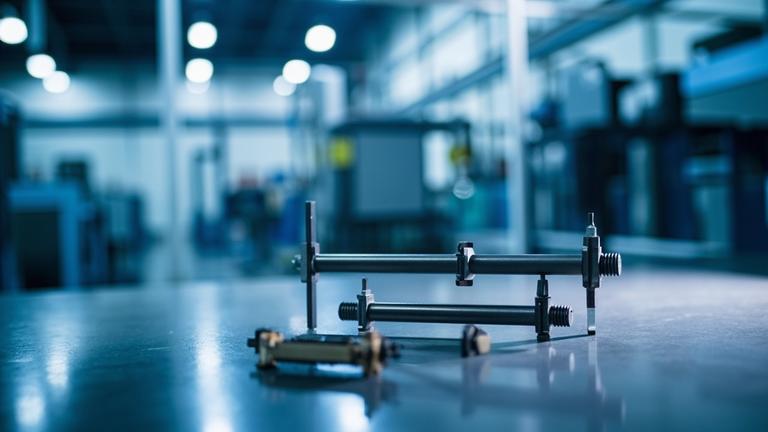
Operating room role: The patient-specific surgical guides transfer the surgical plan into the operating room.
- Polymer complement: The company additively manufactures polyamide drilling and marking guides to supplement its titanium implant supply.
- Precision imperative: Personalised implants must be implanted carefully and precisely, raising the stakes for manufacturers and surgeons.
- Osseointegration benefit: Additive manufacturing enables customised care and enhanced osseointegration in personalised medical devices.
Personalisation raises the precision bar
Additive manufacturing has made patient-specific medical devices routine rather than remarkable. But as the technology matures, the burden shifts downstream: a bespoke implant only delivers its promise if it is placed exactly where the surgical plan says it should go.
"As additive manufacturing opens the door to personalised medical devices, we revel in the customised care and enhanced osseointegration."
That celebration comes with a caveat.
"But for the manufacturers and surgeons involved, it heightens the stakes when it comes to precision."
KLS Martin's two-track additive strategy
To supplement that titanium work, the company also additively manufactures surgical guides from polymer, specifically polyamide.
The guides serve as drilling and marking tools. Their function is direct: they transfer the surgical plan into the operating room, giving the surgeon a physical, patient-matched reference for where to cut and where to mark.
"It is one thing to engineer an implant that can only work for this person, but now it has to be implanted carefully, precisely."
That is precisely the gap the polyamide guides close. The titanium implant is engineered for one anatomy; the polymer guide ensures the installation matches the engineering.
Why the guide matters as much as the implant
For manufacturing professionals, the KLS Martin approach is a useful reminder that additive manufacturing's value in personalised medicine is not confined to the implant itself. Precision is crucial when implanting personalised devices, and an equally tailored set of surgical guides is the practical answer. Polymer AM, running alongside metal AM, turns a digital surgical plan into a physical tool that fits one patient and one procedure — no more, no less.
The result is a workflow where both the device and the instruments used to place it are additively manufactured to the same patient-specific standard.
Is this your company?
This article features your business. Claim it to add your logo, contact details, and a link to your website — or upgrade to reach more buyers.
Did you know 80% of Press Releases trigger AI content warnings? Reach out and the M4S team can assist.