
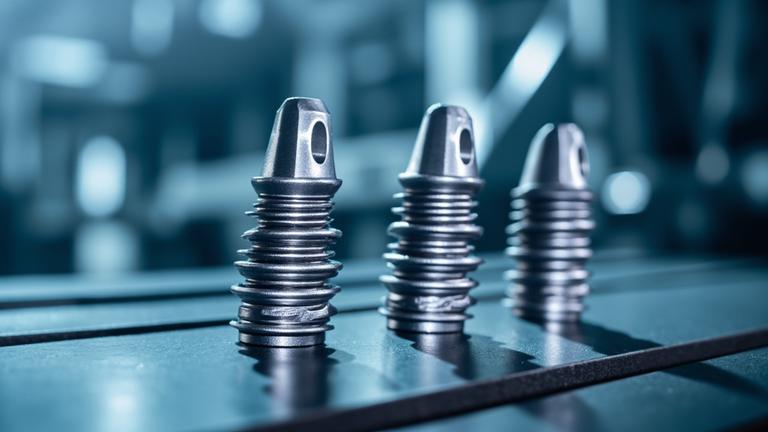
Titanium track record: KLS Martin has used 3D printing for personalized titanium medical devices for a decade.
- Polymer complement: The company additively manufactures polyamide drilling and marking guides to supplement its implant supply.
- Plan to OR: The guides transfer the surgical plan into the operating room, supporting precise implantation of patient-specific devices.
- Two-process workflow: Polymer 3D printing produces the guides while metal additive manufacturing produces the titanium implants.
- Broader context: Industry developments include Valiant Products' expanded metal AM capabilities and Solukon's SPR-Pathfinder® PRO depowdering software for complex LPBF parts.
Personalized implants demand personalized execution. KLS Martin, which has been using 3D printing for personalized titanium medical devices for a decade, is addressing that challenge by additively manufacturing polyamide drilling and marking guides that transfer the surgical plan into the operating room.
A decade of patient-specific titanium
KLS Martin's additive work centers on personalized titanium medical devices — implants engineered to fit one patient and one patient only. That level of customization raises the bar for precision at every stage. An implant designed for a single individual must also be implanted with matching accuracy, and that requirement extends well beyond the build plate.
Polymer guides close the loop
To supplement its titanium implant supply, the company additively manufactures polyamide drilling and marking guides. The guides serve a specific function: they carry the surgical plan from the digital environment into the operating room, giving the surgical team a physical, patient-matched reference during the procedure.
The pairing is deliberate. Polymer 3D printing handles the guide work while metal additive manufacturing produces the implants themselves — two processes, one workflow, each matched to the demands of the part.
Why it matters for manufacturing
The KLS Martin approach illustrates a pattern worth watching across additive manufacturing: polymer and metal AM working as complementary rather than competing processes. Elsewhere in the industry, Valiant Products has expanded its advanced metal additive manufacturing capabilities, and Solukon's SPR-Pathfinder® PRO depowdering software brings simulation depth, process transparency, and accurate time prediction to complex LPBF parts — signs that the tooling around production AM continues to mature alongside the applications themselves.
For manufacturers watching the medical device space, the takeaway is straightforward: the value of personalization is only realized when every step, from implant to guide, is engineered to the same standard.
This article is based on reporting published September 18, 2026.
Is this your company?
This article features your business. Claim it to add your logo, contact details, and a link to your website — or upgrade to reach more buyers.
Did you know 80% of Press Releases trigger AI content warnings? Reach out and the M4S team can assist.