
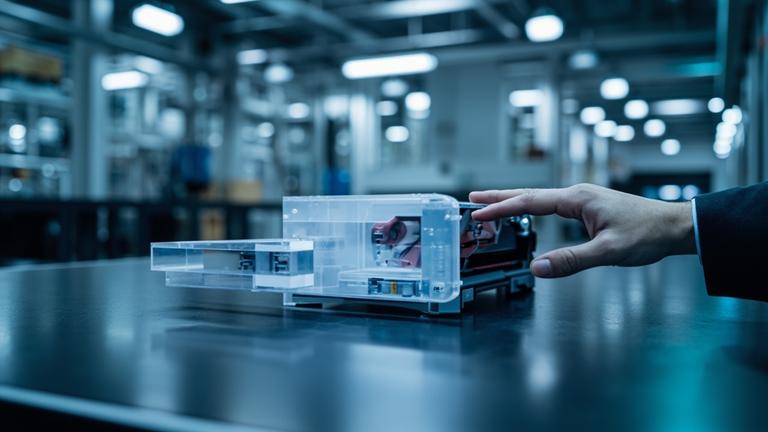
System architecture: The TactaBot combines the Tacta Hand, Skill Capture system, and Dexterous Intelligence AI model into one platform for high-value manufacturing work.
- Hand specifications: Three- and five-finger configurations, 15 DoF, 25 newtons of lift force per finger, Fluidic Tendon actuation, and a rating of up to 30 million cycles.
- Sensing capability: Tactile sensors cover 250 to 700,000 pascals and measure temperature to 0.1 degrees centigrade; fingertip sensors are designed as replaceable consumables.
- Data pipeline: The Tacta Glove carries 256 tactile sensors per fingertip, streams force, motion, video, and temperature data wirelessly, and feeds an off-the-shelf pre-trained AI model fine-tuned at customer sites.
Tacta Systems has launched the TactaBot, a system built around three components: the Tacta Hand, the Skill Capture system, and the Dexterous Intelligence AI model. The pitch is straightforward — robots today move objects well, but high-value manufacturing work demands something more.
"We have vison-only robots and a variety of different robots that do really good work today, which is moving objects and so on, but the holy grail is to be able to augment, complement, and expand the potential to use robots to do high value work," said Vikram Pavate, co-founder and CEO of Tacta Systems, in comments to The Robot Report.
A hand built for feel, not just grip
Pavate frames the gap in robotic capability as a hardware problem.
"Humans have amazing brains, but AI is catching up. We have decent eyes, and that's an area where computer vision, arguably, has caught up. The parts that have been missing are the hands."
The Tacta Hand comes in three- and five-finger configurations with 15 degrees of freedom (DoF). Each finger can lift up to 25 newtons of force — about 2.5 kg (5.5 lb.) per fingertip. Actuation comes via the company's Fluidic Tendon actuation technology, which Tacta says allows for thin fingers and high stability. The hand is rated for up to 30 million cycles.
"For high-value work, we need our robotic hands to be able to touch and feel the real world. They need to be able to feel normal force, shear force, contact, deformation, slip, temperature, texture, surfaces," Pavate said.
Sensors small, replaceable, and precise
Tacta's tactile sensors recognize the full dynamic range of human touch, from 250 pascals to 700,000 pascals, and measure temperature with a precision of 0.1 degrees centigrade. The mechanical durability numbers come with an asterisk the company is upfront about:
"The cycle count is for the mechanical side. The fingertips and the sensors here … will wear out at some point. We have designed them to be consumables at this point."
Capturing skills from the factory floor
The data side of the system is the Tacta Glove, which carries 256 tactile sensors on each fingertip.
"We're starting out with the fingertips because most of our work is on the fingertips today. [The system] can easily be scaled to the entire hand," Pavate said. "We use these tactile sensors on the front. We use motion capture in the back."
"The Tacta Glove and Skill Capture system record force, motion, video, and temperature data directly from workers on the factory floor. All the data the glove captures is streamed wirelessly to a local host device."
From glove data to deployed robot
Rather than building a model from scratch, Tacta starts with existing AI and layers on its own data.
"We use an off-the-shelf, pre-trained AI model, and then train it with our tactile and motion-capture data for a variety of different tasks," Pavate said. "Then, we go to the customer site and we fine-tune that using our gloves on their operations."
Manufacturing is the deliberate first target.
"It's an environment that we, as founders of the company, understand. We spent many, many decades in that space. We come from the electronics side of the industry."
Tacta expects to ship its first TactaBots in early 2027.
Read the full article on The Robot Report
Is this your company?
This article features your business. Claim it to add your logo, contact details, and a link to your website — or upgrade to reach more buyers.
Did you know 80% of Press Releases trigger AI content warnings? Reach out and the M4S team can assist.