
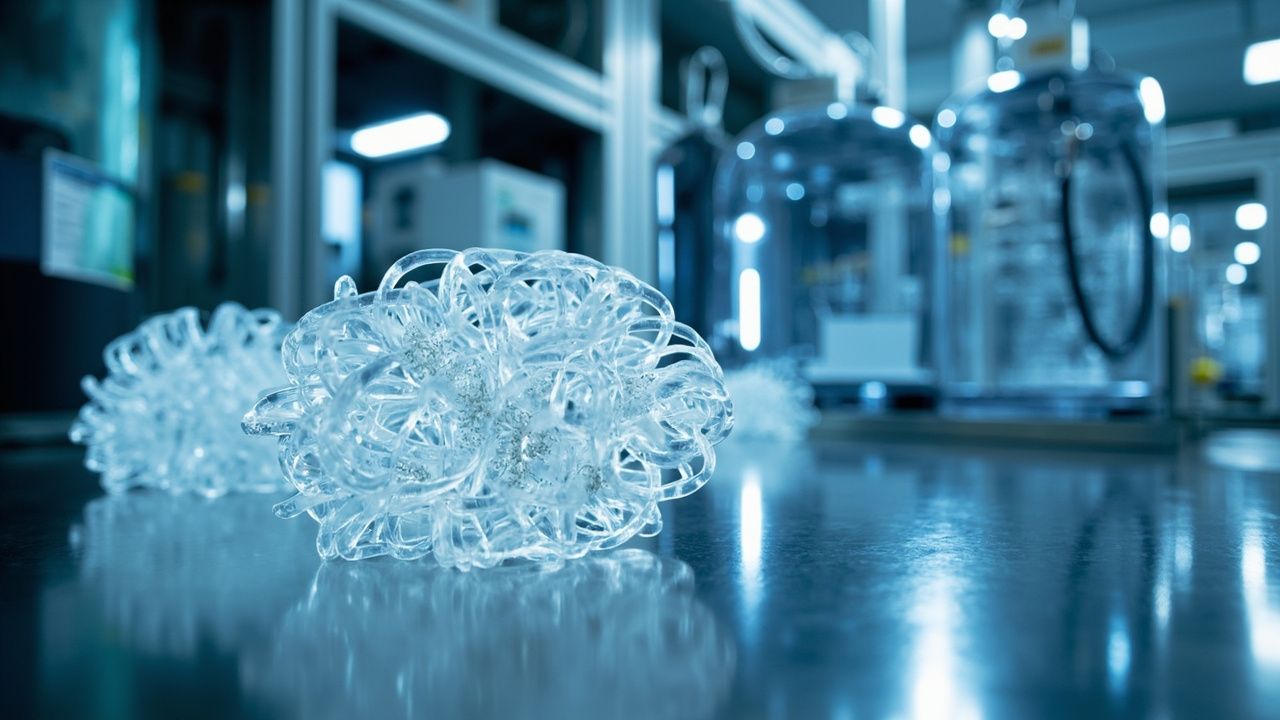
Physical confinement geometry in 3D scaffolds can drive 10x tissue scale-up and functional neural maturation without manual assembly
- Scaffold architecture may matter more than biological complexity for clinically relevant tissue size
- Biofabrication workflows should prioritize geometric control over biological complexity
The Scale Problem Holding Back Organoid Engineering
For years, organoid researchers have been stuck with tissues roughly the size of a sesame seed. The standard approach, growing intestinal stem cell-derived spheroids one by one, maxes out around one millimeter after four weeks of culture. That constraint has made clinical translation a pipe dream. You cannot transplant something that fits on a fingertip into a patient missing meters of functional intestine.
The other bottleneck was the nervous system. The gastrointestinal tract runs on its own neural network, the enteric nervous system, which controls motility, fluid balance, and secretions. Previous protocols required researchers to separately differentiate neural crest cells, then manually combine them with intestinal spheroids in a process called the assembloid approach. The result was tissue that looked like it had a nervous system but didn't behave like one. Organ bath assays showed minimal functional response to electrical stimulation.
A Print-and-Load System That Forces Fusion
A team at Cincinnati Children's Hospital Medical Center, publishing in Nature Biomedical Engineering, describes what they call the confined culture system. The core innovation is deceptively simple: a 3D printed scaffolding tray with defined lanes. Instead of plating 4,000 spheroids scattered across a culture dish, the CCS loads them into lanes roughly 3mm wide and 50mm long. The geometry forces the spheroids into contact, and they merge into a unified structure within days rather than weeks.
The team used human pluripotent stem cell-derived spheroids as starting material. After loading into the scaffold, the cultures were maintained for up to 22 weeks under standard organoid conditions. At ten weeks post-transplantation into immunocompromised rats, the resulting tissues reached widths of up to 8cm. That is roughly ten times larger than conventional protocols produce in the same timeframe.
The Nervous System Built Itself
Here is what surprised the researchers. The CCS tissues developed an enteric nervous system without any externally added neural cells. Both excitatory and inhibitory neuron subtypes emerged spontaneously, confirmed through protein expression analysis, single-cell RNA sequencing, and electrophysiological recordings. I should note the exact mechanism remains unknown. The team hypothesizes that either neural crest cells migrate from the host or that spheroid populations contain progenitor cells that differentiate under the confinement conditions, but the paper does not resolve this question.
Functionally, the difference was stark. CCS tissues produced rhythmic contractile activity in organ bath assays at levels comparable to adult human intestinal samples. When the researchers applied electrical field stimulation, the tissues responded with strong contractions. Adding tetrodotoxin, which blocks neuronal sodium channels, significantly reduced those responses. That confirmed the contractions were being driven by the newly formed ENS, not some artifact of the tissue structure.
The earlier assembloid tissues, by contrast, showed minimal response to the same stimulation protocol. The team concludes that the CCS approach produces a more functionally mature nervous system than methods that assemble ENS components separately.
Surgical Integration: The Tie-In Model
To test whether these tissues could actually function inside a living animal, the team needed to expose them to real luminal contents: bacteria, nutrients, digestive material. Growing tissue in a culture dish is one thing. Connecting it to an actual intestine is another.
They adapted a "tie in" anastomosis procedure, connecting the transplanted CCS organoid directly to the rat's native bowel. This is a high-risk surgery in a small animal model, and post-operative mortality was substantial in early attempts. The team refined the approach, and outcomes improved when the procedure was adapted to use the larger CCS tissue size.
At ten to 22 weeks post-transplantation, the tissues survived the transition and maintained barrier integrity. Mucin production shifted in response to the luminal environment. Paracellular permeability improved compared to baseline. Spontaneous contractile amplitude increased over time. Neuronal structures continued developing, with ENS components migrating into the submucosal layer in a pattern that mirrors normal human gut development during adolescence.
What Remains Unknown
The authors are upfront about the gaps. The mechanism driving spontaneous ENS emergence is not understood. All experiments used immunocompromised rats, so the tissues have not been tested in an immune-competent environment. That is a critical step before any clinical consideration. The surgical model limited long-term data collection.
The work does establish that large-scale, functionally innervated gut tissue can be generated with a relatively straightforward engineering approach. The CCS requires nothing exotic: a 3D printed scaffold, standard culture conditions, and a sufficient starting number of spheroids loaded into the right geometry. Whether that translates to human-scale tissue or survives in a competent immune system remains to be seen, but the scale jump alone makes this worth watching.
Simon McLoughlin
Is this your company?
This article features your business. Claim it to add your logo, contact details, and a link to your website — or upgrade to reach more buyers.
Did you know 80% of Press Releases trigger AI content warnings? Reach out and the M4S team can assist.