
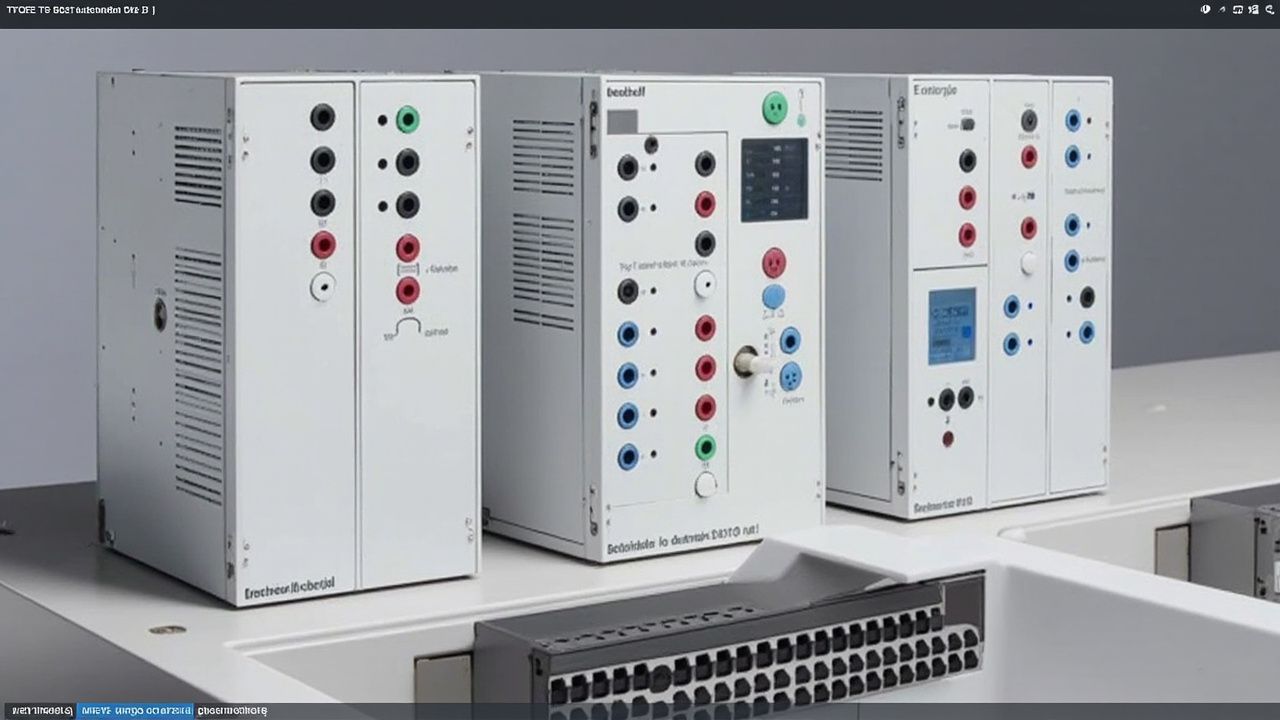
Beckhoff's TwinCAT platform has demonstrated over 30 years that software-defined control on industrial PCs can scale from basic PLC functions to 1,000+ axis systems while maintaining deterministic real-time performance. For machine builders, the economics are compelling: cost per axis has declined steadily while functionality expanded to include machine vision, robotics, and AI integration.
The Problem: Proprietary Hardware Was Crippling Flexibility
In the mid-1990s, industrial automation meant proprietary PLCs with closed architectures. Each manufacturer pushed their own hardware ecosystem. If you wanted better motion control, you bought another box. If you needed machine vision, that was a separate system with its own vendor, its own programming environment, its own maintenance burden. The industry accepted this fragmentation as inevitable.
Beckhoff saw it differently. The company believed that separating control software from dedicated hardware was not just possible but necessary. Their engineers started building toward a unified software platform running on standard industrial PCs.
The Solution: TwinCAT Unifies Control on x86 Hardware
TwinCAT launched in 1996, initially for DOS before migrating to Windows NT. The core idea was straightforward: run real-time automation software on industrial PCs, connect everything through EtherCAT fieldbus, and give engineers a single environment for PLC, motion, and eventually much more.
The platform adhered to IEC 61131-3 standards for PLC programming, which meant engineers could work with familiar ladder logic, function blocks, and structured text. But TwinCAT went further. It also supported C, C++, MATLAB, and Simulink integration, bridging the gap between automation engineers and those from computational backgrounds.
I find it telling that Beckhoff chose openness over lock-in from day one. The architecture supported cycle times down to 100 microseconds using standard PC hardware that had far more memory than any dedicated PLC available at the time.
Over three decades, the platform expanded from basic PLC and I/O handling into a comprehensive suite. Motion control capabilities grew from supporting a handful of axes to managing over 1,000 axes on a single system. Electronic gearing, cam plates, and 5-axis CNC arrived. TwinCAT Vision brought machine vision into the same runtime environment. A system-integrated robot controller followed. More recently, TwinCAT Machine Learning Creator lets engineers deploy AI models for anomaly detection and process analysis without leaving the familiar development environment.
The Results: A Platform That Aged Well and Keeps Scaling
The numbers tell a clear story. TwinCAT now encompasses over 100 functions for measurement, control, and communication. Axis counts grew in stages: 10, then 50, then 100, now exceeding 1,000 while cost per axis declined. That trajectory matters for machine builders designing multi-axis packaging lines, printing systems, or assembly equipment.
EtherCAT integration provides synchronized timing across the entire control hierarchy. Process control and regulation happen deterministically on industrial PC hardware, reducing cabinet space and installation complexity compared to distributed dedicated controllers.
Operating system support expanded beyond Windows. TwinCAT/BSD and Linux support give shops flexibility in their runtime environments. Cloud connectivity through Microsoft Azure certification enables direct data exchange without custom middleware.
The platform positions itself for IT/OT convergence, which remains a messy reality in most facilities. Engineers wrestling with MES integration, edge computing, and cybersecurity requirements will find TwinCAT addresses these concerns, though the implementation details require careful planning.
What This Means for Your Next Machine Design
TwinCAT's 30-year run demonstrates that software-defined control on standard hardware is not a gimmick. It works at scales from compact I/O to 1,000+ axis systems. The learning curve exists, particularly for those coming from traditional PLC backgrounds, but the architecture's consistency across applications reduces long-term complexity.
If you are evaluating control platforms for new equipment, the cost-per-axis economics and single-environment approach deserve serious consideration. TwinCAT is not the only player in PC-based control, but its maturity and installed base make it a benchmark worth measuring against.
Simon McLoughlin
Is this your company?
This article features your business. Claim it to add your logo, contact details, and a link to your website — or upgrade to reach more buyers.
Did you know 80% of Press Releases trigger AI content warnings? Reach out and the M4S team can assist.