
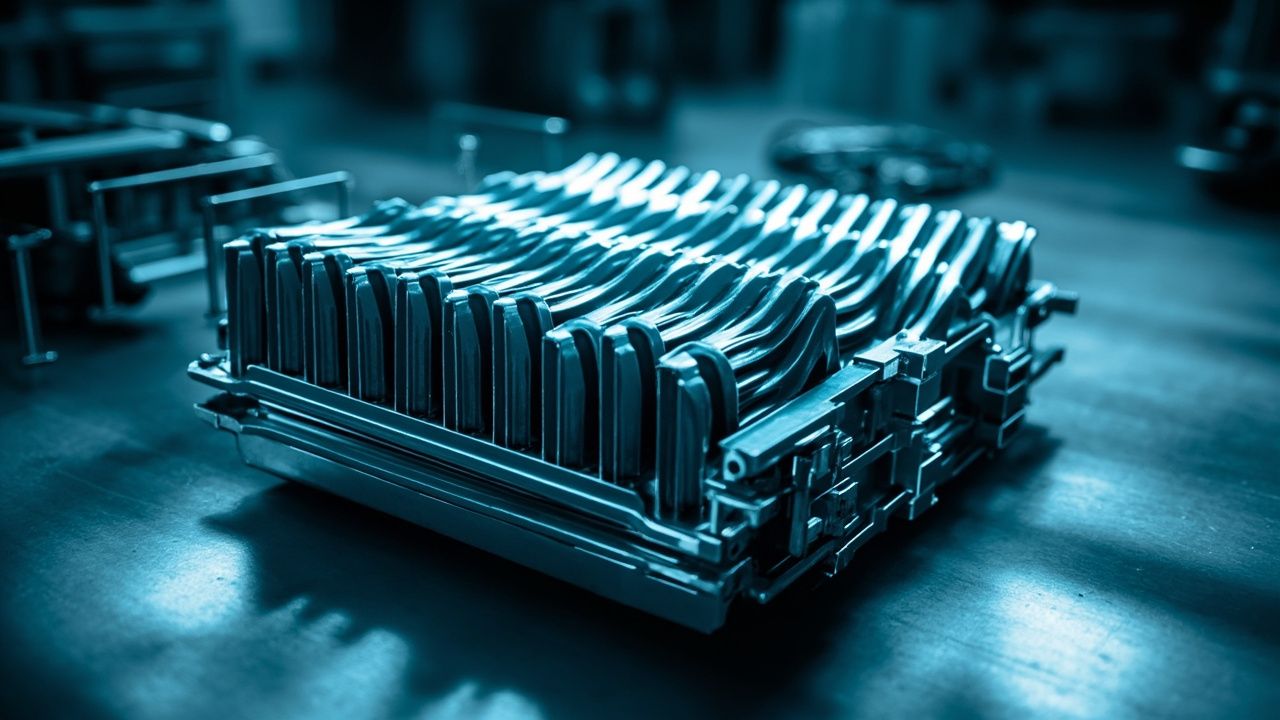
BYD's second-generation Blade Battery pack reveals an engineering philosophy centered on manufacturing cost reduction through functional integration and refrigerant cooling
- The approach works, but creates serviceability and thermal performance constraints that matter for different vehicle applications
Battery analyst Cai Shendao tore down a BYD EV pack using the company's second-generation blade cells. The disassembly, part of a series spanning more than 20 packs, surfaced engineering decisions that deserve scrutiny.
The Problem: Cooling and Control Complexity
Traditional battery pack design spreads functions across separate components. Liquid cooling requires circulation pumps, adding weight, cost, and failure points. The battery management system and dynamic braking unit typically occupy distinct housings, multiplying connectors and wiring harnesses.
The Solution: Integrated Controls and Refrigerant Cooling
Shendao identified two significant departures from conventional architecture.
DBU-BMS integration: BYD combined the dynamic braking unit and battery management system into a single module. "I visited BYD's booth at an exhibition and saw their integrated DBU and BMS design," Shendao said. "Among all the vehicle models we've seen, this is the best design in this aspect."
Refrigerant-based cooling: The pack uses a cooling plate that operates like a room air conditioner, cycling refrigerant through gasification and liquefaction phases. The direct cooling approach eliminates the circulation pump required in liquid cooling systems, removing one heat transfer interface.
"Direct cooling uses an air conditioning compressor, so it eliminates this pump, reducing costs and increasing efficiency by eliminating one heat transfer step."
The tradeoff is real. Shendao notes refrigerant carries disadvantages: lower specific heat capacity and density compared to liquids means greater temperature rise per cycle. "After removing heat, its temperature rise will be significant because of its low density."
BYD addresses this through a back-and-forth flow channel design that prevents heat accumulation in specific pack regions.
Pack structure: The battery is divided into three sections by transverse beams. Forward sections contain two modules with 29 cells each. The aft section holds modules with 27 cells each. Total cell count: 170 per pack.
Epoxy potting: The modules are encased in adhesive so dense Shendao's team struggled to penetrate it. "We chiseled very deep, and there was still adhesive inside, very deep and very solid." The potting covers terminals, connection plates, temperature sensors, copper busbars, and fuse wires completely.
The Results: Cost Reduction with Tradeoffs
The refrigerant system achieves lower manufacturing cost despite higher design complexity. The integrated DBU-BMS eliminates separate enclosures, connectors, and wiring. The tradeoffs include serviceability, with the epoxy potting making field repair essentially impossible, and thermal management limits in high-performance scenarios where sustained high discharge rates could trigger uneven heating.
The design prioritizes volume production economics and structural protection over serviceability. That's a defensible choice for certain vehicle segments, but engineers evaluating this architecture for high-performance applications should note the thermal constraints Shendao identifies.
Simon McLoughlin
Is this your company?
This article features your business. Claim it to add your logo, contact details, and a link to your website — or upgrade to reach more buyers.
Did you know 80% of Press Releases trigger AI content warnings? Reach out and the M4S team can assist.