
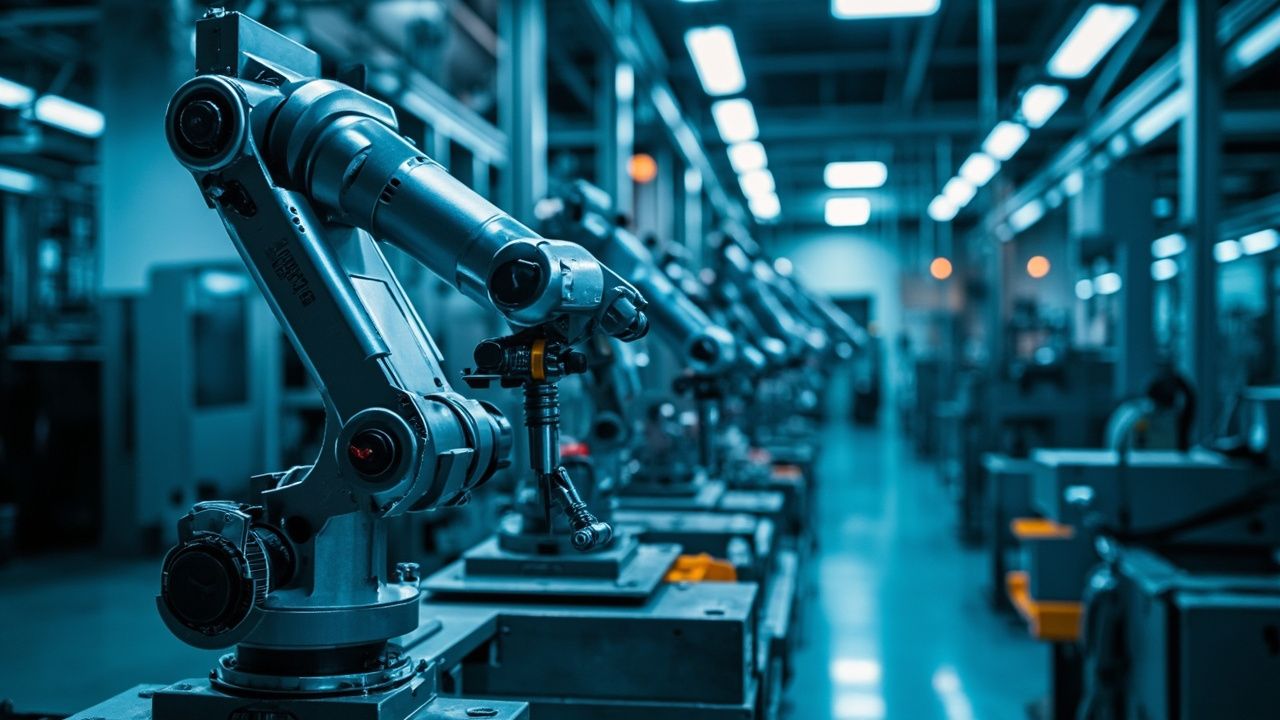
Cobot adoption has crossed from early adopter territory into mainstream manufacturing, driven by structural labor shortages rather than technology novelty
- For metal fabricators and similar shops, this represents a practical staffing solution, not a futuristic concept
The Labor Math Nobody Wanted to Do
Let me be direct: if you haven't run the numbers on collaborative robots lately, you're already behind. The Association for Advancing Automation's latest data shows cobots capturing 18% of total North American robot unit sales. That's not a trend line; that's a market share shift with real consequences for how shops compete for talent.
The driving force isn't technology push. It's labor pull. Roughly 90% of all cobot orders now originate from non-automotive sectors: food and consumer goods, semiconductors and electronics, life sciences. Metal fabrication, palletizing, and data center construction round out the adoption curve. These aren't early adopters chasing novelty. They're shops that ran the math on unfilled positions and decided the cobot ROI calculation finally worked.
Hirebotics Built for the Operator, Not the Engineer
Nashville-based Hirebotics entered the market in 2015 with a deceptively simple question: what if robots could be hired like people? Co-founders Rob Goldiez and current CEO Matt Bush weren't theorizing. They'd been running manufacturing operations since the mid-1990s and faced the same staffing gaps hitting their customers.
"We think about automation from the operator's point of view, not just from an engineering perspective," Bush told me. "How's it going to solve the operator's challenges?"
That positioning shaped everything. While early cobot adopters needed engineering resources to program and integrate, Hirebotics built systems fabricators could actually use without writing code. Their first systems targeted machine tending and assembly, but the welding application became the proving ground.
In partnership with Red-D-Arc, the company launched BotX, the first rental welding cobot. The initial technology worked, but Bush admits it wasn't as user-friendly as the team wanted. So they built Beacon, a mobile app that put programming directly in welders' hands. The Cobot Welder powered by Beacon launched in 2021 and now forms the core of their turnkey offering.
From Bare Arms to Ready-to-Run Systems
The broader cobot market has undergone the same accessibility transformation. Bush recalls seeing the first cobots at a 2014 tradeshow: "They were just bare arms. You had to figure out how to use them and what to add to make them do the job at hand."
Today, Universal Robots and similar manufacturers display turnkey, ready-to-run solutions configured for specific workflows. This shift from hardware to integrated products didn't happen by accident. It happened because companies like Hirebotics proved that standardized, productized cobot applications could penetrate markets that traditional industrial robotics never reached.
Payload capacities have climbed. Safety sensors have become more sophisticated. Programming interfaces have simplified. The ecosystem of compatible end-effectors, fixturing, and software has matured. All of these improvements have narrowed the gap between "technically possible" and "economically justified" for mid-size fabricators.
Cobots now handle machine tending, pick-and-place, palletizing, and welding applications across industries that five years ago wouldn't have considered robotics. The question isn't whether to evaluate cobots anymore. It's whether you can afford not to.
Simon McLoughlin
Is this your company?
This article features your business. Claim it to add your logo, contact details, and a link to your website — or upgrade to reach more buyers.
Did you know 80% of Press Releases trigger AI content warnings? Reach out and the M4S team can assist.