
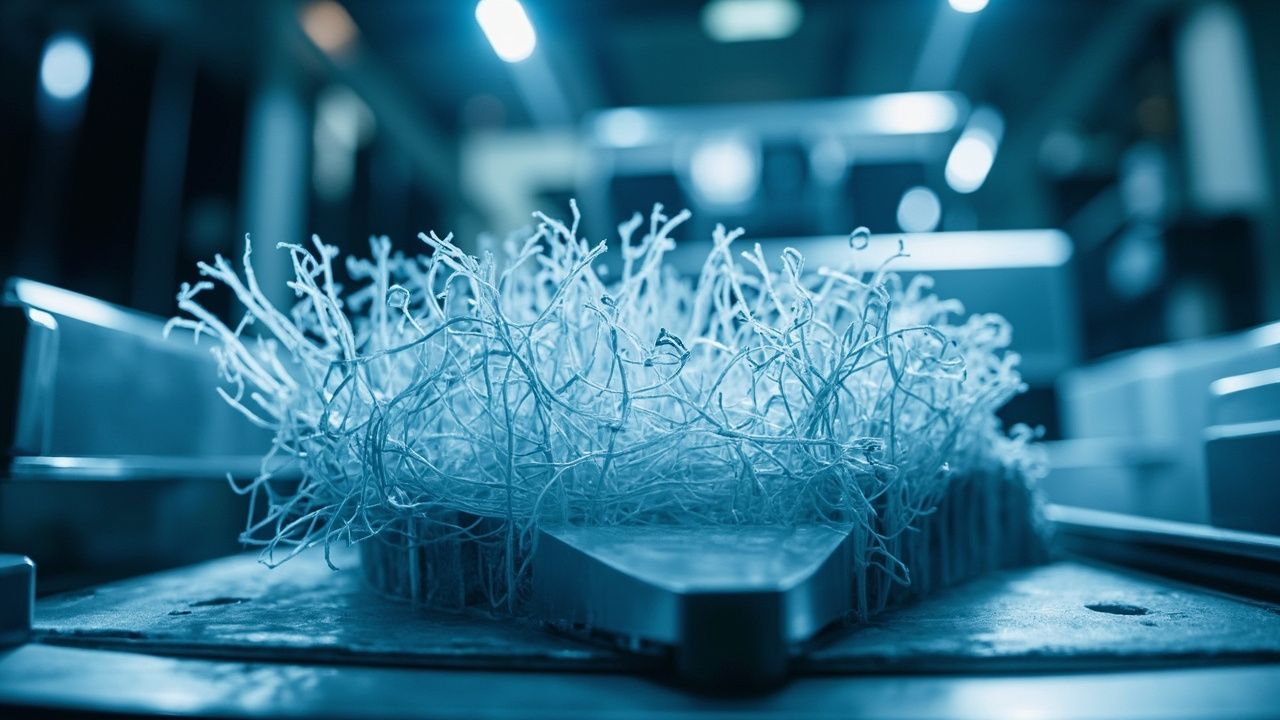
Conexeu's Nasdaq debut puts a platform-based approach to tissue regeneration under serious engineering scrutiny. The company's single-formula strategy across wound care, reconstruction, and other applications is intellectually coherent, but execution risk around manufacturing consistency and regulatory approval timelines remains substantial.
- Nasdaq debut raises approximately $X million (dollar amount not specified in filing materials)
- Ten Minute Tissue transitions from fluid to gel in ~10 minutes at body temperature
- Platform backed by issued patents in U.S., E.U.
The Reconstruction Problem
More than 100,000 women undergo mastectomies annually in the U.S., yet many opt out of reconstruction entirely. The two dominant approaches carry well-documented tradeoffs: permanent implants carry capsular contracture risk and typically require revision surgery within 10-15 years, while autologous flap procedures demand extensive donor tissue harvesting and lengthy recovery. Neither option supports native tissue regeneration.
Conexeu Sciences believes its CXU platform changes that equation.
The Solution: A Platform, Not a Product
Conexeu debuted on Nasdaq this week, positioning itself as a preclinical-stage regenerative tissue company built around a single structural thesis: one formula, one device, designed to scale across multiple tissue types without reformulation.
The CXU platform centers on a patented bioregenerative extracellular matrix. The lead product, Ten Minute Tissue, is an injectable formulation that remains fluid at room temperature and transitions to a stable gel at body temperature in approximately ten minutes. In preclinical studies, the material demonstrated organized scaffold formation, enhanced healing dynamics, and low inflammatory profile, supporting cell migration, proliferation, and differentiation.
For breast reconstruction specifically, the company is developing B.R.E.A.S.T. (Bio-Regenerative Ergonomically Architectured Smart Tissue), a 3D bioprinted scaffold designed to resorb gradually as patient tissue remodels and replaces it. Conexeu frames this as a potential shift away from permanent implants toward a process that allows the body to restore itself.
"Regenerative medicine requires more than incremental improvement; it requires a fundamentally different foundation," said Miles D. Harrison, President and CEO. "We are building the biological architecture for a new generation of regenerative medicine."
The Regulatory and Commercial Picture
The platform draws on more than a decade of university preclinical research and carries issued patents in the U.S., European Union, Japan, and Australia, with additional filings pending. Conexeu holds all rights, title, and interest with no royalty or licensing obligations, giving it flexibility to expand into new indications and markets.
Target applications span wound care, periodontal procedures, facial and body contouring, GLP-1-related skin laxity, 3D printing and biofabrication workflows, and veterinary medicine. A predicate-based U.S. regulatory strategy is underway, with a 510(k) submission targeted for early 2027 for the initial indication.
The competitive landscape includes GenesisTissue, which recently secured investment from Tiger Aesthetics Medical to develop personalized 3D bioprinting technology for lumpectomy, mastectomy, and cosmetic reconstruction. The broader 3D-printed scaffold space remains early but is attracting strategic capital as developers target alternatives to permanent implants.
What This Means for Engineers
Conexeu's approach warrants attention for its platform economics rather than any single product. The concept of a single formulation family addressing multiple tissue regeneration applications is mechanically sound, but the engineering challenge lies in process repeatability at scale and navigating FDA's substantial equivalence requirements.
Investors and engineers watching this space should track 510(k) submission timing and predicate device selection closely. The company's "one formula, one device" strategy only delivers on its scalability promise if the underlying chemistry behaves consistently across manufacturing batches and regulatory submissions.
Simon McLoughlin
Is this your company?
This article features your business. Claim it to add your logo, contact details, and a link to your website — or upgrade to reach more buyers.
Did you know 80% of Press Releases trigger AI content warnings? Reach out and the M4S team can assist.