
Problem The Problem: An Industry Built for Pairs in a World of Individual Feet The footwear industry has operated on one assumption for over two centuries: humans come in pairs.
- Nobody wins, except perhaps the manufacturer who already got paid for the pair.
- No retail middleman, no split inventory, no wasted product.
- The process is straightforward.
The footwear industry has operated on one assumption for over two centuries: humans come in pairs. Two feet, two shoes, one transaction. For most people, this works fine. For amputees, prosthetic users, and anyone with a significant size difference between feet, it means paying full price for half a product or relying on retailers to split pairs and eat the cost of the discarded shoe.
Some retailers now offer in-store single-shoe purchases, but the economics are broken. They split existing inventory, absorb losses on the unsold half, and the customer still gets a standard-size shoe that may or may not fit properly. Nobody wins, except perhaps the manufacturer who already got paid for the pair. The Solution: Scan, Print, Ship One Shoe at Half Price
FITASY Inc, a custom 3D-printed footwear company, has started selling individual shoes directly through its website at exactly half the price of a pair. No retail middleman, no split inventory, no wasted product.
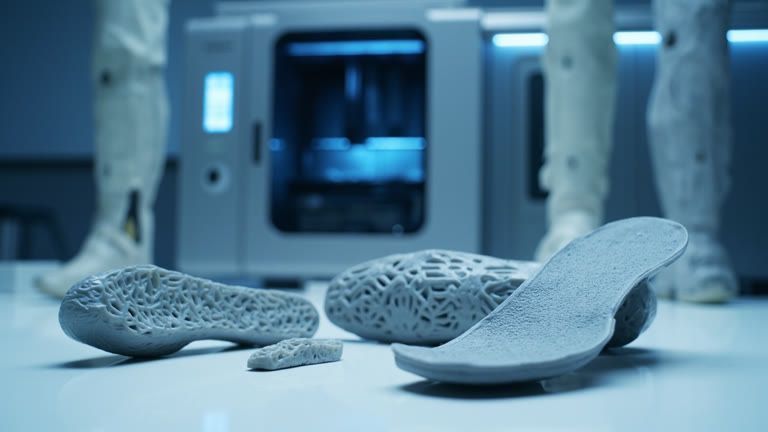
The process is straightforward. The customer uses the Fitasy app to scan their foot with a smartphone. The app builds a 360-degree biometric profile. FITASY then prints the shoe to match the exact morphology of that foot using additive manufacturing. No specialised tooling, no moulds, no inventory sitting in a warehouse waiting to be sold.
This works because FITASY's production model was never built around pairs in the first place. Each shoe is printed on demand, so printing one costs roughly half what printing two costs. The economics actually make sense here, unlike traditional manufacturing where the second half of a split pair becomes landfill. The Technology Stack: Spatial AI, Imaging, and Additive Manufacturing
FITASY describes its system as combining spatial AI, advanced imaging, and additive manufacturing. The spatial AI handles the foot-scanning and biometric modelling. The imaging captures the 360-degree profile. The additive manufacturing prints the final product to spec.
I am generally sceptical when companies throw "AI" into their press releases, but in this case the term is doing actual work. The scanning and modelling step requires computer vision and geometric processing to turn a phone camera feed into a manufacturable 3D model. That is a legitimate technical challenge, not marketing fluff.
The real advantage, though, is the business model. By bypassing traditional production lines entirely, FITASY avoids the inventory risk and tooling costs that make single-shoe sales unviable for conventional manufacturers. A 3D printer does not care whether it prints a left shoe, a right shoe, or a pair. The marginal cost of producing one shoe is roughly half the marginal cost of producing two. This is not true for injection-moulded or stitched footwear. The Advocacy Behind It
The single-shoe option was inspired by Stef Reid, MBE, a Paralympian and World Champion track-and-field athlete who has spent years campaigning for the footwear industry to recognise that not everyone needs two shoes. Reid is now publicly supporting FITASY's initiative.
> "Innovations, like Fitasy's 3D printing and foot-scanning technology, show what's really possible when footwear is designed around real people with real needs, not just the average customer."
Reid's involvement matters because it grounds the technology in an actual user need rather than a corporate diversity initiative. She has lived the problem. That credibility is harder to fake than a press release. What the CEO Claims, and What We Should Verify
Yujun Wang, FITASY's CEO and co-founder, made the predictable grand claims about obsoleting standard sizes and scaling personalised production. He called the single-shoe option "a proof of concept for a scalable technology that accounts for the true diversity of human feet."
> "We believe the future of footwear is personalised and therefore inherently inclusive. With emerging technologies like ours, it is finally possible to do this at scale."
The "at scale" part is the claim worth scrutinising. 3D printing footwear is not new. Companies like Adidas have experimented with it for years. The challenge has always been speed and cost. Printing one shoe takes time. Printing ten thousand takes a lot of printers and a lot of time. FITASY has not released production capacity figures, print times, or material costs, so we cannot yet verify whether this model scales beyond a niche market.
What we can say is that the unit economics for single shoes appear sound in a way they never were for traditional manufacturing. Whether that translates to mass-market viability depends on print speed, material durability, and whether customers accept 3D-printed shoes as a replacement for conventional footwear. The Bottom Line
FITASY's single-shoe offering is not a charity programme or a diversity marketing play. It is a logical extension of a production technology that does not require pairs, inventory, or standard sizes. The price is fair, the process is technically coherent, and the problem it solves is real.
Whether it scales remains to be seen. But as a proof of concept for on-demand, biometrically-customised manufacturing, it is one of the more credible implementations in an industry full of 3D-printing hype.
Simon McLoughlin
Is this your company?
This article features your business. Claim it to add your logo, contact details, and a link to your website — or upgrade to reach more buyers.
Did you know 80% of Press Releases trigger AI content warnings? Reach out and the M4S team can assist.