
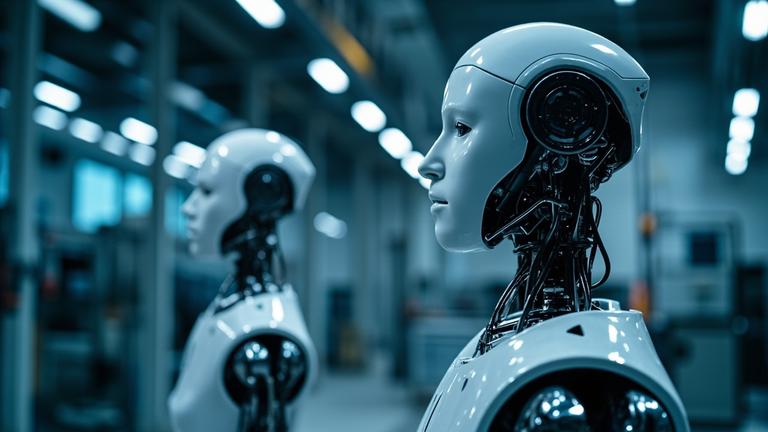
Humanoid robot safety is a latency problem, not a processing problem.
- Real-time sensor fusion — not raw compute power — determines whether a robot can react fast enough to avoid harming humans
- Current systems have 100-200ms reaction gaps; safe human interaction needs <50ms
- The bottleneck is in sensor integration and control loop architecture, not GPU throughput
Processing Power Alone The Problem: Humans Are Unpredictable
A humanoid robot operating near people faces a brutal reality. Humans shift weight, change direction, and react to stimuli without warning. The robot must process visual, auditory, and spatial data simultaneously, then decide and act within milliseconds. Miss that window, and someone gets hurt.
Geir Ostrem, Analog Devices Fellow with the Automotive Business Unit at ADI, puts it plainly: "Humans are somewhat unpredictable. Any robot working with or around humans also needs to be able to deal with our natural unpredictability."
The challenge is not raw computing power. It is getting sensor data to the processor fast enough, and getting decisions back to actuators even faster. Latency kills safety. Vision: Seeing Is Not Enough
Standard RGB image sensors approximate human vision. Depth perception comes from time-of-flight, structured light, or stereo vision. But cameras in the head or torso sit far from the central processor. Running video data across long cables introduces delay.
ADI's Gigabit Multimedia Serial Link (GMSL), already proven in automotive applications, moves video in real time at multi-gigabit speeds. For fast control loops, like motor responses, smaller processors sit near sensors and handle local processing. Physical AI processes visual data locally rather than shipping it to the cloud. This matters. Cloud round-trips add tens of milliseconds. In a shared workspace, that is unacceptable. Audio: Hearing What Matters
Conversational interfaces get the headlines, but acoustic event detection is where safety lives. A crash behind the robot, a shouted warning, a machine alarm, these require immediate response.
> "When it comes to sound events, localization and detection, having deterministic latency from the microphone to the computer is very critical," says Ostrem.
Multiple microphones feed the central processor. Without deterministic latency, the robot cannot locate sound sources accurately or respond in time. The Integration Challenge
A humanoid robot is not a collection of sensors. It is a system where vision, audio, balance, and motor control must work together. Data must flow between subsystems without bottlenecks. The architecture must support redundancy, because a single point of failure in a human-robot workspace is a liability.
GMSL handles video. Deterministic audio pipelines handle sound. Local processing reduces latency for critical loops. The central processor coordinates. This is the architecture that makes safe co-existence possible. What This Means for Engineers
Designing humanoid robots for human environments is fundamentally a systems integration problem. Individual sensor performance matters less than how data moves through the system. Latency budgets must be enforced end-to-end. Local processing is not optional for safety-critical loops.
The technology exists. The question is whether system architects will prioritize deterministic data flow over headline-grabbing compute specs.
Simon McLoughlin
Is this your company?
This article features your business. Claim it to add your logo, contact details, and a link to your website — or upgrade to reach more buyers.
Did you know 80% of Press Releases trigger AI content warnings? Reach out and the M4S team can assist.