
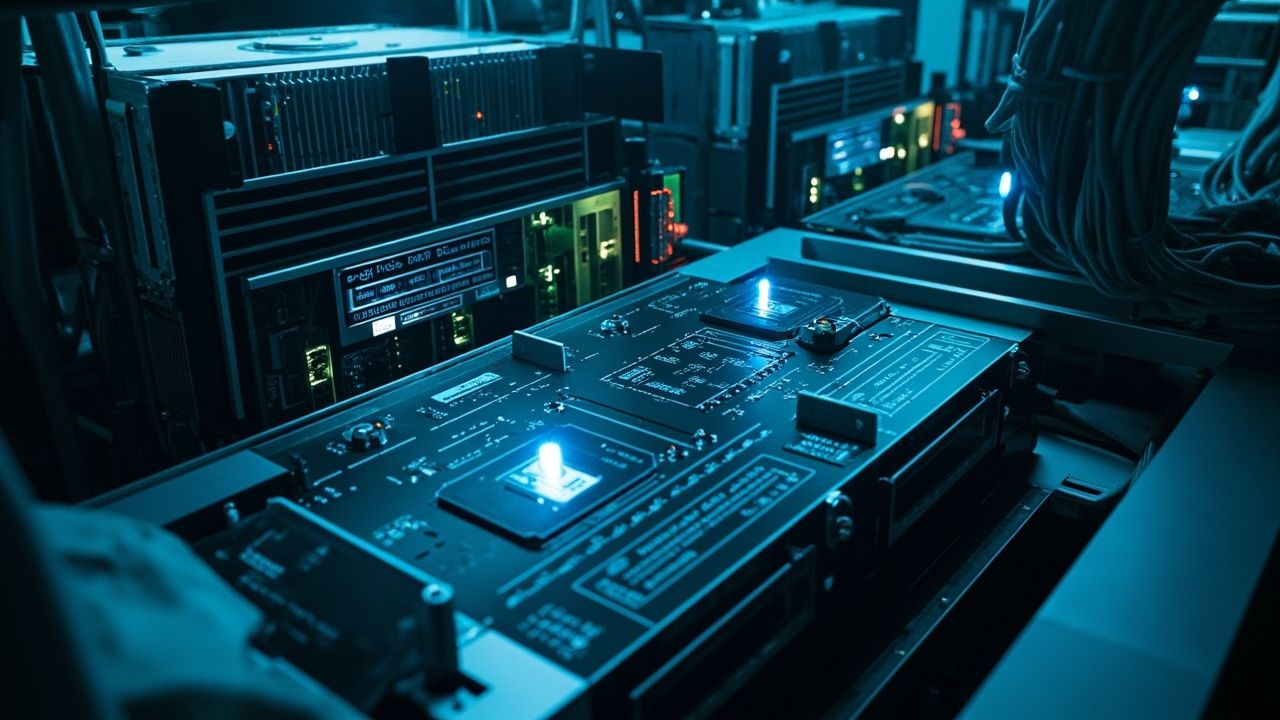
Infineon's MGX ecosystem entry validates 800 VDC power architecture as the practical upgrade path for high-density AI data centers, moving beyond legacy 48 V limitations with a multi-semiconductor approach that addresses both efficiency and reliability
The Bottleneck: Legacy Power Delivery Can't Keep Up With AI Rack Density
AI infrastructure is running into a fundamental power problem. Modern GPU clusters demand 100+ kW per rack, but existing 48 V power distribution architectures weren't designed for this. Shrinking conductor sizes to push more current creates thermal and inductance issues. Meanwhile, data center operators need upgrade paths that don't require scrapping their entire infrastructure.
The core tension: compute density keeps climbing while power delivery technology lags behind.
Infineon's Entry: Full 800 VDC Power Stack for MGX Architecture
Infineon joined NVIDIA's MGX AI Factory ecosystem with a comprehensive power conversion strategy. The company leverages all three major semiconductor platforms—silicon, silicon carbide, and gallium nitride—to cover the full power conversion chain from grid input down to core voltage.
Their GaN technology hits switching frequencies approaching 1 MHz, which enables bus converters that are smaller and more efficient than anything possible with silicon alone. On the SiC side, Infineon's proprietary JFET technology paired with dedicated control ICs handles protection and hot-swap functionality for native 800 V server boards. This is a critical reliability requirement that many approaches gloss over.
The power conversion architecture handles three output rails: 800 V down to 50 V, 12 V, or 6 V depending on load requirements.
What MGX Compatibility Actually Delivers
Within the MGX ecosystem, Infineon supports the complete 800 VDC power conversion flow to intermediate bus voltage and core voltage. The architecture reduces conversion stages compared to legacy approaches, meaning DC power arrives closer to the rack with fewer losses along the way.
"Using 800 VDC on the rack side while converting down to standard voltage rails inside the rack gives us the best of both worlds—high conductor efficiency in the distribution path, familiar voltage levels for components," an Infineon spokesperson noted.
This approach creates a legitimate upgrade path for existing data center infrastructure rather than forcing operators to replace everything at once.
The Reality Check
I should be clear: 800 VDC isn't a magic bullet. The infrastructure supporting these racks still needs work, and not every data center can absorb the changes required. But Infineon's multi-technology approach addresses the real physics constraints that have limited previous architectures. The GaN switching speeds combined with SiC robustness gives engineers options that didn't exist a few years ago.
The technical case is solid. Whether the market moves fast enough to make this the default for next-generation AI facilities remains to be seen, but the engineering fundamentals are in place.
Simon McLoughlin
Is this your company?
This article features your business. Claim it to add your logo, contact details, and a link to your website — or upgrade to reach more buyers.
Did you know 80% of Press Releases trigger AI content warnings? Reach out and the M4S team can assist.