
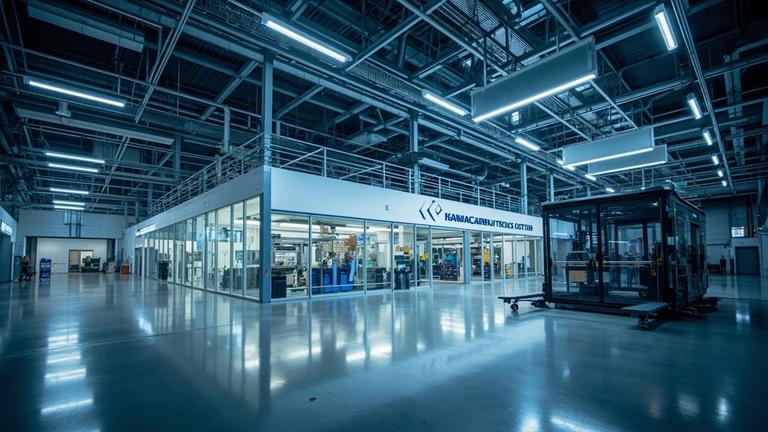
Kawasaki is betting that industrial manufacturing data, when properly structured, can train AI models that actually work on the factory floor. • The Silicon Valley center bridges Japanese manufacturing expertise with US AI talent
- Physical AI requires real sensor data from real machines — not synthetic datasets
- If successful, this becomes a template for other Japanese industrials facing AI disruption
Manufacturing Data with AI Development
Kawasaki Heavy Industries has opened a dedicated Physical AI development hub in San Jose, positioning itself at the intersection of industrial manufacturing data and next-generation AI systems. The Kawasaki Physical AI Center San Jose opened on May 21, with the company framing it as a direct response to a problem most industrial conglomerates face: decades of operational data locked in silos, while AI development increasingly depends on access to real-world physical environments. The Problem: Manufacturing Data Without AI Integration
Kawasaki operates across aerospace, shipbuilding, energy, plant engineering, and motorcycles. The company has accumulated substantial operational data and manufacturing experience across these sectors, but until now lacked a structured mechanism to apply that data to AI development. Physical AI, which Kawasaki defines as systems that perceive real-world conditions, make decisions, and execute actions through machines, requires precisely the kind of real-world data Kawasaki possesses.
The challenge is not unique to Kawasaki. Industrial manufacturers globally hold vast datasets from production lines, equipment operation, and field deployment, but the gap between this operational knowledge and AI model training remains significant. Kawasaki's move to establish a dedicated center in Silicon Valley signals recognition that proximity to AI development ecosystems matters. The Solution: Partnerships and Product Integration
The center will focus initial development on healthcare, nursing care, and mobility applications. Specific products named include the Nyokkey autonomous service robot, FORRO indoor delivery robot, the hinotori surgical robot system, and CORLEO robotic multi-legged vehicle.
Partnerships announced at launch include NVIDIA, Analog Devices, Microsoft, and Fujitsu. Kawasaki has existing robot sales and service operations for semiconductor manufacturing equipment in Silicon Valley, which provides an operational foundation for the new center. The company intends to uses these regional relationships with technology companies and academic institutions to accelerate development. What This Means for the Sector
Kawasaki's approach differs from pure technology plays by anchoring AI development in existing industrial applications. The company is not starting from zero: it has operational robots in market segments that require regulatory compliance and proven reliability, particularly in healthcare and semiconductor manufacturing.
The choice of San Jose over Tokyo for this center reflects where the AI development ecosystem currently concentrates. For manufacturing companies watching this move, the calculation is whether the cost of maintaining a Silicon Valley presence is justified by access to partnership opportunities and talent pools that accelerate Physical AI deployment.
Whether Kawasaki's accumulated operational data translates into competitive advantage in AI development will depend on execution. The partnerships announced are high-profile, but integration between industrial manufacturing processes and AI development cycles remains technically complex. The center's success will ultimately be measured by which products move from development to deployment, and how quickly.
Simon McLoughlin
Is this your company?
This article features your business. Claim it to add your logo, contact details, and a link to your website — or upgrade to reach more buyers.
Did you know 80% of Press Releases trigger AI content warnings? Reach out and the M4S team can assist.