
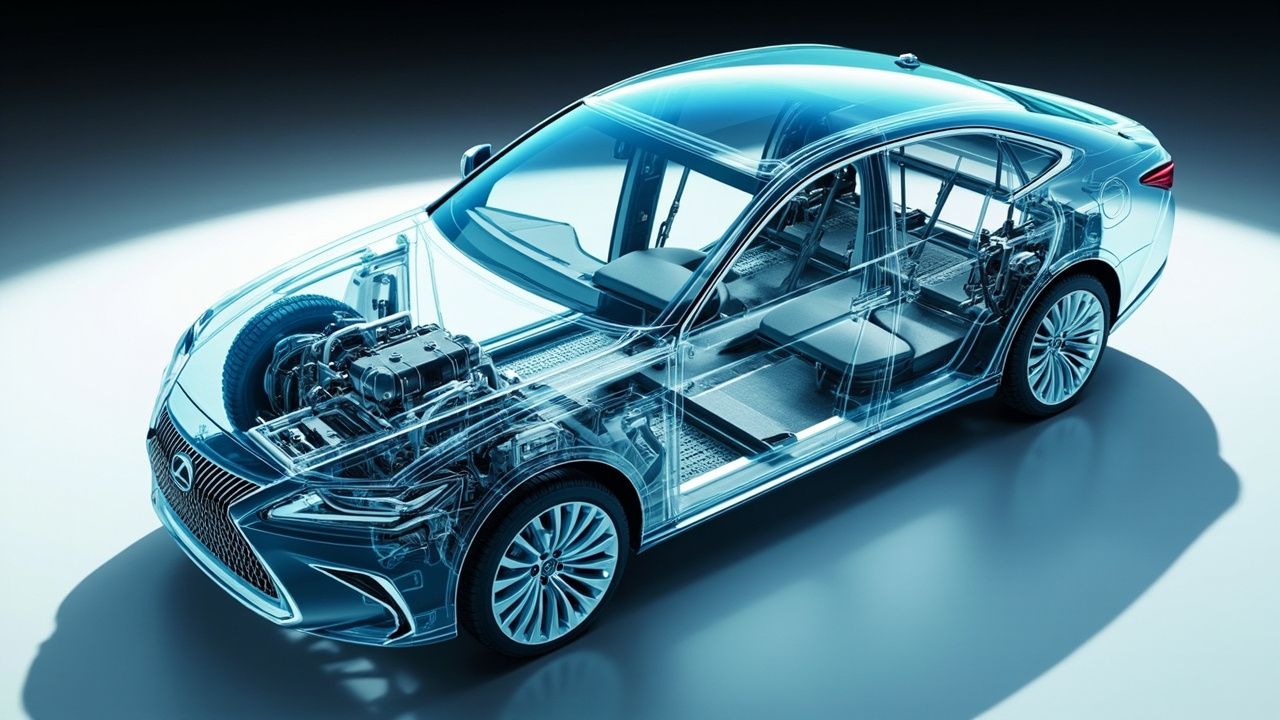
The 2027 Lexus ES proves platform consolidation across hybrid and BEV powertrains is technically viable, but the interior material strategy and high-floor packaging represent engineering missteps that could alienate traditional luxury buyers.
- Single 74.7 kWh battery pack used across ES 350e (307 mi range, 221 hp) and ES 500e (276 mi range, 338 hp AWD)
- NACS charging integration enables 150 kW DC fast charging; 10-80% charge in ~28 minutes
- Hybrid ES 350h achieves 46 mpg combined (FWD) and 44 mpg combined (AWD); 4.
The Engineering Problem
Toyota's Lexus division faced a platform engineering challenge: consolidate hybrid and battery-electric powertrains onto a single architecture while maintaining the brand's traditional luxury positioning. The solution required more than just drivetrain integration. Engineers had to rethink the entire material strategy and address how different powertrains fundamentally alter vehicle packaging.
The Engineering Solution
The 2027 ES platform uses a common 74.7-kilowatt-hour battery pack across both EV variants. This is a deliberate consolidation move that simplifies supply chain complexity and manufacturing tooling. The ES 350e delivers 221 hp through a single front-mounted motor, while the ES 500e adds a second motor for all-wheel drive, pushing total output to 338 hp.
Both EVs share the same thermal architecture, supporting DC fast charging at up to 150 kW. Lexus claims a 10% to 80% charge takes approximately 28 minutes under ideal conditions. The NACS port integration means these vehicles access Tesla's Supercharger network without adapters, a practical consideration for fleet operators planning charging infrastructure.
The hybrid variant uses Toyota's sixth-generation hybrid system. A 2.5-liter four-cylinder pairs with an integrated motor-generator in a CVT. Combined output reaches 244 hp in front-drive form. The AWD version adds a 54-hp rear motor, but the performance difference is negligible: 7.3 seconds versus 7.1 seconds to 60 mph.
The Results
On the efficiency front, the numbers hold up reasonably well. The hybrid ES 350h achieves EPA combined ratings of 46 mpg (FWD) and 44 mpg (AWD). During a media drive program in La Jolla, California, the AWD hybrid returned 43.8 mpg in urban driving. The ES 500e demonstrated 4.2 miles per kilowatt-hour during the same route, which extrapolates to approximately 313 miles of range under low-to-medium-speed conditions.
But here's where I have concerns. The transition between electric and combustion operation in the hybrid feels unrefined. When the four-cylinder engine fires up after extended electric-only driving, the powertrain calibration doesn't mask the mechanical reality: a four-cylinder internal combustion engine simply cannot match the smoothness of an electric motor. This isn't a new problem for Toyota's hybrid systems, but it's more noticeable when drivers have experienced near-silent EV operation.
The interior material decisions are where I think Lexus made a significant strategic error. The move to synthetic surfaces and away from wood and leather trim aligns with Tesla's aesthetic, but it fundamentally misreads the luxury buyer. The instrument cluster replacement with a propped tablet-style display looks cost-reduced rather than intentionally designed. Yes, the anti-reflective coating works, but visual sophistication matters in this segment.
The high floor and raised seating position that engineers introduced to mimic SUV ergonomics result in a cramped cabin feel. This is a packaging consequence of battery placement that should have been addressed earlier in the development cycle.
Engineering Takeaway
The ES platform demonstrates that platform consolidation across powertrains is technically achievable, but the trade-offs in interior packaging and material perception require careful management. Lexus prioritized manufacturing efficiency over customer experience in the cabin, and that calculation may not pay off in the luxury segment.
Simon McLoughlin
Is this your company?
This article features your business. Claim it to add your logo, contact details, and a link to your website — or upgrade to reach more buyers.
Did you know 80% of Press Releases trigger AI content warnings? Reach out and the M4S team can assist.