
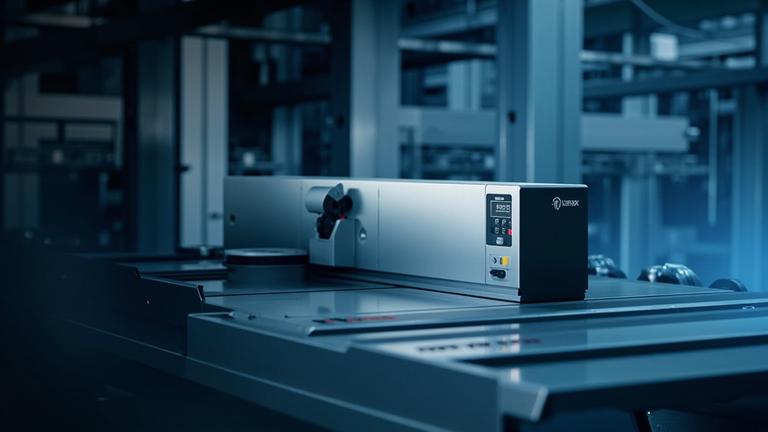
The MX300 enters a underserved price segment between proto-focused systems and high-end production platforms
- At $185K with dual 500W lasers and a 300 x 300 x 350 mm build envelope, it addresses the cost barrier that has kept many machine shops from metal AM adoption
Mastrex officially launched its MX300 metal additive manufacturing system this week, and the numbers suggest the company is making a direct play for shops that have been priced out of production-grade metal 3D printing.
The Problem: Proto-Ready Systems Can't Handle Real Production
Metal AM adoption has long been bifurcated. Engineers could get either a low-volume prototyping machine with tight tolerances or a high-end production system that costs well over $500,000. Mid-tier manufacturers and machine shops wanting to move metal parts into low-volume production found themselves stuck in the middle. Mastrex's positioning for the MX300 is explicitly about filling that gap.
The Solution: MX300 Specs and Strategy
The MX300 specs out at a 300 x 300 x 350 mm build volume, powered by dual 500W lasers. Mastrex priced the system at $185,000, which undercuts comparable production-oriented systems by a significant margin. The company is targeting vertically integrated manufacturers, machine shops, and specifically the aerospace, defense, and medical sectors.
Material compatibility includes titanium, stainless steel, aluminum, cobalt-chrome, and Inconel. Mastrex emphasized that the machine was developed with operational efficiency in mind, though the specifics of their efficiency claims should be scrutinized during any evaluation.
"Adding metal 3D printing to our machine shop has always been a priority, but it's been cost-prohibitive," said Solomon MFG CEO Eli Solomon. "With the accessibility of the MX300, we are immediately adding capability for our current customers and uncovering new opportunities."
Solomon MFG is one of the first adopters, which gives the launch some real-world validation beyond marketing language.
Mastrex also noted that all MX300 systems are designed, assembled, and tested in the United States, a detail that matters to defense contractors and shops with domestic sourcing requirements.
What This Means for Buyers
At $185,000, the MX300 sits in a category that has historically been sparse. The dual-laser configuration is the notable spec here. Having two 500W sources theoretically improves build speed and surface quality compared to single-laser setups, but without independent benchmarks, I'm cautious about taking that at face value.
The real test will be uptime data and post-sale support responsiveness. Mastrex is a newer player, and their track record for supporting deployed systems is still being established. Anyone evaluating this system should ask hard questions about service level agreements, lead times for replacement components, and whether the $185K price includes any on-site training or application engineering support.
The Take
The MX300 looks like a legitimate option for shops that need more than a research-grade system but can't justify the cost of enterprise-class metal AM. The specs are competitive on paper. Whether Mastrex can deliver consistent performance in the field remains the open question.
Simon McLoughlin
Is this your company?
This article features your business. Claim it to add your logo, contact details, and a link to your website — or upgrade to reach more buyers.
Did you know 80% of Press Releases trigger AI content warnings? Reach out and the M4S team can assist.