
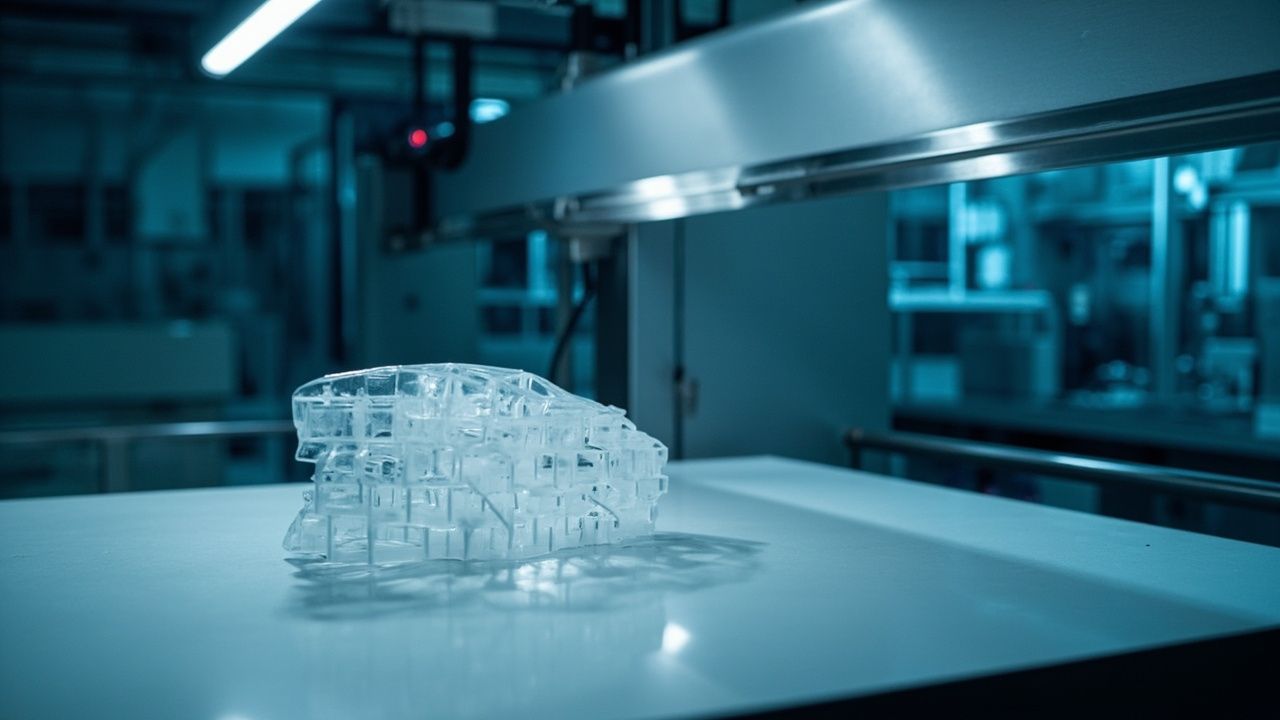
Medical 3D printing has proven its technical capability in clinical settings, but the gap between what the technology can do and what patients will actually use remains stubbornly wide
- The economic model, not the technology itself, is now the primary obstacle to broader adoption
The Problem: Capable Technology Meets Resistant Markets
3D printing has earned its place in clinical settings. Surgical guides, spinal implants, dental devices, and orthopedic casts are no longer experimental concepts. What once lived exclusively in engineering labs now appears in operating rooms and medical schools. But capability does not equal adoption, and the gap is wider than most industry discussions suggest.
Rand Kittani, resident physician in general surgery at Stanford and founder of CIM3D, has spent years building the infrastructure connecting printing technology to patient outcomes. At Carle Illinois, CIM3D served as a testing ground for projects that bridge classroom learning and clinical reality. One project produced a 3D printed surgical guide for orbital floor fractures, designed to help surgeons navigate difficult-to-visualize anatomy in settings with limited case volumes or specialized planning tools. The intended beneficiary was not the surgeon with resources. It was the patient at a rural clinic who might otherwise wait weeks for a customized solution from an outside vendor.
The technology worked. The workflow was sound. And then the real world interfered.
The Solution: Two Case Studies Expose Structural Barriers
Kittani's team ran two parallel research efforts that illustrate a recurring tension in medical 3D printing applications.
Project one: custom breast prosthetics. Using a free smartphone scanning app, MRI images, and accessible design software, the team produced anatomically matched prosthetics at a fraction of the time and cost associated with conventional suppliers. The target was not reconstructive surgery. It was the months-long window between mastectomy and reconstruction, a period when many patients have no affordable option.
Patient interviews revealed a sharp contrast in reception. Those who had not yet undergone surgery were unfamiliar with the technology and defaulted to skepticism. Those who had lived through the waiting period were far more receptive. As one patient put it, she wished during that bridging time there had been more options that were cost-friendly to help regain, momentarily, that sense of self after losing a part of her body.
Project two: orthopedic casts. The team compared cost structures between established commercial providers and what a medical school lab could produce. Despite patient acknowledgment that printed casts offered better hygiene and a more precise fit, most respondents were only willing to pay between $100 and $150. Commercial providers charge substantially more, which means the technology outperformed standard options yet remained economically unviable for many patients.
The Results: Cost, Not Capability, Decides Adoption
The data points to a structural tension running through most of 3D printing's medical applications. The technology can outperform standard options. Affordability and insurance coverage remain decisive barriers.
Kittani identifies awareness as the first barrier and affordability as the second, and argues that affordability starts earlier than most assume. From his perspective, the challenge is not about what patients will pay at point of service. It is about what the manufacturing chain will allow at point of production.
Manufacturers who want to expand medical 3D printing adoption need to address cost structures upstream, not downstream. Until that happens, capable technology will continue to sit in labs while patients go without.
Simon McLoughlin
Is this your company?
This article features your business. Claim it to add your logo, contact details, and a link to your website — or upgrade to reach more buyers.
Did you know 80% of Press Releases trigger AI content warnings? Reach out and the M4S team can assist.