
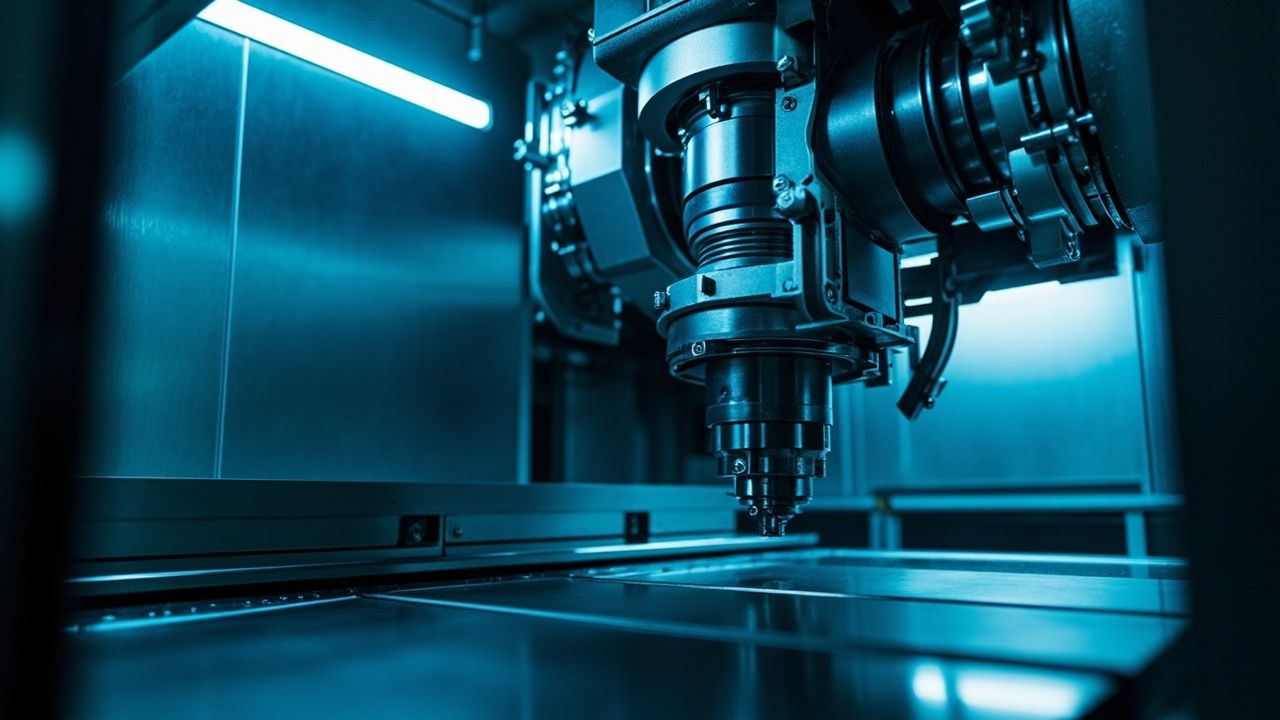
Hybrid manufacturing—combining DED additive deposition with precision 5-axis CNC in a single setup—is maturing past the novelty phase and entering production conversations, but the technology delivers most value when paired with traditional machining expertise rather than replacing it
The Problem: Skills Gap Meets Complexity Demands
Machine shops face a brutal arithmetic. The average age of skilled machinists keeps climbing while enrollment in machining programs drops. Meanwhile, customers demand tighter tolerances, faster turnaround, and lower costs. Something has to give.
The traditional response was simple: stack machines and workers. But floor space isn't free, and finding operators who can run multiple stations is becoming rare. I talked to shop owners across the Midwest last quarter, and nearly all cited workforce as their primary constraint on growth.
The Solution: Multitasking Machines With Hybrid Capability
The answer isn't new, but it's getting smarter. Multitasking CNC machines—capable of turning, milling, drilling, and finishing in a single setup—have moved from boutique luxury to production necessity. DMG MORI's DED hybrid platforms now combine 5-axis machining with laser-based powder deposition. Parts get "grown" and finished within the same workspace, eliminating the hand-offs that introduce error and delay.
"Most additively manufactured parts require secondary machining to achieve final tolerances," said Luke Ivaska, general manager for engineering at DMG MORI USA. "We've already embraced this reality. For the foreseeable future, 3D printing and precision machining will continue to work side-by-side, or simultaneously in our hybrid machines."
Jason Taylor, product manager at Mazak, put it more bluntly. A simple one-and-done process on a multitasking machine increases throughput exponentially compared to traditional routing. No transfer, no waiting, no second operator.
The automation layer compounds these gains. Mazak's systems now integrate bar feeders, part cleaning, and in-process scanning into unmanned operation. Leick noted that the push toward full automation—from raw stock to finished part—lets shops maximize spindle utilization on equipment they already own.
The Results: What the Numbers Actually Show
I've seen shops report 60-70% reductions in part handling time after switching to multitasking setups. Floor space requirements drop proportionally. First-pass yield improves because thermal drift and setup error accumulate across fewer operations.
For hybrid-specific applications—military field repair, legacy part reproduction, rapid prototyping—the value proposition is different but equally clear. When a unit stationed in a remote location needs a replacement component, waiting for a job shop to source material and schedule capacity isn't viable. Hybrid machines enable on-demand fabrication from powder or wire feedstock.
The Catch: Hybrid Isn't for Every Shop
Here's what the vendors won't tell you: hybrid machines require significant expertise to operate effectively. The DED process introduces variables—powder chemistry, deposition rates, heat input—that traditional machinists don't encounter. Startups entering the DED space often lack the finishing capabilities to deliver production-ready parts.
"A significant gap remains between a printed component and a finished, production-ready part," Ivaska said. "Traditional 'chip cutting' from job shops remains a vital partner to additive manufacturing."
That means the future isn't hybrid-or-bust. It's hybrid-where-it-makes-sense, with conventional machining handling the finishing work that additive processes can't yet do reliably.
The Bottom Line
For shops evaluating capital equipment, the calculation is straightforward: if you're running more than two operations on a single part across multiple machines, you're burning money on handling and losing tolerance to setup drift. Multitasking pays. Hybrid adds capability for specific applications but demands operational expertise that most shops don't have sitting on the bench.
Simon McLoughlin
Is this your company?
This article features your business. Claim it to add your logo, contact details, and a link to your website — or upgrade to reach more buyers.
Did you know 80% of Press Releases trigger AI content warnings? Reach out and the M4S team can assist.