
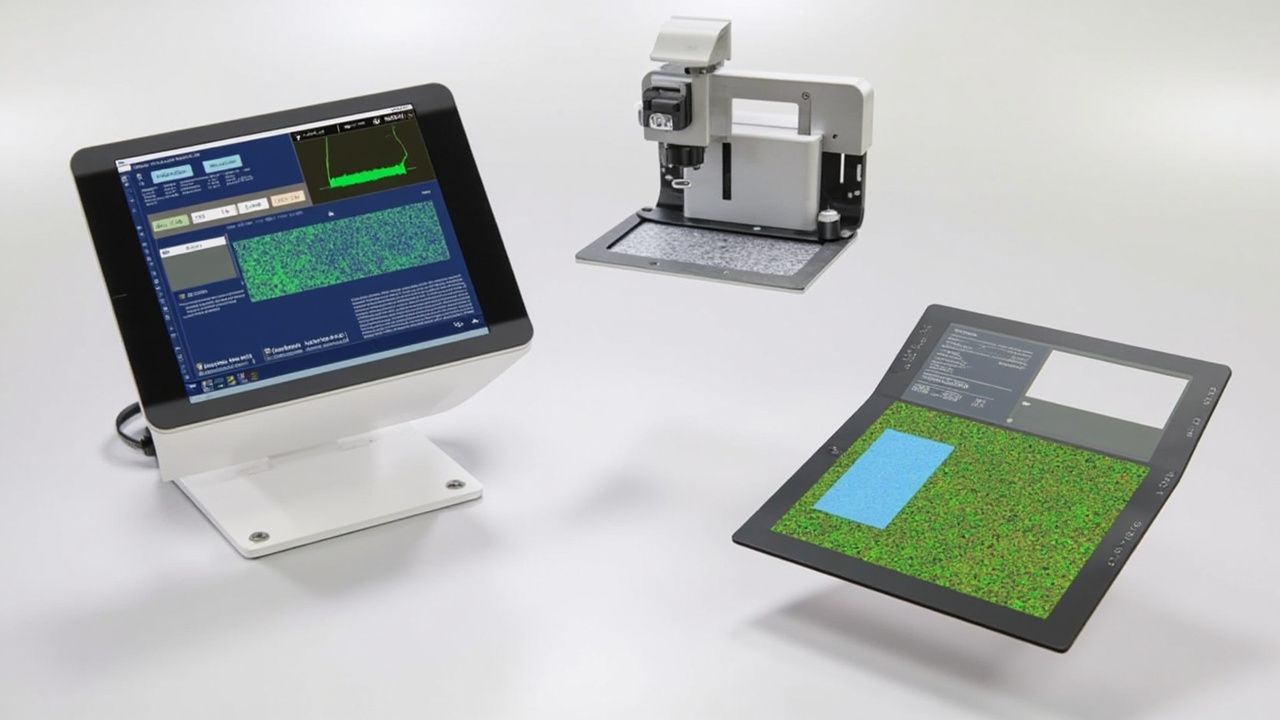
This marks a practical shift in micro-scale inspection capability, moving beyond visual confirmation to quantitative 3D data collection in spaces previously limited to 2D imaging. The economic case centers on workflow acceleration and distributed approval rather than hardware specs alone.
- 2.
The Miniaturization Problem
For manufacturers of precision-machined components, the inspection challenge keeps shrinking. Aerospace fuel manifolds, hydraulic valves, automotive injection systems—internal geometries are getting tighter and tolerances more unforgiving. The core physical constraint hasn't changed: any probe larger than 2.2mm in diameter simply won't fit into the passages we need to inspect. That's the hard boundary.
Until recently, inspectors working in these micro-spaces faced an ugly trade-off. Ultra-thin videoscopes delivered visual confirmation—inspectors could spot a surface scratch or lingering burr—but dimensional data remained out of reach. No cross-sections. No topography. No quantitative defect measurements. In an Industry 4.0 world where actionable data drives quality decisions, showing someone a 2D image and saying "trust me, this looks bad" doesn't cut it anymore.
The Modular Solution
The fix isn't in the optics themselves, which have been refined for decades. It's in separating processing from the scope head. The latest evolution in remote visual inspection (RVI) uses a modular ecosystem: a 2.2mm interchangeable scope plugs into a high-powered base station that handles the computational work.
I see this as the right architecture. Instead of cramming processing hardware into a pencil-thin probe—which limits everything from heat dissipation to algorithm complexity—the industry finally admitted that a 2.2mm scope is an input device, not a computer. Pair that scope with a properly cooled, adequately powered main unit, and suddenly you're running software tools that previously required dedicated workstations.
Practical impact: Consider inspecting a 2.5mm cross-hole in a precision-machined valve block. The inspector navigates the flexible 2.2mm scope to the intersection and spots a surface anomaly. Instead of describing it in notes, the system captures video and generates a 3D spatial model of the internal surface in real-time. This isn't simulated or extrapolated data—it's derived from the actual video stream, giving inspectors true topographic visualization of defect severity without reaching for bulky measurement probes that physically won't fit the channel.
Cloud Connectivity Eliminates the Data Silo
Capturing 3D data inside micro-machined parts solves one problem. The other half is what happens after the inspection. Historically, data pulled from complex inspections sat on local SD cards or flash drives, bottlenecked by the need to physically transfer files or draft PDF reports before quality approval could proceed.
Modern visual inspection workflow software connects base stations directly to cloud platforms. A supplier manufacturing high-value fluid transfer components captures high-resolution video and a 3D topographical model of a suspected defect inside a tiny bore. Instead of pausing production to manually draft a PDF report, the videoscope wirelessly syncs images and 3D data to a centralized cloud platform. A quality manager or off-site client logs into the analytics dashboard, reviews the 3D representation in real time, and makes an immediate, collaborative decision on whether the part passes or fails.
This workflow change matters more than the hardware specs. Distributed approval means inspection throughput increases without adding inspection staff.
Results That Actually Matter
The numbers tell the story. Defect severity becomes quantifiable through 3D modeling instead of subjective visual assessment. Cloud connectivity removes the manual reporting bottleneck that previously stalled production approvals. The modular approach means facilities can upgrade processing capability without replacing existing scope inventory—a capital efficiency argument that's hard to ignore.
The days of accepting visual-only inspection in micro-spaces are over. This isn't a solution looking for a problem. For facilities already using 2.2mm scopes for visual confirmation, the upgrade path to 3D data capture is now clear and commercially available.
Simon McLoughlin
Is this your company?
This article features your business. Claim it to add your logo, contact details, and a link to your website — or upgrade to reach more buyers.
Did you know 80% of Press Releases trigger AI content warnings? Reach out and the M4S team can assist.