
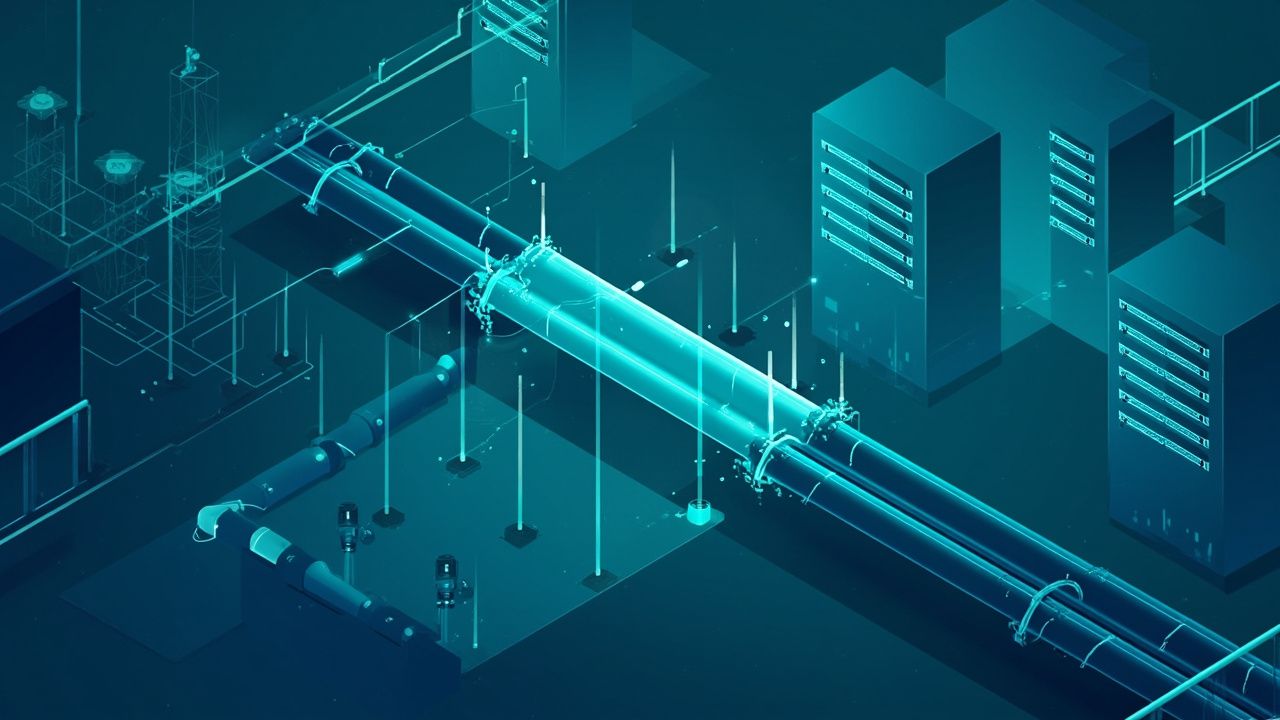
Infrastructure companies are successfully repositioning pipeline assets as distributed generation platforms, creating a viable alternative to traditional utility expansion for data center power. The economics and logistics clearly favor companies with existing fuel infrastructure, but manufacturing capacity constraints will determine which projects actually reach execution.
- Tallgrass Cheyenne Power Hub: 1,150 MW from two M501JAC turbines, $7+ billion total investment, fuel from existing Rockies Express Pipeline
- First turbine installation begins July, data center partner is Crusoe with 1.8 GW initial load scaling to 10 GW
- Williams Companies has committed $5.
The Problem: Grid Constraints Meet Explosive Data Center Demand
The numbers are stark. Electricity demand in the Western U.S. is forecast to grow over 20 percent this decade, with data centers alone projected to require 90 GW of new capacity. Traditional utility expansion timelines can't keep pace. In regions like Utah, Arizona, and Colorado, transmission constraints are already limiting what the grid can absorb.
This is the problem midstream infrastructure companies are moving to solve.
The Solution: Repurposing Pipeline Assets for Power Generation
Tallgrass Energy's Cheyenne Power Hub, now entering equipment delivery phase at Switchgrass Industrial Park in Laramie County, illustrates the model. The company is installing two Mitsubishi Power M501JAC gas turbines that will provide approximately 1,150 MW of combined cycle capacity, fueled directly from the Rockies Express Pipeline that Tallgrass already operates.
Installation of the first turbine begins in July. Total project investment exceeds $7 billion.
The hub serves a single customer: Project Jade, a data center campus developed in partnership with Crusoe, sized at 1.8 GW initially with development potential to 10 GW on an adjacent 600-acre parcel.
I see two engineering advantages here that traditional generation developers can't match. First, fuel delivery is already wired into existing infrastructure. Second, the behind-the-meter configuration avoids transmission system strain entirely, with grid interconnection reserved for future renewable integration.
The project also positions itself for long-term carbon management through proximity to Tallgrass's Trailblazer carbon capture and sequestration hub. That's a differentiation factor that matters for corporate procurement decisions increasingly driven by Scope 2 emissions commitments.
This approach mirrors Williams Companies' $5.1 billion Power Innovation program, which targets modular gas and hybrid plants for data center and industrial loads in capacity-constrained markets.
The Results: Manufacturing Base at Capacity
The demand signals are unambiguous. Mitsubishi Heavy Industries reported GTCC segment bookings of 35 large-frame gas turbines in the fiscal year ending March 2026, exceeding the company's prior record. Williams CEO Chad Zamarin has stated their opportunity pipeline extends through the decade, and the company has secured supplier commitments to stay ahead of orders.
For engineers evaluating this trend, the supply chain constraint is the critical near-term variable. Equipment lead times and manufacturing capacity are now competitive moats.
Simon McLoughlin
Is this your company?
This article features your business. Claim it to add your logo, contact details, and a link to your website — or upgrade to reach more buyers.
Did you know 80% of Press Releases trigger AI content warnings? Reach out and the M4S team can assist.