
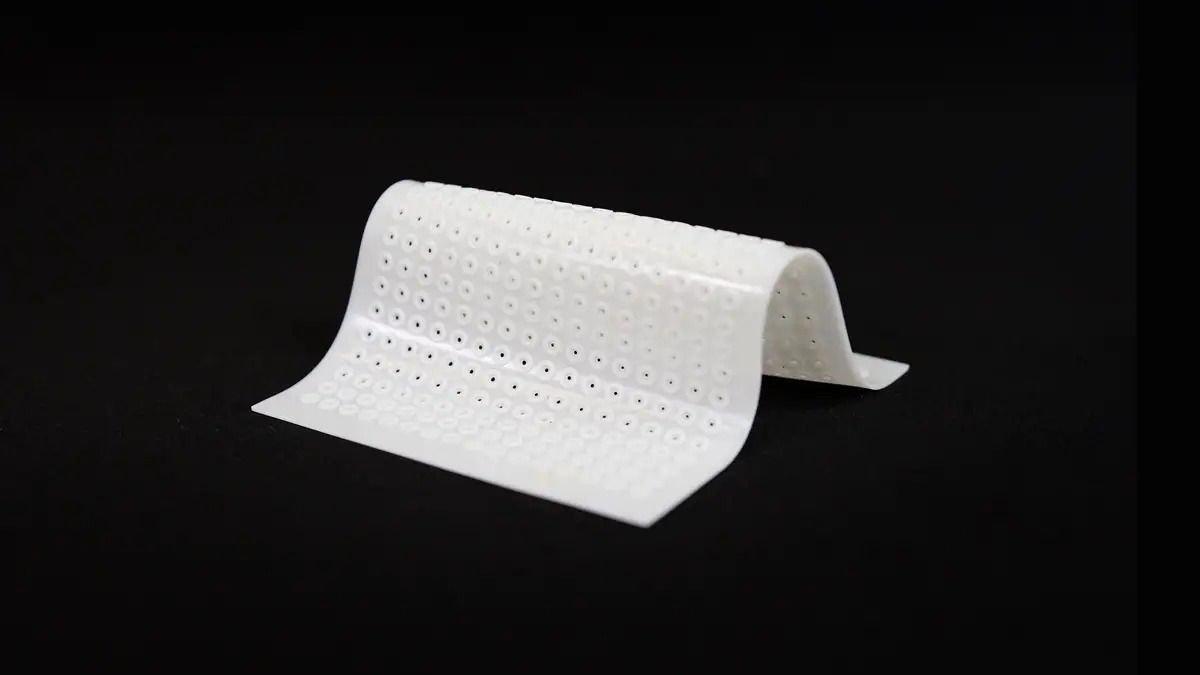
Picodya has cut diagnostic development time by two years using Stratasys 3D printing.
Picodya adopted a multi-technology Stratasys 3D printing workflow in-house. It combines PolyJet™ and Origin® P3™ DLP with MED Silicone 25A for parts, thin gasket geometries and sealing elements. The company reports up to 90% cost reduction on complex parts, with small components that previously cost tens to hundreds of dollars now costing a few dollars to print. A printed cassette-insertion fixture also eliminated operator variability.
The medical technology company saved roughly two years by bringing a multi-technology Stratasys 3D printing workflow in-house for point-of-care diagnostics.
Picodya uses PolyJet™ for tight-tolerance machine parts, cassette elements, custom plates, jigs and fixtures. Origin® P3™ DLP with MED Silicone 25A handles thin gasket geometries and sealing elements during proof-of-design work. Biological assay testing is done on 3D printed custom plates.
Bringing additive manufacturing in-house cut complex part costs by up to 90%. A quickly printed cassette-insertion fixture eliminated operator variability, protecting experimental time and biological materials. Engineers can test ideas without waiting for full optimization.
Frequently asked questions
How does Picodya's adoption of Stratasys 3D printing impact their development timelines and part costs?
Picodya has realized significant improvements in development timelines, saving approximately two years of accumulated development time. Parts that previously took up to two months to manufacture are now produced in days, with some iterations completed in hours. This also translates to substantial cost reductions, with complex parts experiencing up to a 90% decrease in price. Components that once cost tens to hundreds of dollars now cost only a few dollars to print.
What specific additive manufacturing technologies does Picodya employ and for what applications within their diagnostic platforms?
Picodya utilizes a multi-technology Stratasys 3D printing workflow. They employ PolyJet technology for creating tight-tolerance machine parts, wet-application components, cassette elements, custom plates, and jigs, facilitating fit, sealing, and mechanical integration testing. Additionally, they use Origin P3 DLP with MED Silicone 25A for iterating thin gasket geometries and sealing elements during proof-of-design, eliminating the need for molds before design validation.
Beyond time and cost savings, what other advantages has Picodya experienced from integrating 3D printing into their workflow?
Picodya has experienced fewer failed experiments thanks to 3D printing. For instance, a quickly printed cassette-insertion fixture successfully eliminated operator variability, safeguarding experimental time and expensive biological materials. This rapid iteration process also enables faster proof of concept, allowing engineers to test ideas without lengthy waits for full optimization, thereby fostering a continuous design-print-test-refine cycle across the entire team.
What types of materials are being 3D printed by Picodya for their diagnostic devices?
Picodya uses a variety of materials in their 3D printing workflow. For their Stratasys PolyJet technology, they employ materials suitable for tight-tolerance machine parts, wet-application components, and cassette elements. For their Origin P3 DLP system, they specifically use MED Silicone 25A for iterating gasket geometries and sealing elements, indicating a focus on materials compatible with biological applications and fluid handling.
How does Picodya's approach using 3D printing facilitate biological assay testing?
Picodya uses 3D printed custom plates for biological assay testing. This allows the team to evaluate both the geometric accuracy and the biological performance of their designs before committing to expensive production molds. This capability is crucial for ensuring that the physical design of the assay components is compatible with the biological processes they are intended to support.
What was the approximate time savings per part iteration achieved by Picodya through in-house additive manufacturing?
By bringing additive manufacturing in-house, Picodya has dramatically reduced part iteration times. Parts that previously required up to two months for manufacturing are now produced in a matter of days, with some design iterations being completed within hours. This acceleration allows for much quicker feedback loops in the development process, enabling engineers to move through design-print-test cycles much faster.
Get the long read at Laser Lines Limited
Is this your company?
This article features your business. Claim it to add your logo, contact details, and a link to your website — or upgrade to reach more buyers.
Did you know 80% of Press Releases trigger AI content warnings? Reach out and the M4S team can assist.