
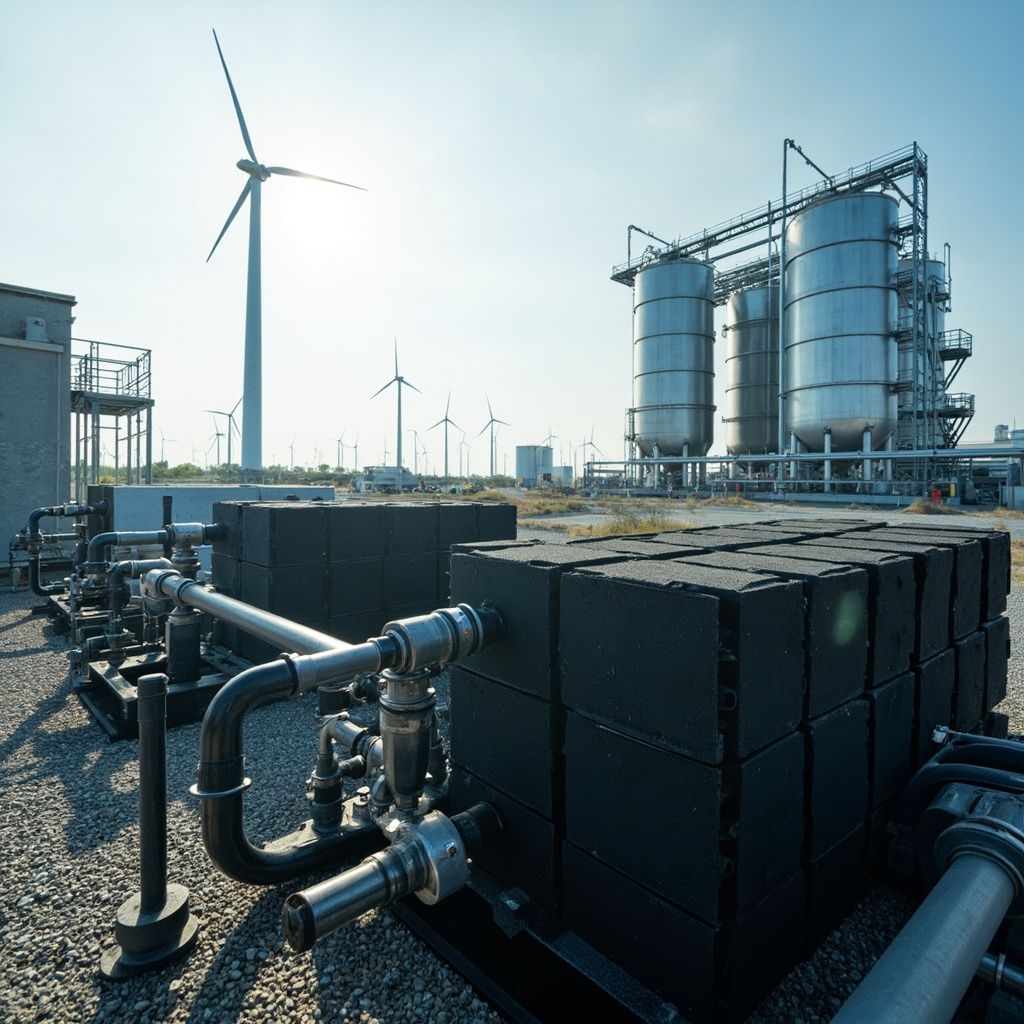
This project demonstrates thermal energy storage functioning at industrial scale, converting intermittent wind generation into continuous process heat for bioethanol manufacturing. The technical approach—solid carbon blocks storing heat for direct industrial delivery—avoids thermoelectric conversion losses that make electrochemical storage economically marginal for high-temperature applications.
The Problem: Industrial Heat Needs Don't Align with Wind Output
POET's Big Stone City bioethanol facility needed continuous thermal energy to increase production, but wind generation in the region comes in surges and lulls that don't match manufacturing demand. Storing electricity in batteries and converting it back introduces efficiency losses that make economics difficult at industrial scale.
The Solution: Solid Carbon Thermal Batteries with Direct Heat Delivery
Antora Energy installed a 5 GWh thermal energy storage system that sidesteps thermoelectric conversion entirely. The system charges during wind surplus periods, storing energy as heat in insulated blocks of solid carbon. When POET needs heat, the thermal energy flows directly to industrial processes without a steam cycle in between.
Antora worked with Otter Tail Power to develop an electric rate approved by the South Dakota Public Utilities Commission. The rate lets the system charge selectively during local wind surplus without shifting costs to other consumers.
Construction to first energy delivery took under 12 months. Full operational status is expected later this year.
"This is what reindustrialization looks like—American innovation driving industrial competitiveness, domestic supply chains spanning a dozen states, and jobs from the factory floor to the construction site," said Andrew Ponec, Antora CEO.
The Results
The completed system will rank among the world's largest energy storage installations by capacity. POET receives around-the-clock thermal energy under a long-term heat offtake agreement, enabling higher bioethanol output. The project leverages supply chains across multiple states.
Senator Mike Rounds (R-SD) noted the project's economic impact for the region while boosting domestic energy production.
Engineering Implications
This deployment tests whether thermal storage can serve continuous industrial loads at scale. The direct thermal delivery approach avoids roundtrip losses that limit electrochemical storage in high-temperature applications. If the Big Stone City system performs as projected, it establishes a viable template for integrating variable renewable generation with steady industrial heat demand.
The specialized rate structure also matters. By enabling selective charging during surplus periods, Otter Tail Power's approach lets the system capture value from wind variability without destabilizing the broader grid.
Simon McLoughlin
Is this your company?
This article features your business. Claim it to add your logo, contact details, and a link to your website — or upgrade to reach more buyers.
Did you know 80% of Press Releases trigger AI content warnings? Reach out and the M4S team can assist.