
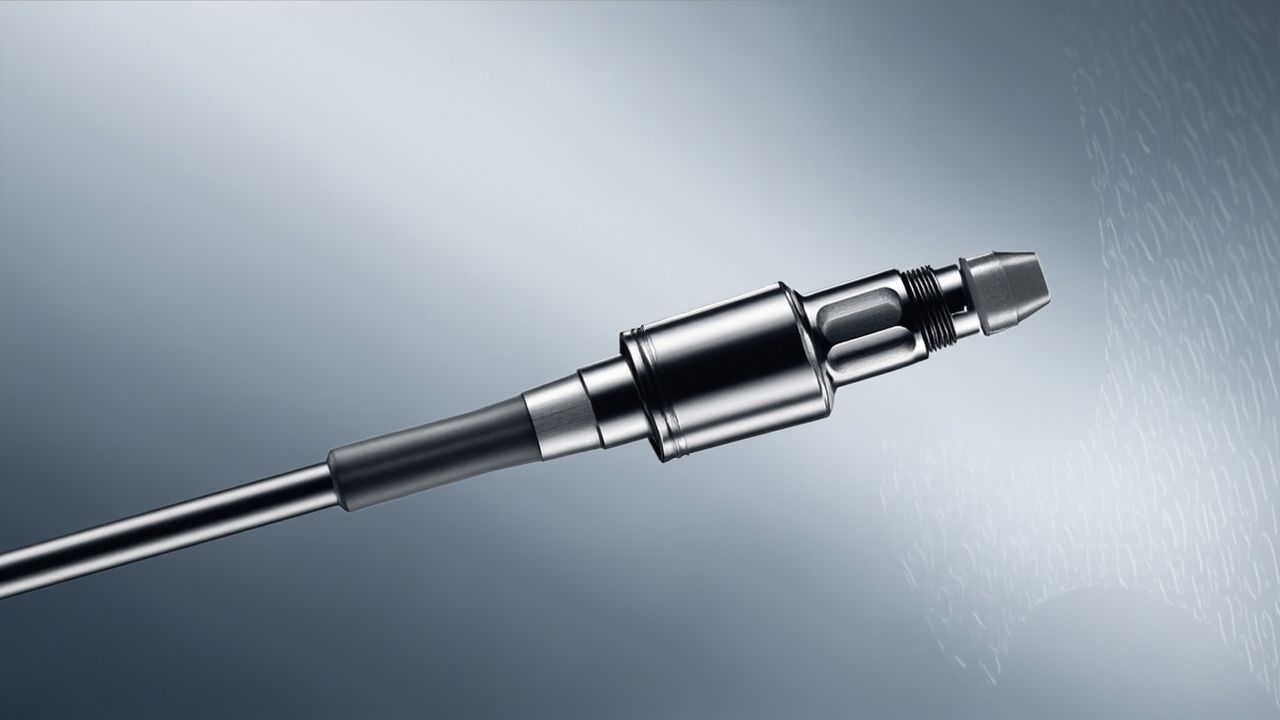
This connector expansion addresses a specific gap in high-vibration RF system design by combining threaded engagement security with SMPM small-form-factor packaging. The frequency range and VSWR performance make these viable for K/Ka-band defense and aerospace applications where standard push-on connectors present unacceptable reliability risk.
- Threaded SMPM interface to MIL-STD-348 with retractable coupling nut for vibration resistance
- RF047-A and RF086 cable assemblies rated to 67 GHz; SMPMT board-mount plug to 60 GHz
- Typical VSWR of 1.35:1 from 26.5 to 40 GHz (approximately -16.
The Problem: Vibration Kills RF Connections
In military radar systems, aerospace communications payloads, and ruggedized base station equipment, connector failure under vibration isn't an inconvenience. It's a mission-critical reliability issue. Standard SMPM push-on connectors rely on spring tension to maintain engagement. Under sustained vibration loads common in aircraft and ground-based tactical systems, that spring tension degrades. Connectors back out. Signals drop. Maintenance crews get called.
For RF engineers working across the 26.5 to 40 GHz spectrum common in satcom and electronic warfare applications, the choice was previously binary: accept the vibration risk with standard connectors, or specify larger, heavier RF solutions that added weight and complexity to already-constrained platforms.
The Solution: Threaded Engagement Meets MIL-STD-348
Samtec's answer arrived in the form of a threaded SMPM interface built to MIL-STD-348. The key difference sits in the coupling mechanism. Instead of relying solely on spring retention, these assemblies use a retractable coupling nut that threads into engagement. The connector maintains full SMPM small-form-factor footprint while delivering positive mechanical lock that doesn't depend on spring memory.
The family expansion includes two cable assembly options: the RF047-A and RF086 low-loss variants, both rated to 67 GHz. Board-mount applications get the SMPMT plug, rated to 60 GHz. Engineers can specify full detent retention for applications requiring positive tactile feedback during mating, or smooth bore options where repeated connect/disconnect cycles are expected.
Mixed-technology board termination handles the transition between cable and PCB traces. Samtec bonds the center conductor directly to the board pad rather than using a simple press-fit interface. This approach reduces mechanical stress concentration at the termination point. Under thermal cycling and vibration load, that direct bond resists the micro-fretting that eventually opens standard solder terminations.
The Numbers
The SMPMT board-mount plug delivers typical VSWR of 1.35:1 across the 26.5 to 40 GHz band. That's 0.05:1 better than typical commercial-grade SMPM parts in the same frequency range. Return loss at 40 GHz sits at approximately -16.5 dB, acceptable for most point-to-point RF links without requiring external matching networks.
The RF047-A assembly uses 0.047-inch semi-rigid cable, suitable for fixed routing in sealed enclosures. The RF086 variant steps up to 0.086-inch semi-rigid for applications requiring longer cable runs where insertion loss becomes a concern. Both assemblies ship with tested performance data across the full 67 GHz range.
What This Means for Your Stack
If you're designing into K-band or Ka-band RF chains for defense or aerospace programs, these connectors deserve evaluation alongside the traditional large-format options. The threaded SMPM approach lets you use smaller connector footprints without sacrificing vibration immunity. That translates to smaller enclosures, lighter harness runs, and simpler board layouts.
The MIL-STD-348 compliance matters for programs requiring defense standard conformance documentation. Mixed-technology termination provides a reliability path that survives thermal cycling without the inspection headaches of hand-soldered connections.
I'm not going to pretend this solves every RF connector problem in high-shock environments. Threaded engagement adds mating time compared to push-on designs, and the retractable coupling nut introduces additional mechanical complexity that could fail if contaminated with debris. For applications where installation access is limited and mating cycles are infrequent, these tradeoffs likely pencil out. For high-cycle test equipment or production fixtures, the standard push-on SMPM still wins on ergonomics.
Contact Samtec for detailed mechanical drawings and environmental test reports if you're running these parts through vendor qualification.
Simon McLoughlin
Is this your company?
This article features your business. Claim it to add your logo, contact details, and a link to your website — or upgrade to reach more buyers.
Did you know 80% of Press Releases trigger AI content warnings? Reach out and the M4S team can assist.