
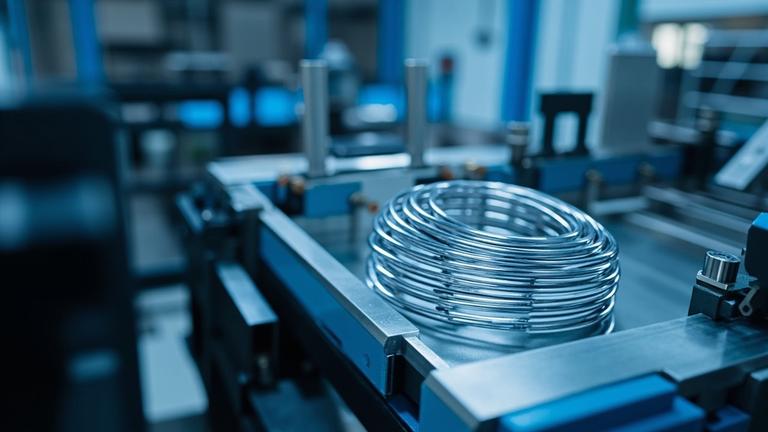
This development demonstrates that additive manufacturing can fundamentally restructure medical imaging economics, with silver-ink coils achieving near-copper conductivity at consumer electronics price points
- For pediatric imaging specifically, the ability to produce precisely-fitted coils rapidly transforms what was previously impractical into routine clinical capability
The Problem: $50,000 Coils Built for Adults Don't Fit Children
MRI coils have been a stubborn weak link in clinical imaging for decades. These specialized radiofrequency antennas sit close to the body and capture signals that become diagnostic images. The industry standard uses copper conductors rigidly mounted in fixed geometries. Prices range from $10,000 to $50,000 per coil. They conform poorly to pediatric anatomy, and the one-size-fits-all approach forces clinicians to work with coils designed for adult bodies and then scaled down for smaller patients.
For newborns requiring cardiac imaging, this isn't a minor inconvenience. A newborn's heart can be the size of a walnut. Using an improperly fitted adult-derived coil means compromised signal-to-noise ratio, lower resolution, and potentially missed pathology. The problem extends to moving anatomy like wrists and hearts, where rigid coils lose contact during imaging cycles, degrading image quality.
The Solution: Direct-Ink-Write Silver on Flexible Substrate
Researchers at USC Viterbi School of Engineering, working with collaborators at USC's Stevens School of Computing, Keck School of Medicine, and Children's Hospital Los Angeles, developed a direct-ink-write fabrication method using silver ink printed onto thermoplastic polyurethane substrate.
The team, led by Yasser Khan and Krishna Nayak along with researcher Félix Muñoz and research assistant professor Ye Tian, identified silver ink as the answer to a fundamental materials conflict. Copper offers excellent conductivity but zero flexibility. Most flexible alternatives sacrifice too much signal efficiency.
Silver ink printed onto rubber-like polyurethane achieves approximately 95% of the signal efficiency of solid copper while remaining stretchable. The material conforms to natural skin elasticity and maintains consistent contact throughout scanning cycles.
The design process uses standard Gerber files, the same digital format employed in printed circuit board manufacturing. An automated direct-ink-write printer produces the coils, eliminating manual assembly steps that inflate costs and introduce variability in conventional manufacturing.
The Results: $30 Coils, Four-Times Resolution Improvement
The study, published in Nature Communications, demonstrates coils costing approximately $30 in consumable materials with a print time under ten minutes. By comparison, conventional clinical coils range from $10,000 to $50,000 each with lead times often measured in weeks.
Image quality metrics show up to four-times higher resolution compared to commercial counterparts. For pediatric applications, this means detecting smaller structural abnormalities that might escape detection with lower-resolution systems.
John Wood, a collaborator specializing in pediatric imaging at Children's Hospital Los Angeles, noted the clinical significance: existing coils fail to accommodate rapidly changing infant anatomy. The new platform enables coil geometries precisely matched to neonatal cardiac structures, something previously impractical given the cost and lead time of custom conventional coils.
The research team has identified specific clinical targets: pediatric lung imaging, bronchopulmonary dysplasia monitoring, swallowing function assessment, gastrointestinal evaluation in newborns, and wrist injury diagnostics.
The technology also enables deployment in resource-limited settings. At $30 per coil, MRI systems in rural areas or developing regions could maintain purpose-specific coils for different applications without the capital burden of conventional hardware.
The fabrication approach eliminates proprietary manufacturing processes that have historically locked in high costs and rigid designs. Additive manufacturing is beginning to challenge traditional medical hardware economics across multiple device categories, and MRI coils represent a particularly expensive, poorly-served segment ripe for disruption.
Simon McLoughlin
Is this your company?
This article features your business. Claim it to add your logo, contact details, and a link to your website — or upgrade to reach more buyers.
Did you know 80% of Press Releases trigger AI content warnings? Reach out and the M4S team can assist.