
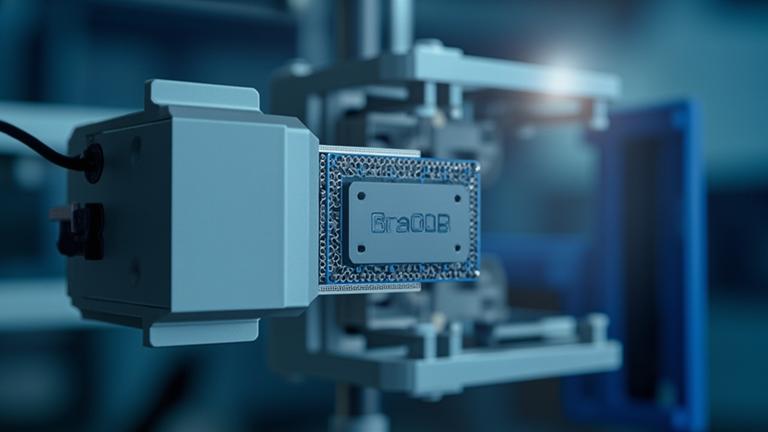
The BIANCO2 represents a genuine option for engineers who need open SLS architecture without enterprise-system pricing. The 137 accessible parameters and third-party material support directly address long-standing complaints about closed platforms, though actual production validation across diverse materials remains to be proven in the field.
- 137 adjustable print parameters exposed through Sinterit Studio Ultimate, enabling full process envelope control
- 30W RF CO₂ laser source rated for 20,000+ hours with galvo scanner and integrated water chiller
- Build volume: 130 × 180 × 330 mm for PA materials; layer heights 0.075–0.
The Problem: Closed Systems Strangling SLS Adoption
Selective laser sintering has long promised production-grade polymer parts without tooling costs. The reality has been different for anyone who needs to work outside a manufacturer's approved material list. Closed-architecture SLS platforms restrict parameter access, lock out third-party powders, and force engineers into a vendor's ecosystem regardless of whether it fits their application requirements.
This limitation hits hardest in three areas: material developers who need to test formulations without platform restrictions, research institutions pushing process boundaries, and production teams with specialized material specifications that established suppliers don't cover.
The Solution: BIANCO2's Open Architecture
Sinterit's BIANCO2 directly addresses these constraints. The system exposes 137 adjustable print parameters through Sinterit Studio Ultimate, giving engineers direct control over laser power curves, hatch patterns, recoater timing, and thermal management. This isn't a locked parameter with an override checkbox. This is full access to the process envelope.
The machine ships with a sealed metal tube RF CO₂ laser source rated at 30W with a 20,000+ hour lifespan. The galvo scanner delivers precise beam positioning, and a dedicated water chiller handles thermal stability throughout the build. For PA materials, the build volume reaches 130 × 180 × 330 mm with layer heights between 0.075 mm and 0.125 mm. Build speeds of 15–30 mm/hour place this firmly in production territory rather than rapid prototyping mode.
The open material policy matters practically. Users can run Sinterit's own portfolio—covering technical, white, natural, and flexible material types—but nothing prevents loading third-party powders. This eliminates the arbitrary material lockout that has made SLS adoption difficult for engineers with non-standard requirements.
"We focused on SLS because we believed the technology deserved a platform that didn't treat engineers like children who couldn't be trusted with process controls," said Sinterit in their product documentation.
The Results: Production Reality Check
BIANCO2 enters a compact SLS market segment that's grown more competitive as industrial manufacturers demand smaller footprint systems. The EU manufacturing origin addresses supply chain concerns that became acute during recent disruptions. Spares and consumables moving from within the European Union provide predictability that overseas supply chains cannot match.
Target applications span medical, dental, orthotics, automotive, consumer product development, drone and defense work, food-grade production, and architectural modeling. Sinterit positions the platform for end-use parts rather than purely prototyping, which aligns with actual production requirements where surface finish and mechanical consistency matter.
The technical specification sheet reveals a machine designed for engineers who read datasheets before purchasing. No vague marketing claims about "precision" or "quality." Instead: actual layer height ranges, specific laser ratings, build volume dimensions, and speed specifications that let someone calculate whether the system fits their production volumes.
The decade-long SLS focus since 2014 suggests accumulated process knowledge rather than a company diversifying to chase market trends. Whether that specialization translates to reliability advantages requires real-world deployment data that will emerge once units reach customers.
Simon McLoughlin
Is this your company?
This article features your business. Claim it to add your logo, contact details, and a link to your website — or upgrade to reach more buyers.
Did you know 80% of Press Releases trigger AI content warnings? Reach out and the M4S team can assist.