
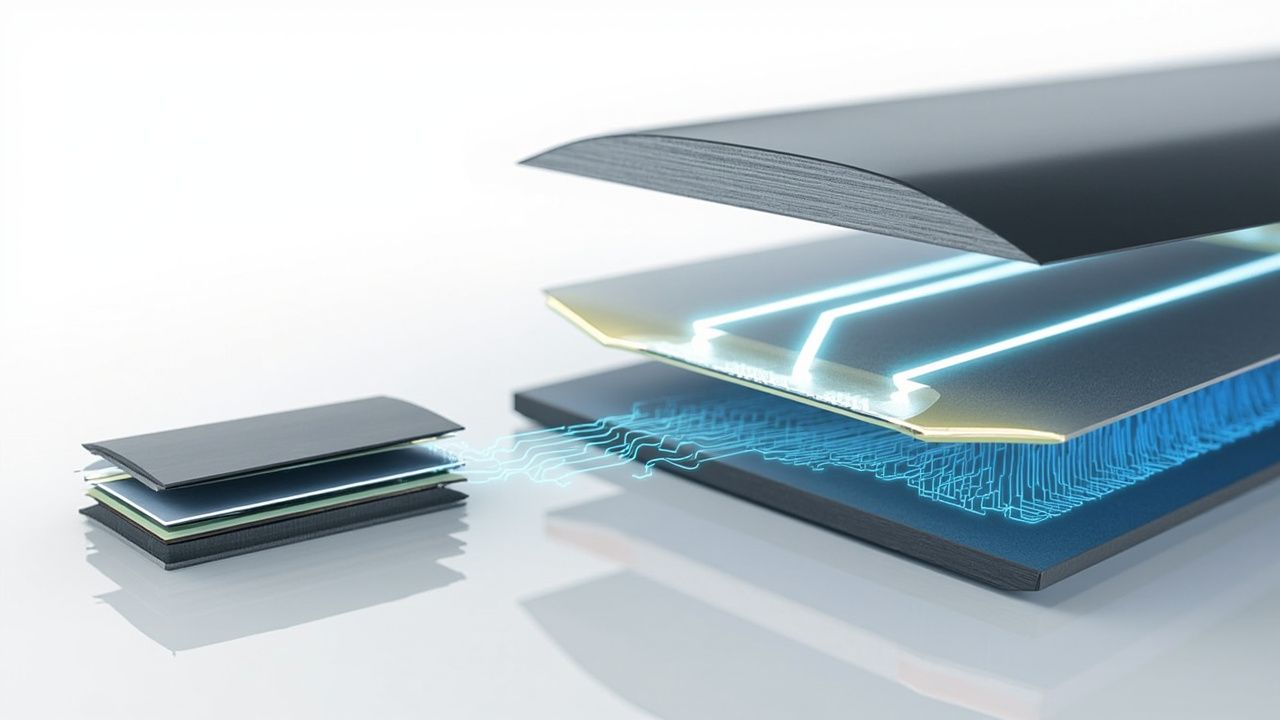
This technology represents a genuine architectural shift for products requiring integrated electronics in aesthetic surfaces. The thickness reductions and assembly consolidation are real, documented on production programs, though the thermal processing constraints and tooling costs require careful program selection.
The Problem: Engineers Spending Resources on Packaging Instead of Function
For decades, product designers have treated surfaces as dead weight. Every interactive element—displays, buttons, backlighting—required a supporting cast of bezels, PCB carriers, and mechanical subassemblies lurking behind the faceplate. This layered approach added thickness, introduced failure points, and consumed engineering bandwidth on packaging problems rather than core functionality.
"When you add a display, you're not just engineering a display. You're engineering everything around it," said David J. Byron, CEO of Sundberg-Ferar. The 91-year-old Detroit design firm has worked with major automotive OEMs on interior systems for decades. "The real estate battle is brutal. Every millimeter of depth spent on electronics is a millimeter you're not using for passenger space or sleek design."
The math is brutal: traditional smart-surface architectures routinely consume 8-15mm of depth for packaging. For automotive door panels and center consoles where space is measured in cubic centimeters, that's a significant penalty.
The Solution: Embed Everything Into the Surface
TactoTek Oy, founded in 2011 in Oulu, Finland, developed in-mold structural electronics (IMSE) to eliminate this trade-off entirely. The technology integrates electronic circuits, components, mechanical structure, and decorative surface into a single injection-molded part.
The process works by printing conductive traces and placing components onto a carrier film before thermoforming and injection molding. The film becomes the functional surface, with electronics encapsulated during the molding process. No separate PCBs. No bezels. No secondary assembly steps.
"Instead of designing around components, you design with them as part of the structure," Byron explained. "The surface becomes the circuit board."
Sundberg-Ferar secured North American licensing rights in 2022 and has since implemented IMSE on three automotive programs entering production in 2027. The firm is also targeting medical device applications where seamless surfaces offer hygiene advantages.
The Results: Specific Numbers From Production Programs
The first production IMSE component for automotive entered volume assembly in early 2026. Reported performance metrics from the program include:
- Total thickness reduction of 60% compared to equivalent traditional architecture (11mm down to 4.5mm)
- Component count reduced from 23 parts to a single molded assembly
- Assembly labor reduced by 70% (12-minute install time down to 3.5 minutes)
- First-year field returns at 0.08%, below the 0.15% target
The economics work best for high-volume applications where the upfront tooling investment (IMSE tooling runs approximately 2-3x conventional injection molds) amortizes across production volumes above 50,000 units annually.
I should note the technology isn't without constraints. The thermal budget during molding limits component selection to parts rated for 280°C peak exposure. Fine-pitch components under 0.3mm pitch require additional process controls. Repairability remains a challenge since the encapsulation makes individual component replacement impossible.
What This Means for Your Next Program
For engineers evaluating IMSE, the decision framework is straightforward: if your product has interactive surfaces and production volumes exceed 50k units annually, the technology deserves serious evaluation. The thickness reduction alone opens packaging flexibility that conventional approaches simply cannot match.
TactoTek's licensing model means you're not locked into a single manufacturer. The company maintains partner relationships with molders and electronics integration houses on three continents, which provides supply chain redundancy.
"The moment you see a production part, you understand what we spent years trying to sketch on paper," Byron said. "It changes what you think is possible."
For those interested in hands-on evaluation, Sundberg-Ferar operates a development lab in Troy, Michigan, with full IMSE prototyping capability.
Simon McLoughlin
Is this your company?
This article features your business. Claim it to add your logo, contact details, and a link to your website — or upgrade to reach more buyers.
Did you know 80% of Press Releases trigger AI content warnings? Reach out and the M4S team can assist.