
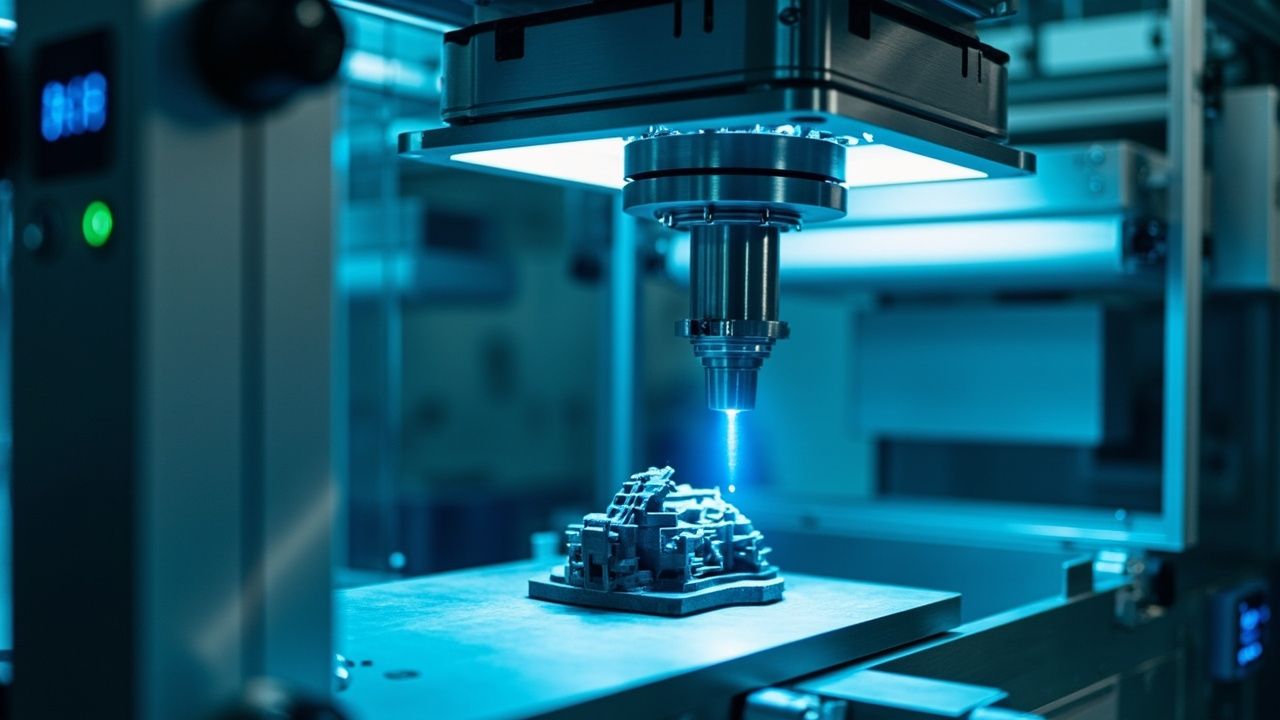
This partnership tackles the fundamental data fragmentation problem that has plagued AM quality management since the technology entered production
- Toolcraft's deployment demonstrates how integrated digital quality infrastructure enables the documentation rigor demanded by semiconductor manufacturing while reducing engineer...
Semiconductor manufacturing requires documentation so rigorous that most quality systems buckle under the weight. Toolcraft, a German contract manufacturer with significant AM operations, found itself buried in that exact problem: build data scattered across spreadsheets, inspection records siloed from process parameters, and traceability built on manual reconciliation rather than integrated systems.
The company partnered with amsight, an industrial AM quality specialist, to overhaul how production data flows from machine to decision-maker.
The Core Problem
Industrial AM has matured as a manufacturing technology, but its quality infrastructure hasn't kept pace. Across most facilities, process data lives in one system, inspection records in another, and build documentation in a folder.
For semiconductor manufacturing, this fragmentation is unacceptable. IPC standards, customer audits, and regulatory requirements demand complete traceability from powder lot to finished part. When a discrepancy surfaces, engineers need answers in minutes, not hours of spreadsheet archaeology.
Toolcraft's operations were hitting this wall repeatedly. Reporting cycles dragged. Drift detection happened after escapes rather than before. The company was reactive by architecture, not by choice.
The Solution
amsight's digital quality backbone consolidates machine data, process parameters, inspection results, and quality metrics into a single traceable environment. Toolcraft deployed this platform across its AM operations with a specific focus on semiconductor-related manufacturing, where documentation requirements are non-negotiable.
The platform implements statistical process control as a core discipline, not an add-on. SPC gives production teams a structured method for catching production drift before it becomes a quality problem. Process stability becomes architectural rather than accidental.
Key capabilities deployed include standardized data evaluation across all AM systems, real-time SPC-based analysis, and integrated quality metric dashboards that surface actionable information without manual aggregation.
What This Means in Practice
By consolidating data into one environment, Toolcraft cut the time between build completion and actionable decisions. Manual effort required for analysis dropped significantly. Reporting cycles that previously consumed days of engineering time now run in hours.
The company now maintains complete traceability from build parameters through post-process inspection. When deviations occur, correlation analysis runs automatically rather than requiring engineers to manually connect data sources.
Christoph Hauck, Executive Board Member for Technology and Sales at toolcraft, emphasized the partnership's strategic weight: "Semiconductor-related manufacturing environments demand extremely high levels of consistency, documentation, and process understanding. We see amsight as a partner that understands the realities of industrial AM production and the importance of connecting quality data in a meaningful and scalable way."
Maximilian Seßner, Process Development Engineer at toolcraft, identified a critical capability gap the platform addresses: "Standardised data evaluation and SPC-based analysis are becoming increasingly important as AM production matures and expands into demanding sectors such as semiconductor manufacturing."
Tim Wischeropp, CEO at amsight, framed the collaboration within industry-wide pressures: "This collaboration with toolcraft demonstrates how manufacturers are moving toward integrated, data-driven quality strategies that support both operational efficiency and long-term scalability. It also shows toolcraft's commitment to strengthen its leading position as a reliable contract manufacturer for regulated industries."
Why This Partnership Matters Now
AM is expanding into regulated sectors where component traceability carries direct commercial and compliance weight. Medical devices, aerospace components, semiconductor equipment — these markets demand quality infrastructure that matches production capability. Fragmented data management can't scale with AM output.
The toolcraft-amsight collaboration points toward an emerging industry consensus: quality management must be architecturally integrated from the start, not retrofitted around production processes. Where companies once treated quality as a post-build afterthought, leading manufacturers are building continuous quality workflows that parallel production workflows.
For engineers evaluating similar transitions, the lesson is structural. SPC, integrated data environments, and unified traceability frameworks aren't features — they're prerequisites for competitive AM at scale in regulated sectors.
Simon McLoughlin
Is this your company?
This article features your business. Claim it to add your logo, contact details, and a link to your website — or upgrade to reach more buyers.
Did you know 80% of Press Releases trigger AI content warnings? Reach out and the M4S team can assist.