
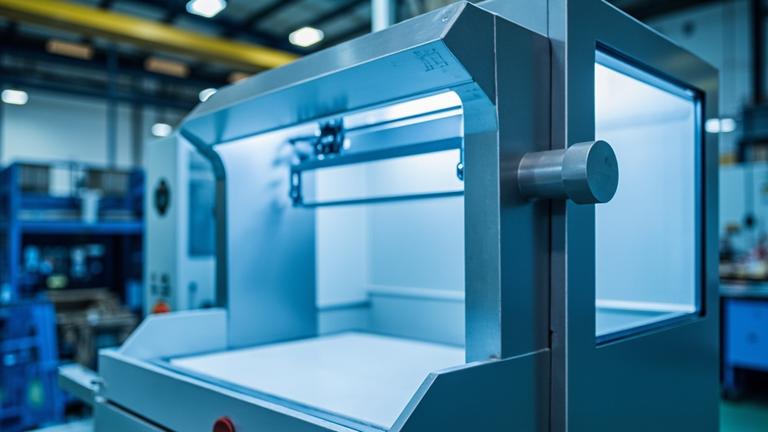
For engineers specifying industrial ventilation, wall-mount canopy hoods in welded 304 stainless represent a practical middle ground between cheap carbon steel and expensive specialty alloys
- The key is matching containment configuration (enclosure panels, filtration) to the specific hazard rather than over-specifying or under-specifying
The Problem: Corrosive Environments Demand More Than Standard Hoods
Industrial facilities handling chemicals, high-temperature processes, or both face a persistent challenge. Standard ventilation hoods fail prematurely in corrosive environments. I visited a plating shop last year where the maintenance team had replaced their third hood in 18 months. The original carbon steel unit showed pitting corrosion within six months. They switched to a painted metal hood, but the finish blistered from solvent exposure. Each replacement meant production downtime and unexpected capital expenditure.
The core issues are well-known to facilities engineers: chloride stress cracking in marine environments, acid vapor degradation near plating or etching operations, thermal cycling fatigue near high-heat processes like powder coating or anodizing. Add cross-drafts from HVAC systems or production traffic, and containment efficiency drops even on equipment that hasn't failed outright.
The Solution: 304 Stainless Construction with Configurable Containment
Wall-mount canopy hoods built from welded type 304 stainless steel offer a practical answer. The material handles most industrial chemical vapors, including the chlorides and acids common in metal finishing. 304 provides adequate corrosion resistance for most applications without the cost premium of 316L.
Available widths span 36", 48", 72", and 96", allowing selection based on equipment footprint and capture velocity requirements. The wall-mount design keeps floor space clear and positions the capture zone directly over the work area. A standard wall mounting kit ships with each unit.
For facilities needing tighter containment, manufacturers offer several add-ons. Vapor-proof lights and switches resist moisture ingress in humid or washdown environments. Side and rear enclosure panels block cross-drafts that dilute capture efficiency and prevent spills from spreading beyond the containment zone. One food processing plant I toured used rear panels on hoods near loading docks where wind-driven rain had been a persistent problem.
Exhaust system design remains the responsibility of the installing contractor, but manufacturers can engineer blowers, ducting, and filtration to match specific requirements. Inline HEPA filters capture particulate, useful near grinding or polishing operations. Activated carbon modules handle odor and organic vapor control for coating or chemical storage areas.
The Results: Matched Application, Reduced Maintenance
Custom sizing extends utility to non-standard installations. A semiconductor equipment manufacturer needed a hood spanning a 108" process tank. Standard widths wouldn't work, so they specified a 108" unit built to their exact dimensional requirements. The manufacturer provided shop drawings for review before fabrication, catching a dimensional conflict with an existing utility chase.
Long-term performance depends on matching the system to the application. A 304 stainless hood works well for most industrial chemicals but can suffer stress corrosion cracking in concentrated chloride solutions above approximately 50 ppm. For those environments, specify 316L or consult the manufacturer on alternative alloys.
These hoods won't solve every ventilation challenge. Properly sized and configured, they provide reliable containment for corrosive vapor, heat, steam, and odor control in industrial settings where 304 stainless construction and configurable options make sense.
Simon McLoughlin
Is this your company?
This article features your business. Claim it to add your logo, contact details, and a link to your website — or upgrade to reach more buyers.
Did you know 80% of Press Releases trigger AI content warnings? Reach out and the M4S team can assist.