
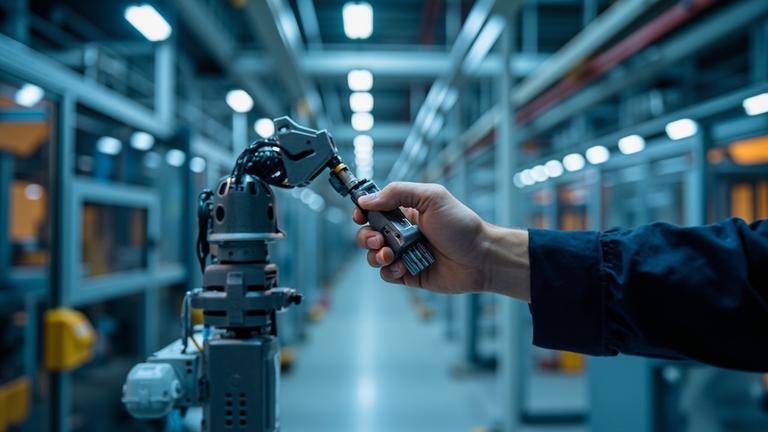
XELA Robotics is pushing tactile sensing into new territory with eight-fingered robotic hands that can feel what they grip.
- Tactile sensing gives robots the ability to handle fragile or deformable objects without crushing them
- Eight fingers provide redundancy — if one sensor fails, the others compensate
- The technology opens applications in food handling, electronics assembly, and medical device packaging
Hardware and Software Upgrades
XELA Robotics has packed a lot into its exhibition circuit this spring. The company is showing eight distinct improvements to its uSkin tactile sensor platform at the Robotics Summit & Expo in Boston this week, followed by appearances at Automatica in Munich and a humanoids-focused event in Tokyo. I went through the technical briefings and the demos tell a clear story: tactile sensing is moving from laboratory curiosity to factory-floor necessity, and XELA is trying to own that transition. The Fingertip with a Nail
The most eye-catching demo is a robotic fingertip fitted with a six-axis, force-sensitive nail. It carries 30 tri-axial force sensing points in the pulp. The nail itself is not decorative. It adds a sensing surface that lets the gripper handle paper-thin cards, keys, and even scrape adhesive tape off a flat surface without tearing it. I have not seen a tactile nail design in production before, and the mechanical integration is non-trivial. The nail has to sense while also protecting the sensor array underneath from shear loads. UMI Gripper Integration
XELA has integrated uSkin into the open-source Universal Manipulation Interface gripper, which collects human demonstration data for robot skill transfer. The standard UMI setup uses vision to record a person pouring water or picking up objects. Adding uSkin injects distributed force-vector data into that same pipeline. The result is a richer training signal for imitation learning algorithms. Whether that translates to better generalisation in unstructured environments is still an open question, but the data density is undeniably higher. Magnetic Interference Compensation
Handling ferrous parts in real factories has always been a headache for capacitive tactile sensors. XELA is showing what it calls magnetic interference compensation, which strips out noise from nearby magnets or ferromagnetic materials. The previous software add-on handled most cases but failed when strong, small magnets got close to the sensing surface. This version claims to handle even those edge cases. For anyone running bin-picking with steel brackets or magnetic clips, this is the difference between a working cell and a debugging nightmare. Delicate Grasping with Machine Vision
The delicate grasping demo involves a paper origami crane and a quail egg. Behind the theatre, XELA has added machine vision for object localisation, tighter robot arm control loops, and a reworked third-party GUI. The software stack now guides the gripper to fragile objects with enough compliance that the origami does not crumple and the egg does not crack. It is a good demo, but the real value is in the reduced integration time for developers who do not want to build their own compliance controllers from scratch. Field-Replaceable Covers and High-Durability Models
XELA has redesigned the fingertip covers so they can be swapped without replacing the sensor or fingertip body. The high-durability variant trades some sensitivity for higher force tolerance and longer wear life. That is a sensible product split. Not every application needs laboratory-grade resolution. Sometimes you just need the sensor to survive a year of abrasive handling. Automatic Weight and Hardness Detection
Robots running the latest uSkin firmware can now estimate object weight and hardness during the lift phase. This is done through force-rate analysis rather than adding a separate load cell. The practical use case is sorting unknown objects on arrival, where the robot can classify material properties before deciding how hard to grip. uSPr DS: Lower Hysteresis, Same Sensitivity
The updated uSPr all-around soft sensor has reduced hysteresis and reinforced construction without sacrificing sensitivity. Lower hysteresis means the sensor returns to the same reading after loading and unloading, which matters for precision insertion and assembly tasks. XELA is pitching this specifically for bin-picking where accidental contact with neighbouring parts can damage them. CAN FD and Faster Microcontrollers
The sensor line now outputs over CAN FD at up to 8 Mbps with 64-byte frames, up from the 8-byte limit of classical CAN. Combined with XELA's event-based communication protocol, the bus stays stable when many sensing points fire at once. The company is also shipping improved microcontrollers, including a 500 Hz variant for the Robotiq Hand-E. That frequency matters if you are trying to close a force-control loop on a fast manipulator. What This Means
XELA is not announcing one big product. It is tightening every bolt on an already capable platform. The magnetic compensation and CAN FD upgrades address real industrial pain points. The fingertip nail is genuinely novel. Whether the UMI integration and vision-guided grasping translate to faster deployments will depend on how well the software stack holds up outside the booth. I will be watching the factory trials.
Simon McLoughlin
Is this your company?
This article features your business. Claim it to add your logo, contact details, and a link to your website — or upgrade to reach more buyers.
Did you know 80% of Press Releases trigger AI content warnings? Reach out and the M4S team can assist.