
A $250 3D printed pipetting robot won't replace industrial lab
- Automation, but it exposes how much of that $18,000 price tag is
- Margin, not mechanics. For engineers, the real story is whether
- Open-source hardware can cross from novelty to reliable
- Infrastructure.
- 96-well plate pipetting robot built for $250 in parts vs.
The Problem: A Six-Order-of-Magnitude Cost Barrier
Walk into any R&D lab or hospital and you'll find 96-well plate pipetting robots handling the grunt work: moving samples, diluting them, placing cell cultures, adding reagents. These machines are workhorses. They're also expensive. Commercial multi-channel systems run from $10,000 to $40,000 for desktop units. The OT2, an open-source alternative, still costs around $16,000. At the high end, modular systems with robot arms for storage and handling run much higher.
For high school labs, small research groups, clinics in developing regions, or any outfit running on a tight budget, that price tag is a wall. The equipment exists. The need exists. The money doesn't. The Build: Geared Ratchets, Lead Screws, and a Lot of Tuning
Triggy, who runs the YouTube channel It's Triggy, decided to see how low the cost could go. The answer: $250 in parts.
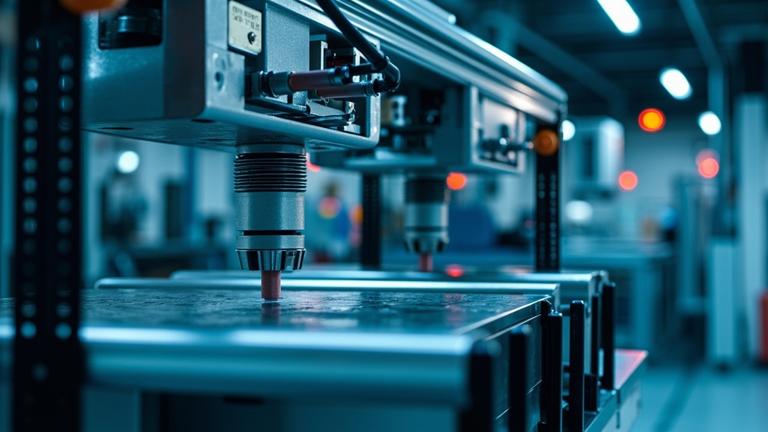
The design uses a geared ratchet lowering system riding on extruded rails. Housings, guides, and the pipette platform are all 3D printed. Four stepper motors, each mounted to a lead screw, move the platform vertically. Getting the platform tolerance and the right amount of mechanical give took real iteration. The CAD files, build explanation, and firmware are now on GitHub.
Triggy tested the machine by dispensing and mixing different liquids, then running reagent mixing programs. It works. It's not a replacement for high-end lab equipment, and he knows it.
> "This isn't going to replace high-end lab equipment, and that's not the point; the point is to reduce barriers to entry for these tools." The Context: Open Labware Has Been Here Before
This isn't the first open-source lab equipment project. Open Labware maintains a collection of 3D printed gear aimed at developing countries and austere environments. The University of Plymouth's EmbryoPhenomics lab developed LabEmbryoCam. The Custom Lab Institute published work on 3D printed lab gear back in 2018. Researchers have built interferometers from 3D printed parts and smartphones.
The movement has produced functional hardware. What it hasn't produced is much funding or visibility. Donors find it easier to grasp a new school building, books, computers, or water pumps. Open labware is harder to photograph, harder to explain, and harder to fundraise for. The idealism is there. The money isn't. What Happens Next
Triggy's build adds something the movement needs: a popular voice. With 60,000 subscribers, his project reaches an audience that academic papers and NGO reports don't. Whether that translates into broader adoption depends on what happens after the video.
The real test isn't whether a YouTuber can build a cheap pipetting robot. It's whether anyone else can replicate it, improve it, and keep it running. Open hardware lives or dies on documentation, community support, and the willingness of users to debug someone else's 3D print settings. The CAD and firmware are public. The hard part is what comes after.
Simon McLoughlin
Is this your company?
This article features your business. Claim it to add your logo, contact details, and a link to your website — or upgrade to reach more buyers.
Did you know 80% of Press Releases trigger AI content warnings? Reach out and the M4S team can assist.